Celesta, effects for concerts and shows.
At a concert, we work with the artist and their touring production, as well as with the venue or town hosting it. So we fit into a set-up already written, approved and replayed from town to town.
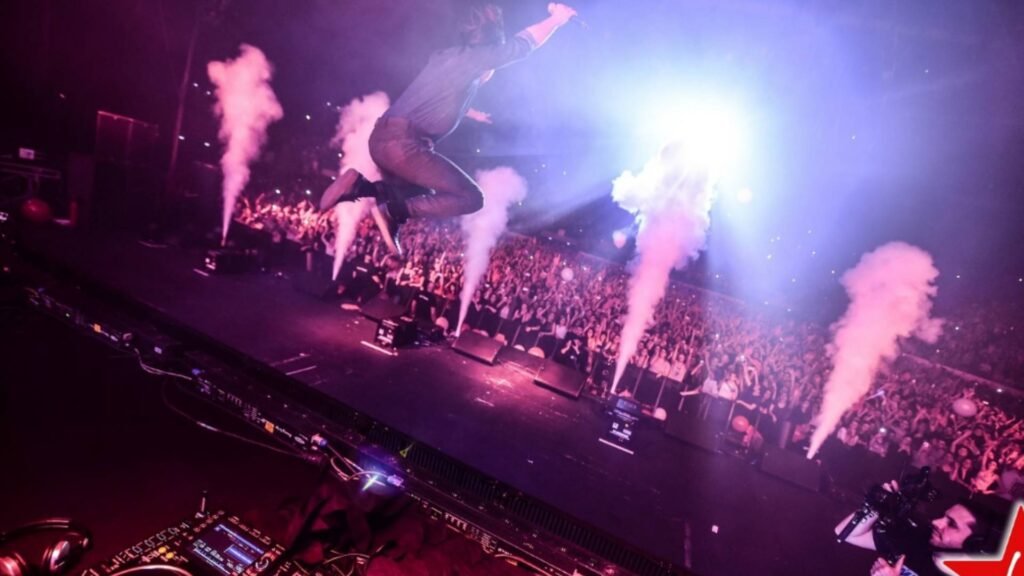
Our concert effects, prepared with the production.
At a concert, the organiser hosts a production. So we work with the tour manager.
Town event
The organiser makes the decision
- The programme is drawn up in consultation with the sponsor
- The timetable is based on the expected audience
- The duration is open to discussion
- The venue is known months in advance
- One performance, one setting
Concert and tour
Production takes the lead
- The running order already exists and we fit into it
- The time code comes from the artist’s production control room
- The duration is set to the nearest second by the reminder
- The technical data sheet arrives late and is binding
- The same effect must be replicated in ten theatres
Six constraints of a concert.
We note them with the production, before writing.
01
The time code from the artist’s control desk
It comes from the artist’s sound desk. We slave to it, which requires a reliable link, a wired backup and a joint test before the soundcheck.
02
Stage lighting and aerial effects
A lighting plan designed for the artist can cancel out an aerial effect. We obtain a few seconds of blackout from the lighting designer in advance, without which the effect is not visible.
03
The tour’s technical rider
It often arrives late and sometimes rules out what was planned. We read it before quoting, and offer variants that remain compatible with the tour.
04
The encore and the launch time
No one knows whether the artist will play two tracks or four. The performance begins on the production control’s command, and the system remains on standby until the command is given.
05
The pit is upright and compact
We cannot move the audience back: we gain the safety distance through height, positioning and cold effects, with the venue’s security team.
06
Effects that transfer across the whole tour
On a tour, an effect approved once will be asked for everywhere. So we write set-ups that can be moved from one venue to another.
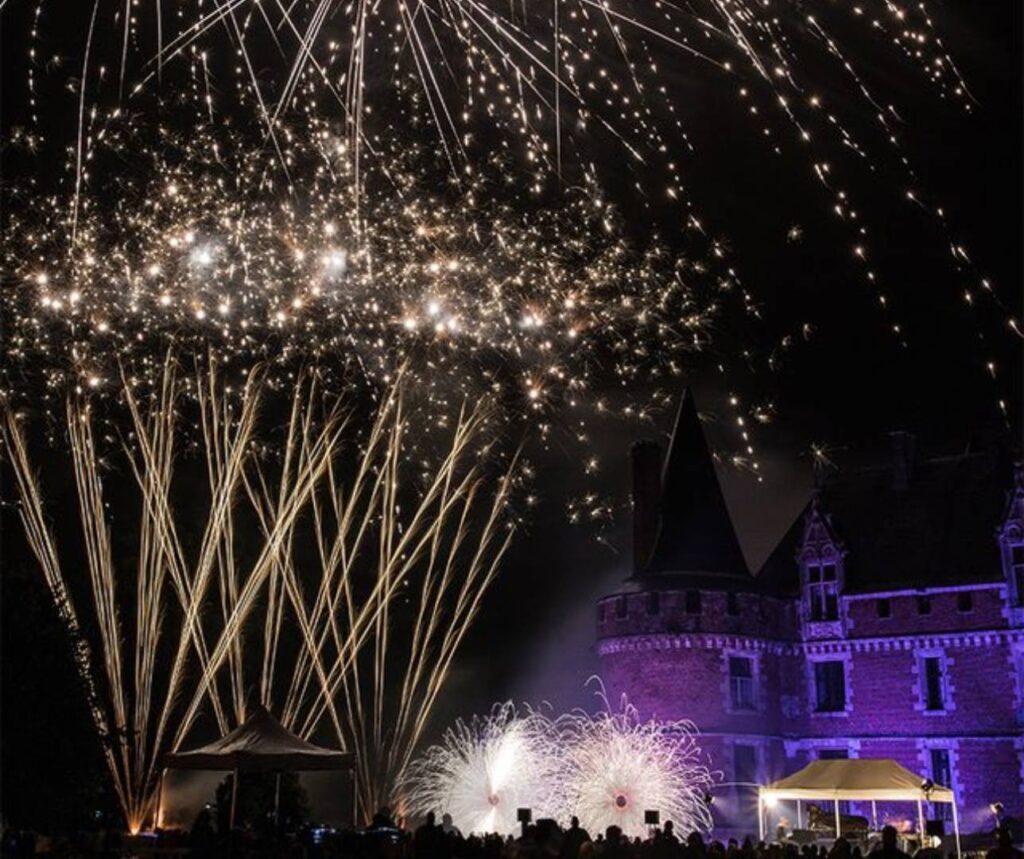
From the technical data sheet at the top of the production control team.
The audience only sees the sixth.
01
The technical data sheet
We read it before any costing: power, rigging points, restrictions, available set-up time.
02
Location
Visit of the hall or site with the venue’s stage manager and the tour’s. We bring the two stage managers together from this visit.
03
Writing
The effect is built on the existing running order. It lasts a few seconds and serves a precise moment of the set, chosen with the artist or their artistic director.
04
The file
Prefecture declaration for an outdoor display, safety commission opinion indoors, DGAC filing for a drone flight. We prepare the application.
05
The scales
The test is done with the artist’s control desk: slaving to the time-code, wired backup, stop procedure.
06
Live coverage
The set-up is armed and monitored throughout the entire set. The cue comes from production control. Less than three seconds elapse between the cue and the first flash of light.
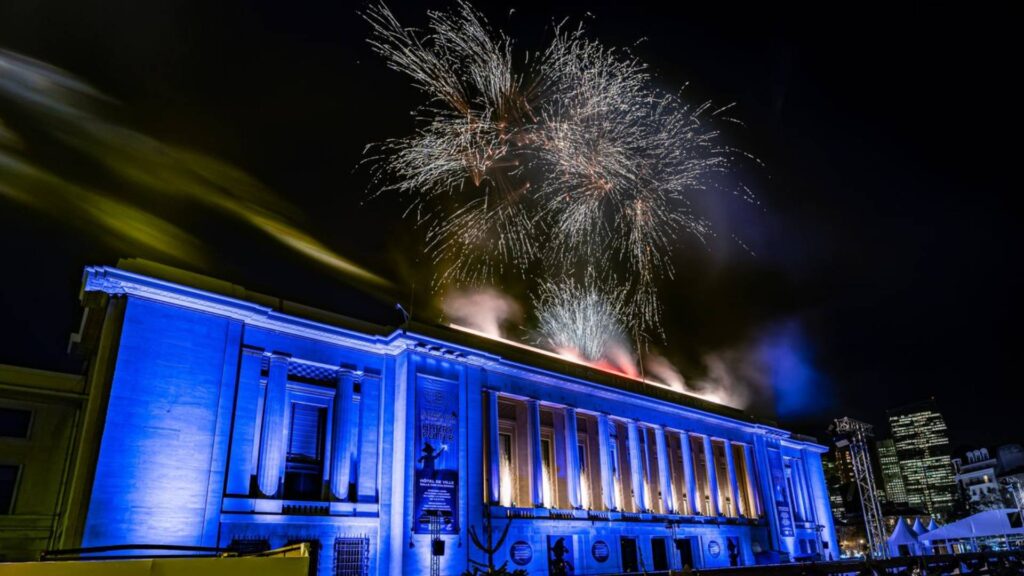
Effects timed to the artist’s music.
At a concert, we trigger the pyrotechnics on an emotion already built by the music, to heighten it for a few seconds.
That is why we write brief interventions, and why we favour timing: we prefer a burst of cold sparks triggered on the right bar to a generous shell set off two seconds too late.
Lead times and price for a concert.
Four minimums and one threshold, valid whatever the venue.
Orders of magnitude
on a per-performance basis
Costed proposal
within 48 hours
A bespoke show
3 to 6 months
Permission to set off a fireworks display
At least 1 month
Authorisation for a drone flight
A minimum of 45 days
Rehearsal with the artist’s production control team
systematic
Drone light show, from
€10,000
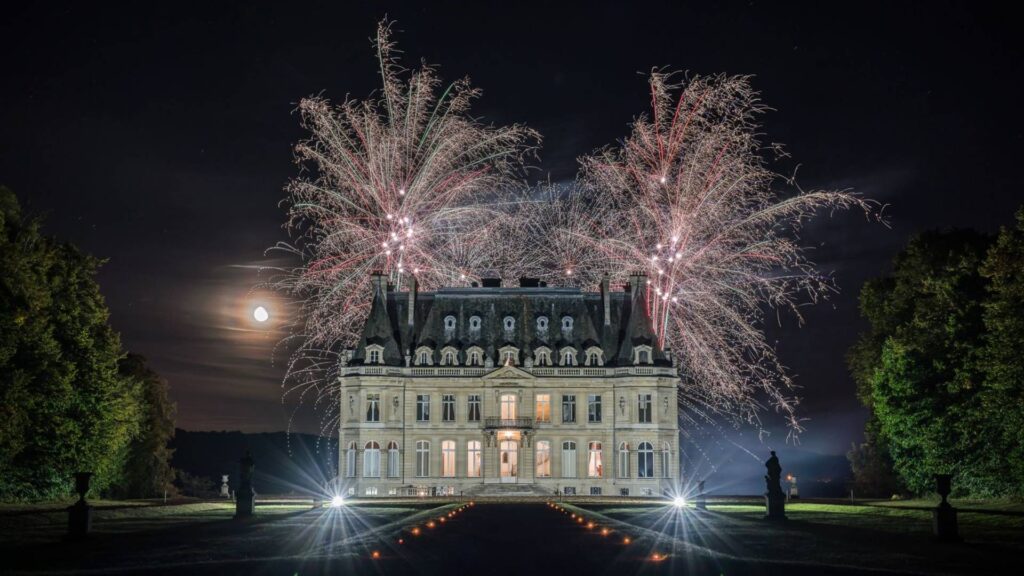
Send your technical rider.
An entrance, a finale, a precise moment of the set: tell us the venue or site, the dates and the name of the production. We reply within 48 hours with a first costing and the points to agree with the control desk.
Your questions about concerts and shows.
Can effects be triggered inside a room?
Yes, using a range of effects designed specifically for this purpose: cold sparks, controlled flames, thick fog and confetti. Each effect is declared to the safety committee and tested under real-world conditions before the doors open.
Who provides the timestamp?
The artist’s control desk. We slave to it, with a wired backup and an immediate stop procedure. When there is no time-code, our pyrotechnician gives the launch by hand, on the control desk’s cue.
The technical data sheet prohibits the intended effect – what should we do?
We offer a compatible variant. That is why we read the rider before quoting and prepare the alternative from the start.
Is it possible to fly drones during a concert?
Yes, outdoors, and indoors provided the space and ceiling height allow it. The display is timed to coincide with a moment when the stage lighting dims; otherwise, the LEDs won’t be visible.
Can the effect be repeated throughout the tour?
Yes. We write transferable set-ups, whose equipment and procedure are rebuilt identically, with a regulatory file redone for each venue.
How long should I allow for this?
Allow 3 to 6 months for a bespoke show. On top of this, there are administrative lead times, which run in parallel but are separate from the creative process: a minimum of 1 month for a fireworks display, and a minimum of 45 days for a drone light flight.