Celesta creates drone shows for stadiums.
Half-time runs over, extra time pushes the evening back. In a stadium, we therefore do not set the flight to a fixed time: it launches on your production’s signal.
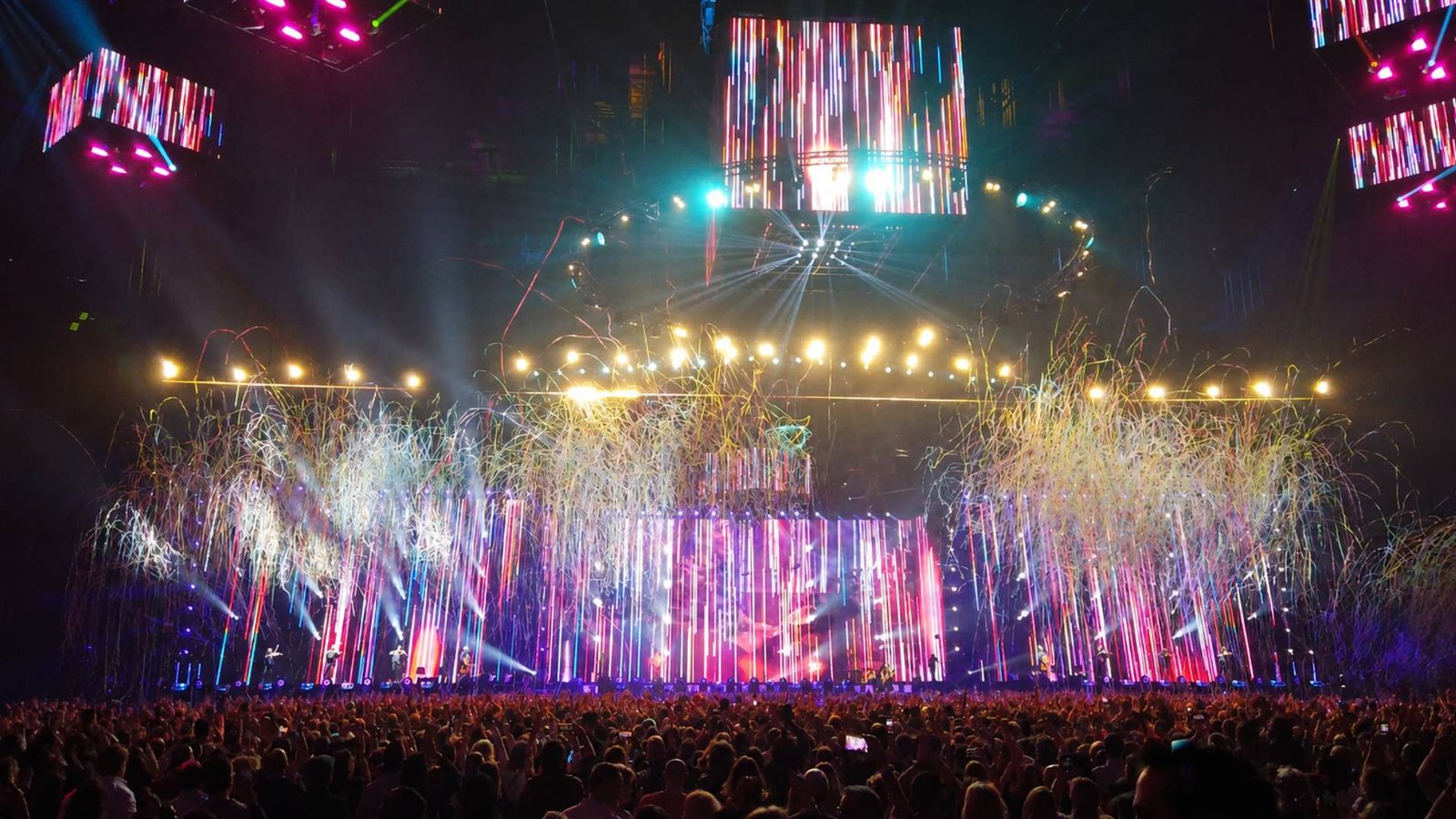
A stadium flight compared with a scheduled show
For a scheduled show, we set the start time with you. In a stadium, the match sets the time, and we design the flight accordingly.
The scheduled event
- The departure is included in the programme.
- You are free to choose the duration of the flight.
- The site is being tidied up after the show.
- The audience comes for the show.
- We rehearse once on site.
The sporting highlight
- The start is signalled by the production team.
- The window is short and set by the match.
- The lawn remains untouched, both before and after.
- The crowd comes for the match: theft is just an added bonus.
- We keep a fallback procedure ready, agreed at rehearsal.
Our recent flights
Each project describes the venue, the client’s brief and the set-up we put in place.
-
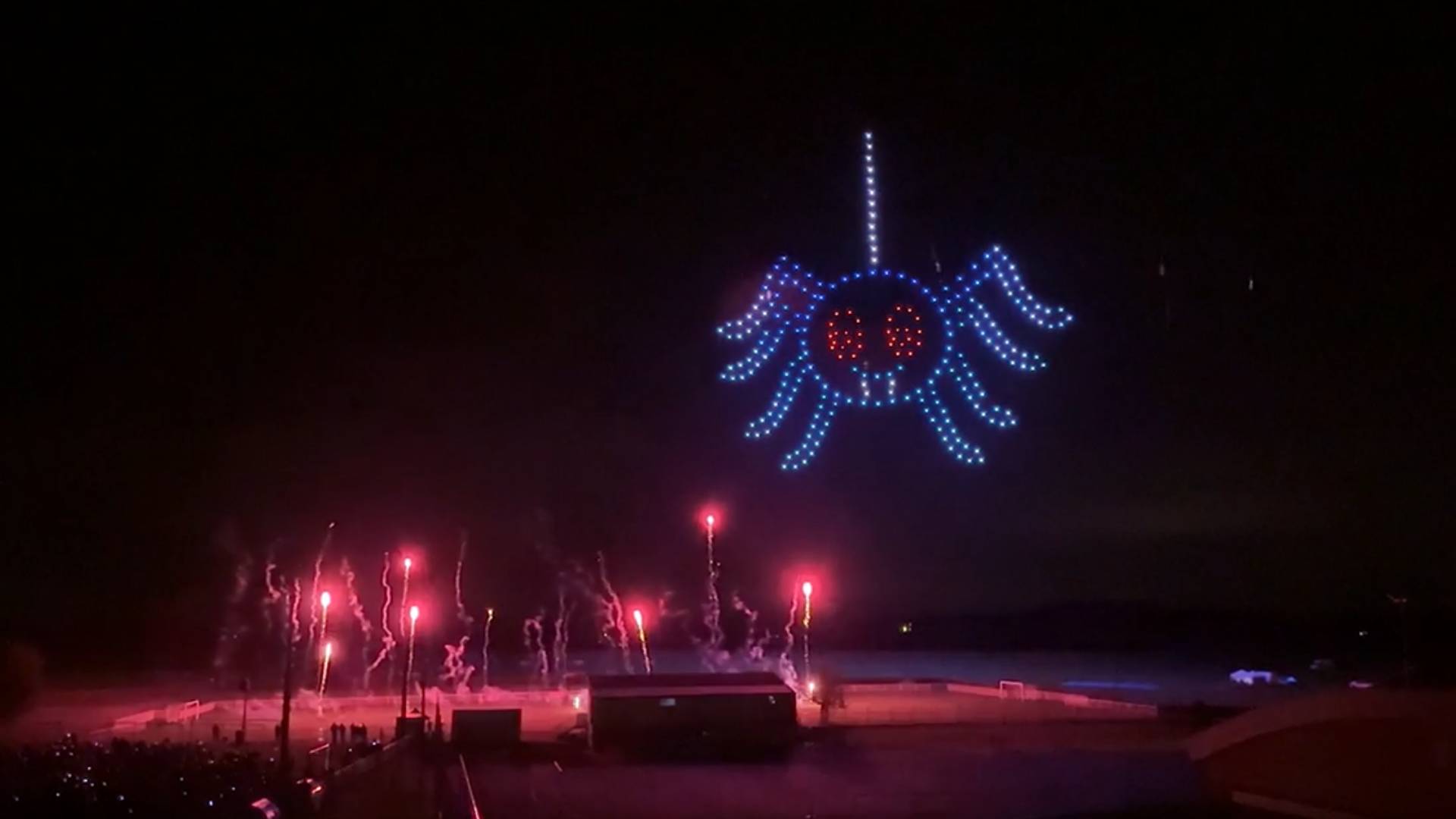
Pyrotechnic display featuring drones in Buchy
View the project: Pyrotechnic display featuring drones in BuchyA demonstration for local authorities In Buchy, we organised a technical demonstration combining a pyrotechnic display and a swarm of…
-
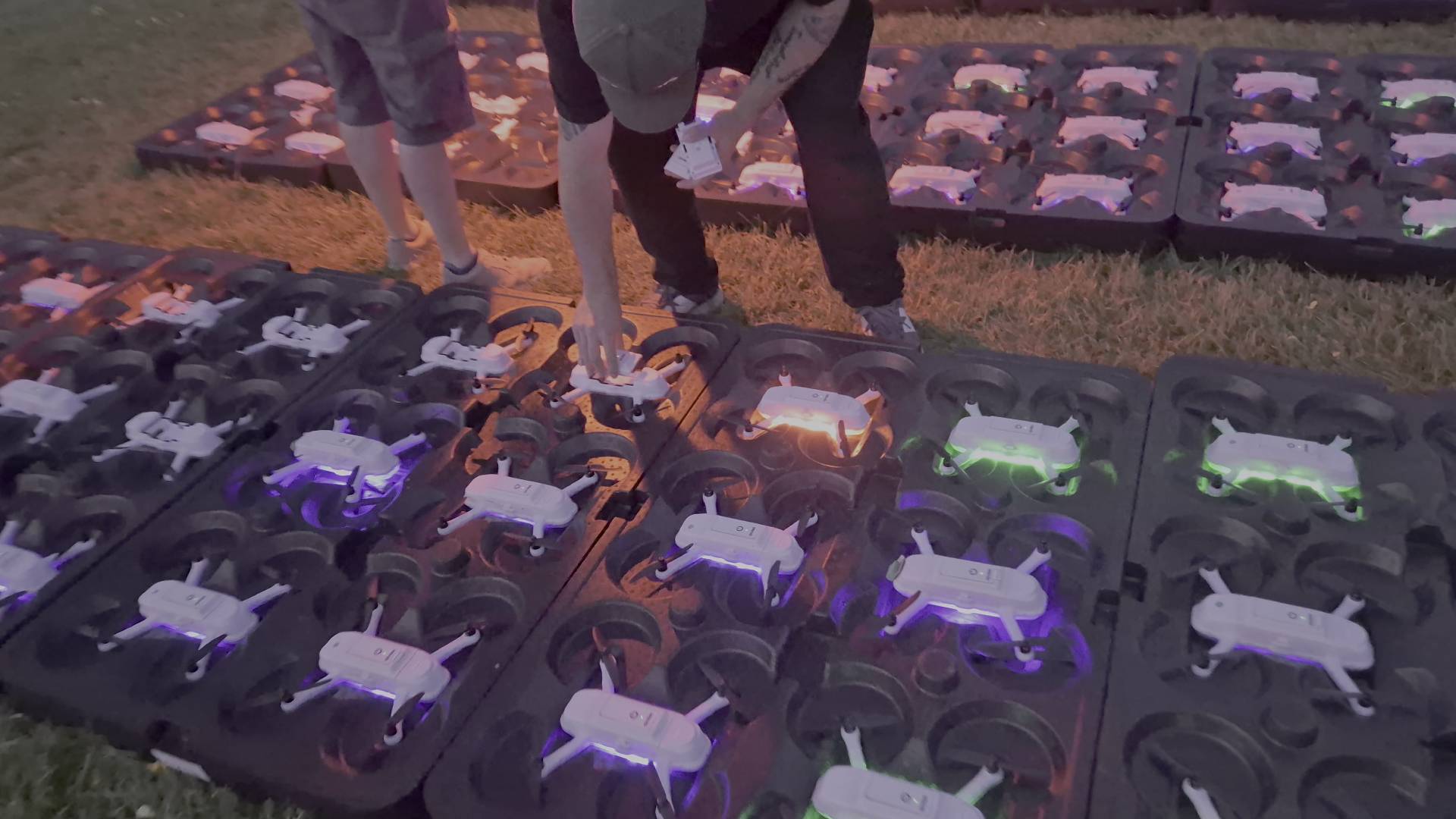
Marly-le-Roi Town Festival 2026: Drones and Fireworks
View the project: Marly-le-Roi Town Festival 2026: Drones and FireworksA town celebration in the heart of a royal park The Fête de Marly returns every June to the grounds…
Roof, pitch, broadcast: the stadium constraints
We settle these points while writing the flight: on match night, there is no time left to decide.
01
A flight window set by the game
Extended half-time, extra time, injury stoppages: the scheduled time shifts during the match. So our flights launch on the production’s signal.
02
A take-off area off the pitch
No take-off area on the pitch, before or after. We set up the take-off area outside the playing area and work with the distances this involves.
03
Roof, masts and cameras: the stadium airspace
We survey the roof, the floodlight masts, the suspended cameras and, sometimes, an air corridor: the usable volume is much smaller than in an open field.
04
Pitch lighting, to be negotiated with the broadcaster
A stadium lights its pitch to levels specified by the broadcaster. We negotiate the switch-off with the broadcaster before promising it to you.
05
Flight paths set to the live cameras
We set the flight paths to the camera angles and the timing of the live broadcast, with the director, so that the flight is visible on air.
06
The audience remains seated
Numbered seats give known, stable distances, which simplifies the risk assessment.
Sports calendar on cue
The first four stages are prepared with the club, the stadium operator and the broadcaster.
01
The moment
Half-time, opening ceremony or end of the match: we choose with you the moment where the flight fits and the time it has.
02
The volume
A complete survey of the stadium: roof, floodlight masts and suspended cameras. We set the size of the figures to this available space.
03
The site
We place the take-off area outside the playing area. We check access and set-up times between two flows of spectators.
04
The file
SORA risk analysis, submitted to the DGAC, the prefecture and the stadium operator. The broadcaster is consulted at this stage.
05
The rehearsal
A closed-door trial, carried out using your production line. The start signal and the fallback procedure are set out here in writing.
06
Live coverage
The flight takes off on cue. Our operators remain in contact with your production team throughout the entire window, including the return journey.
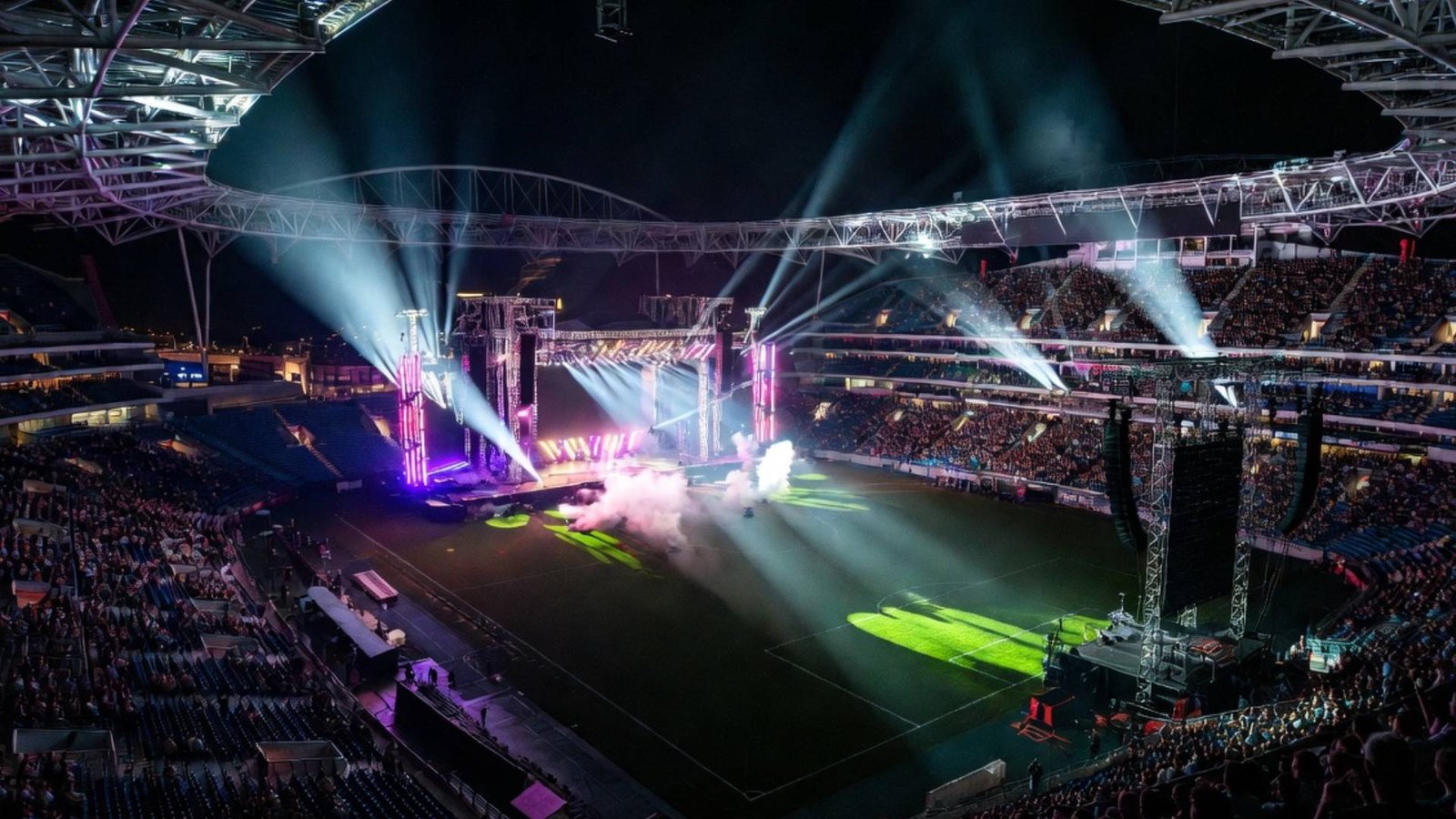
The launch procedure
On our other sites, the flight launches at the scheduled time; in a stadium, we write down who triggers it.
Our flight plan is compiled in advance and cannot be changed live. So we prepare the trigger chain: who gives the order, on which channel, and what happens if the order never comes. We write it with your production and rehearse it behind closed doors before the match.
Lead times and conditions for a stadium flight
A stadium highlight involves the club, the venue operator and the broadcaster: here are the lead times and conditions we ask you to plan for.
Conditions for a stadium flight
Key points
Time allowed before the meeting, including consideration of the case
2 to 6 months
Flight duration within a gameplay window
3 to 6 minutes
Take-off area, always outside the playing area
Off the pitch
A written procedure for triggering the process, repeated in camera
Understood
Drone light show: from
€10,000
The amount then depends on the number of units, which in turn is determined by the space available above the stadium.
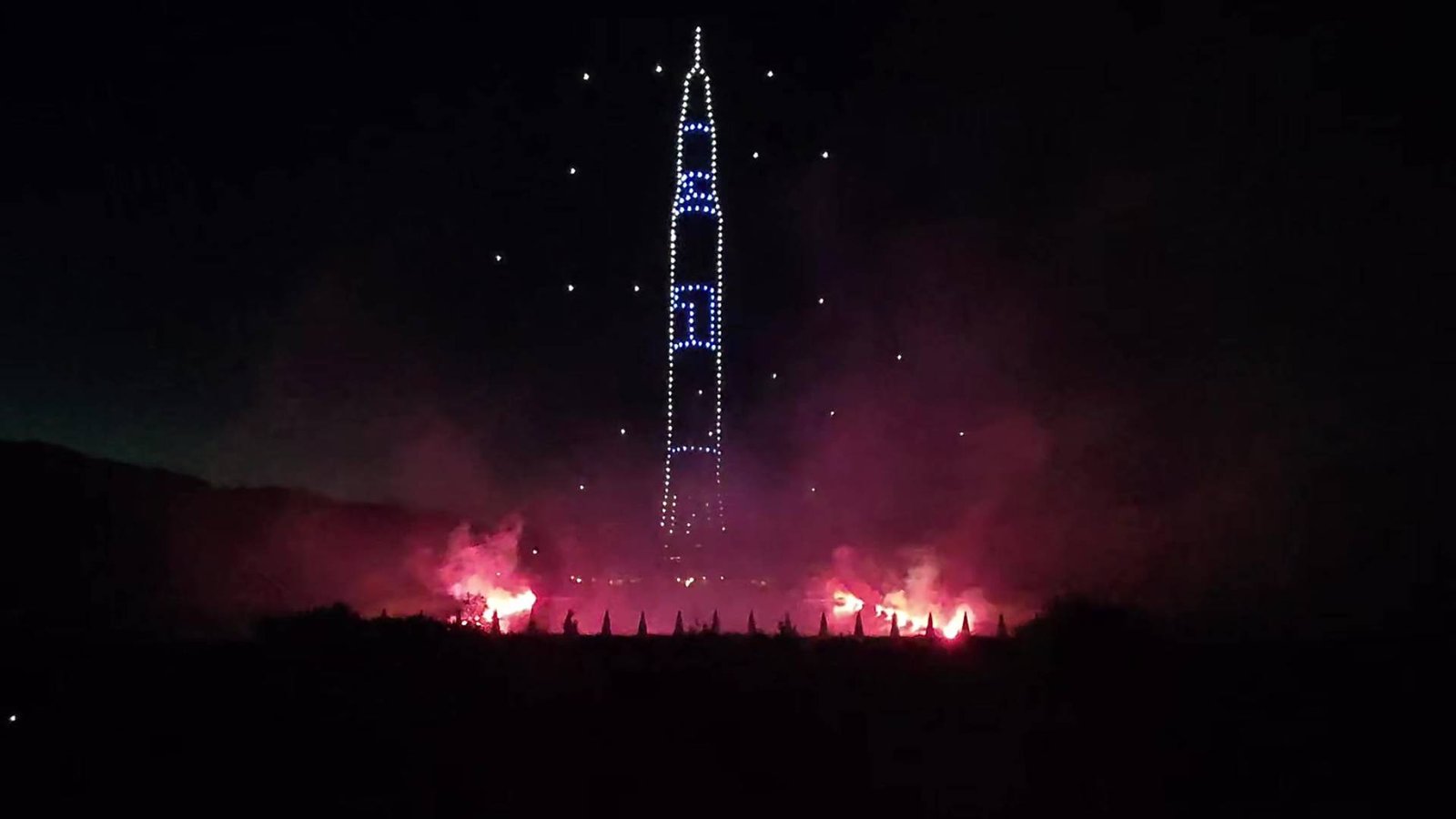
Preparing a flight for your stadium
Give us the stadium, the competition and the planned moment. Within 48 hours you receive a letter of intent and a costed estimate. If the volume above your stadium does not allow the figure you hope for, we tell you before quoting.
Your questions about drones in stadiums
Can you fly during half-time?
Yes, that’s a common time slot. For it, we plan a short flight of three to six minutes, a very quick set-up and take-off on the production’s signal rather than at a fixed time.
Should drones be landed on the lawn?
Never. We place the take-off area outside the playing area, which moves the fleet further away and increases the number of drones needed. We include these extra drones in the first quote.
What happens in the event of an extension?
The flight is pushed back. As it launches on the production’s signal, a twenty-minute delay changes nothing as long as the authorised window is not exceeded.
Should the stadium lights be switched off?
At least in part. A stadium lights its pitch to levels dictated by the broadcasters, and these floodlights overwhelm the LEDs. We negotiate this with the broadcaster before promising it to the public.
What authorisations are required for a flight over a stadium?
Flying over the public falls within the specific category of European Regulation 2019/947: SORA risk assessment and authorisation filed with the DGAC. The prefecture and the stadium operator are added to that. We handle the whole application.
Can we display the club logo or the score?
The logo, yes, subject to the relevant rights. A result, no: the flight plan is drawn up before the match and cannot be changed in real time. If an element depends on the match, we prepare it as a variant, agreed in advance.