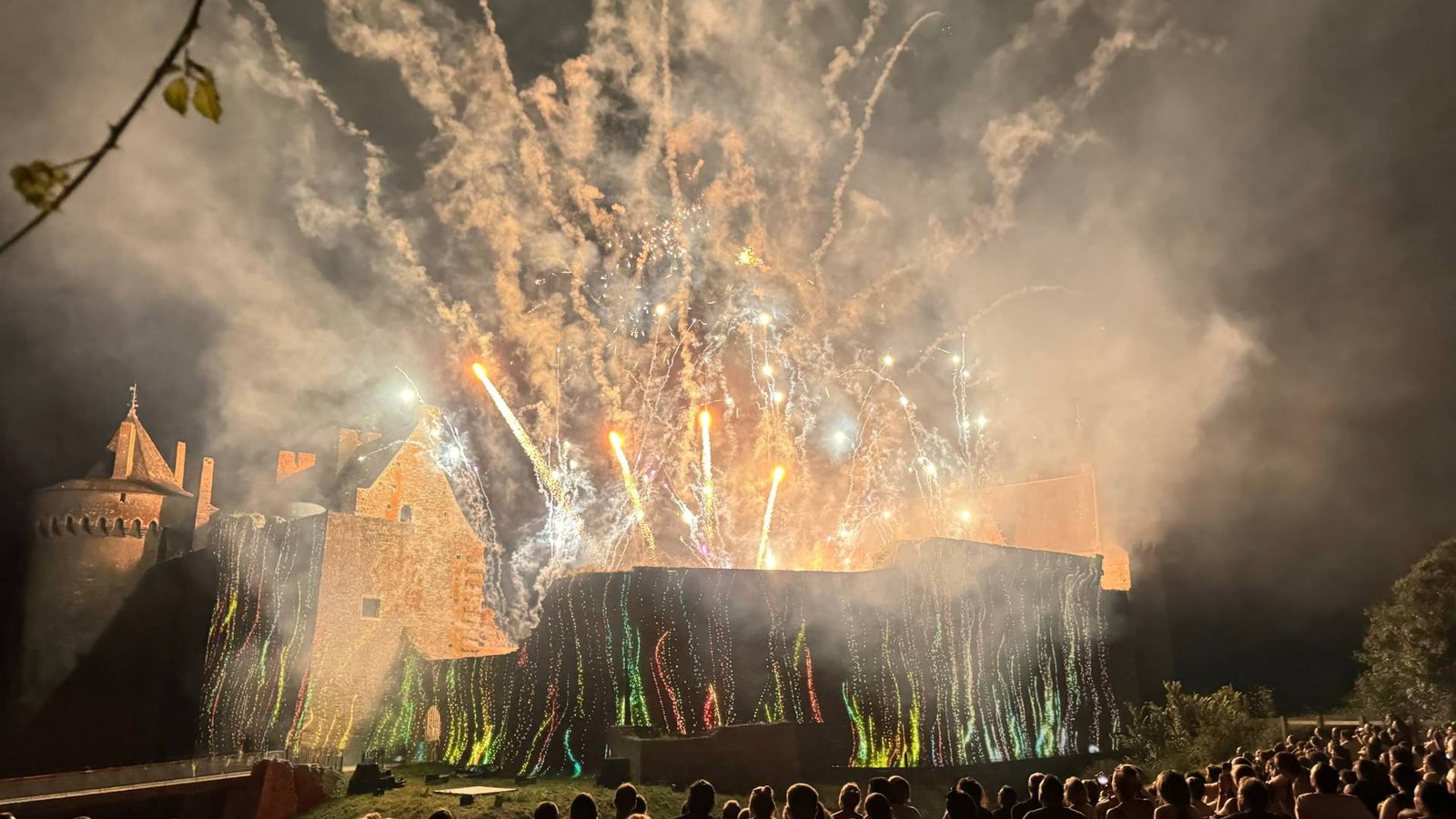
Celesta, service provider for your heritage festivals
Town festival, a monument’s centenary, historical festival or Heritage Days: we write and produce a show about the history of your town, played on its own buildings.
- Free quote
- Registered F4-T2 pyrotechnicians and drone pilots
- Prefecture application processed
- France and abroad
A festival written from the town’s history
Unlike 14 July or New Year, a heritage festival celebrates a date specific to the town: the 800th anniversary of a charter, the centenary of a bridge, the parish fair named after a local saint, the relighting of a collegiate church after restoration.
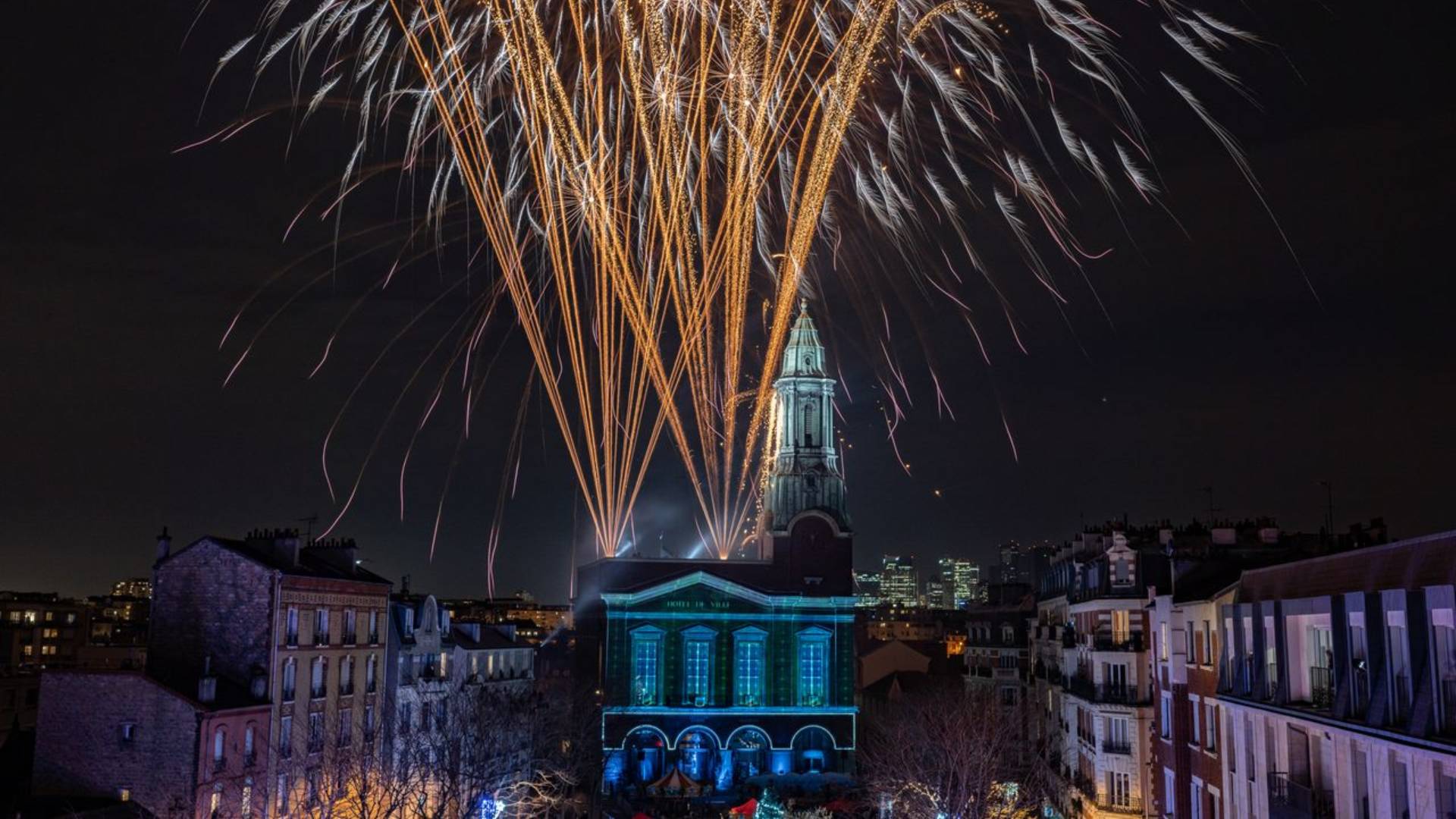
Celesta produces heritage shows for local authorities: we write, produce and run the creation, from research in your archives to the prefecture authorisations. Video mapping on façades, fireworks, light drones and stage effects serve one single story.
We write the content from your history, for your town alone, and it belongs to you.
Our heritage festivals recent
Creations written for a town, its history and its buildings.
Town festival, anniversary and Heritage Days
Towns call us for three quite distinct reasons. They do not involve the same budget, the same timetable or the same amount of documentary research, and in all three cases the show starts from real facts about the area.
Every year, at the same time
The annual town festival
Parish fair, St John’s Day, grape harvest festival, town fair: this is the event residents know by heart and compare with the previous edition.
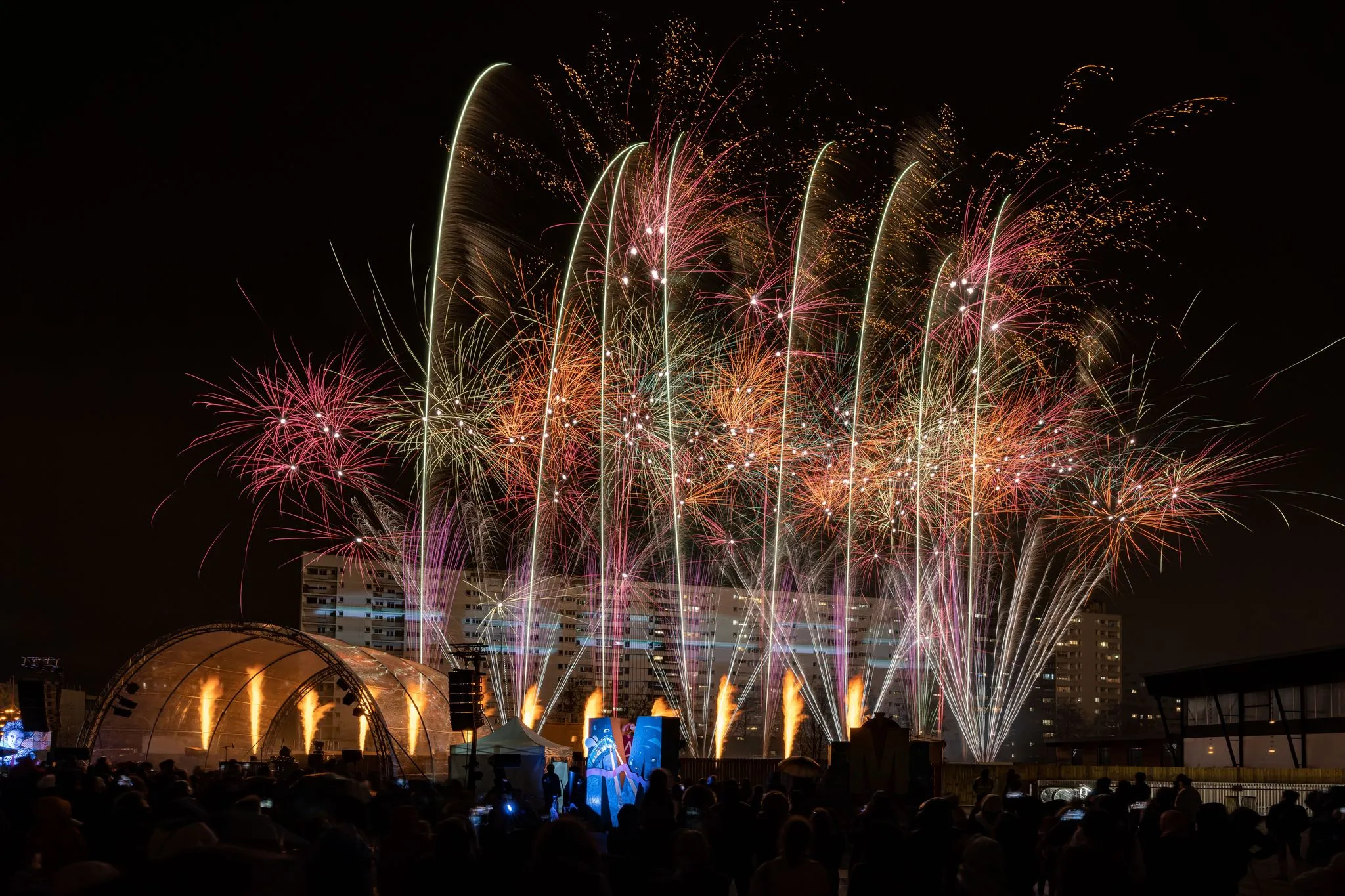
Our approach is to retain the familiar format whilst changing the narrative: the same time, the same venue, but a new story every year. In Marly-le-Roi, the show combined a drone ballet with a fireworks display, all woven into a single narrative thread, from Earth to the Moon.
- Annual event
- Known gauge
- A new take on the story
- Budget carried over
Once in a generation
The town’s anniversary
One hundred and twenty-five years, eight hundred years of a charter, the centenary of a bridge or a belfry: the number becomes the subject of the show. As the date does not come round again, we devote a larger creation to it.
It needs more research upstream, and we recommend video mapping for it: the story unfolds on the town hall façade.
- Archival research
- Original creation
- Reusable content
In September, or summer
Heritage Days and Historical Festival
Medieval festival, re-enactment, European Heritage Days night opening: the public comes for the monument itself. The show brings out the monument and extends the visit after nightfall.
We favour short, repeated screenings: a ten-minute film shown three times throughout the evening keeps the audience moving rather than keeping them stationary for a single screening.
- Nocturne
- Short format, re-run
- The featured monument
Mapping, fireworks and drones on heritage sites
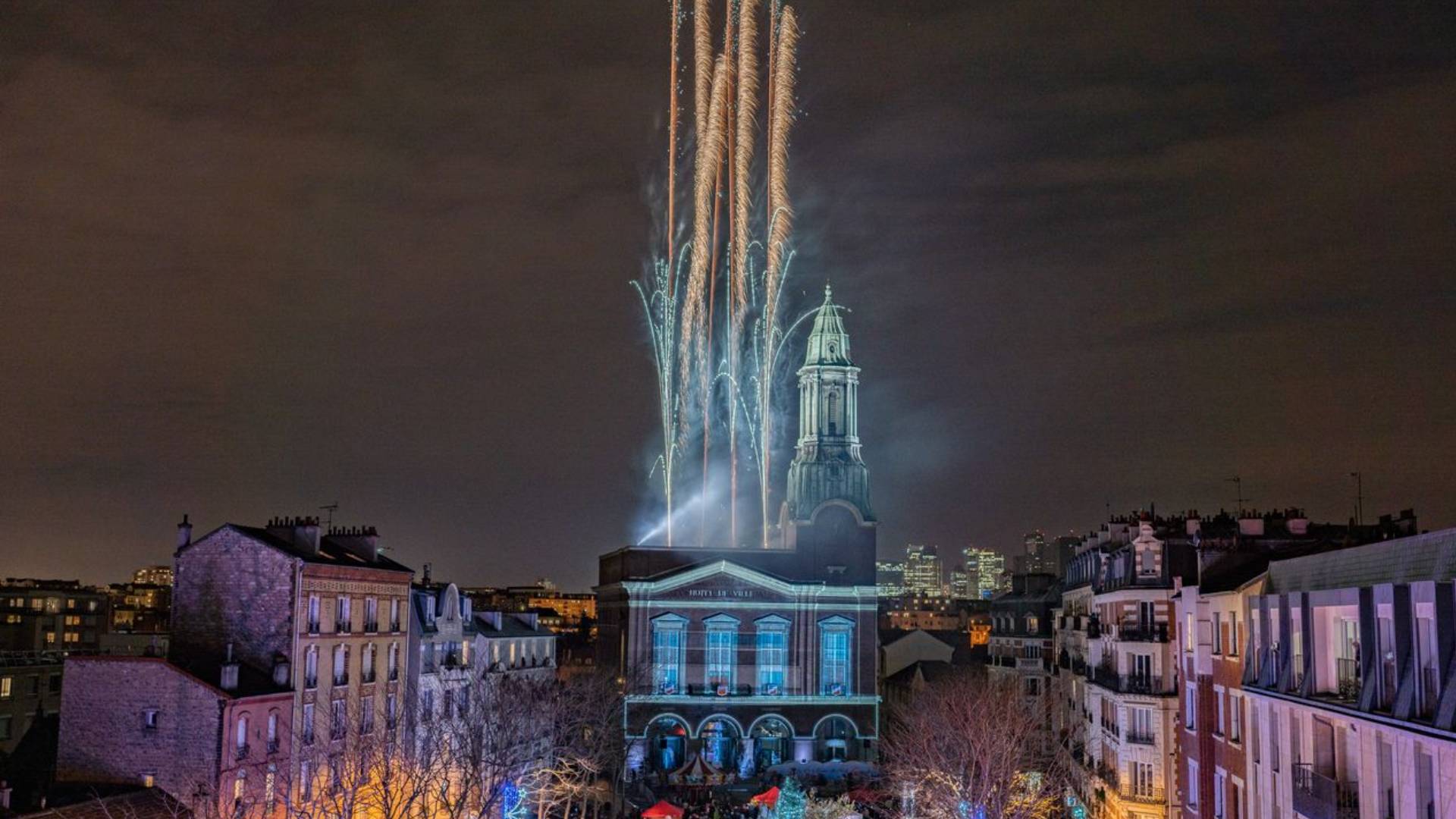
Video mapping
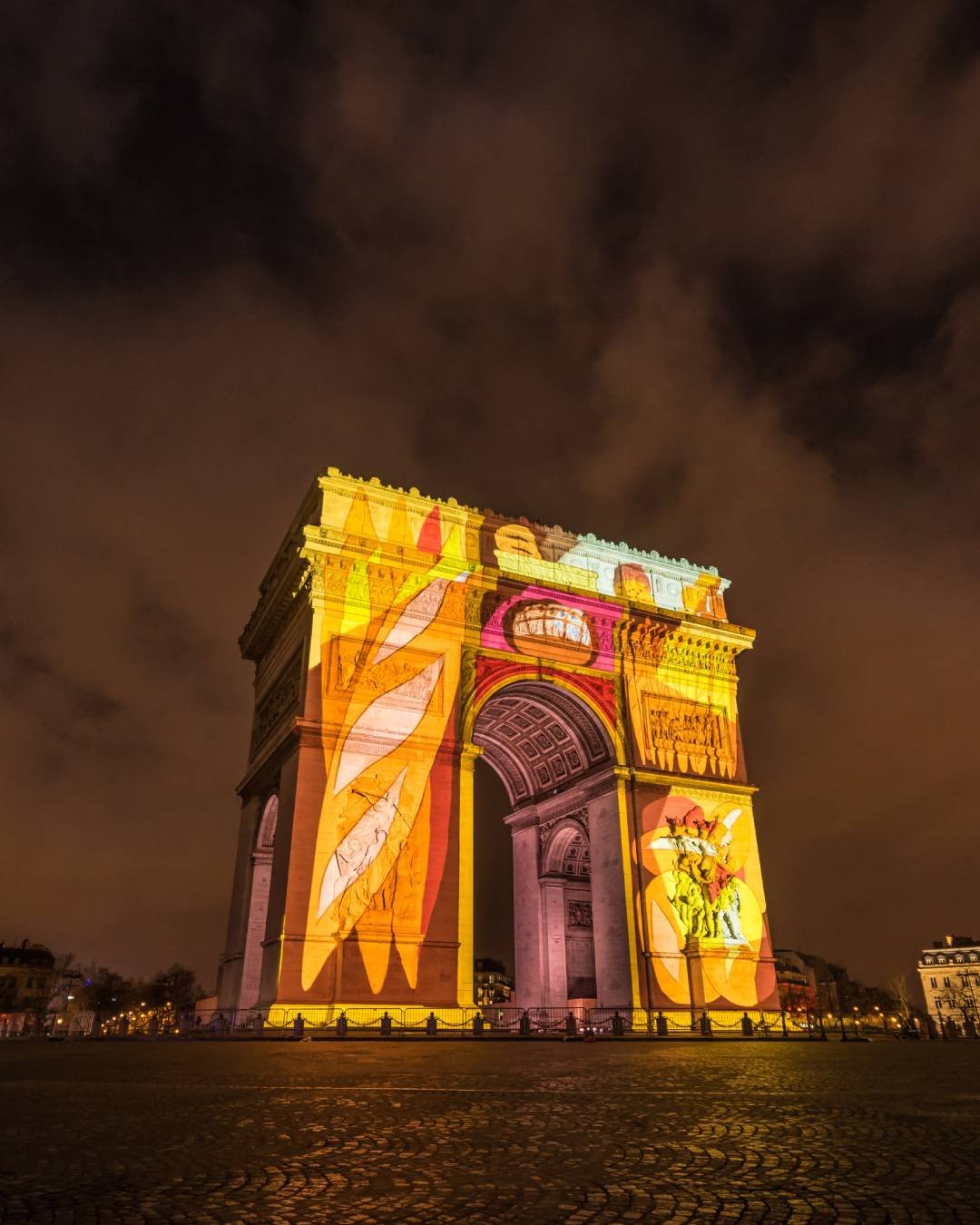
Video mapping on façades
We survey the geometry of the façade by laser, and it becomes the grid on which the story is written. A cornice is outlined, a window opens, a date appears on the stone. We fix nothing to the building.
The film produced remains your property and can be replayed in subsequent seasons.
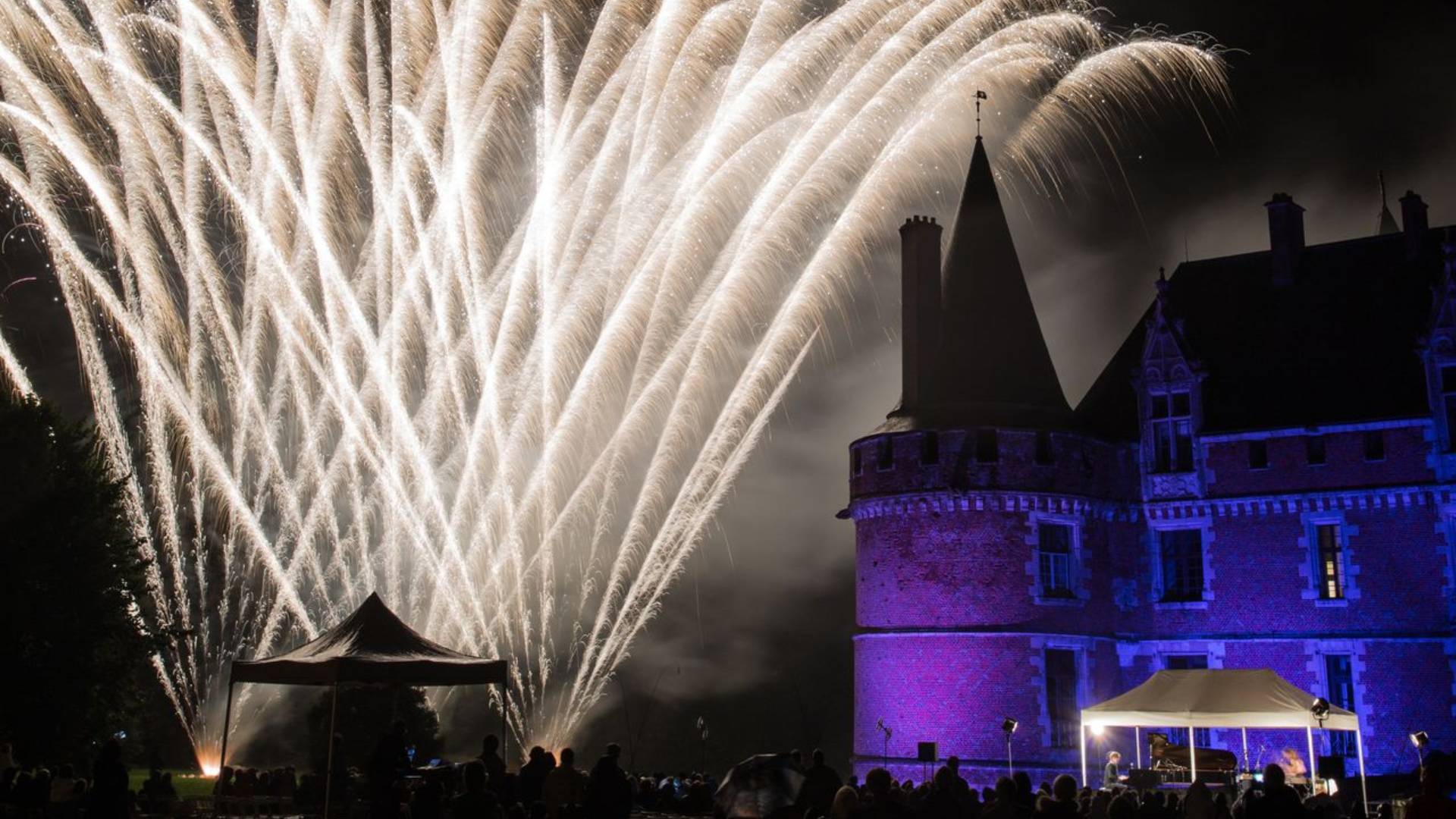
Fireworks displays
Fire, silhouette and backlighting
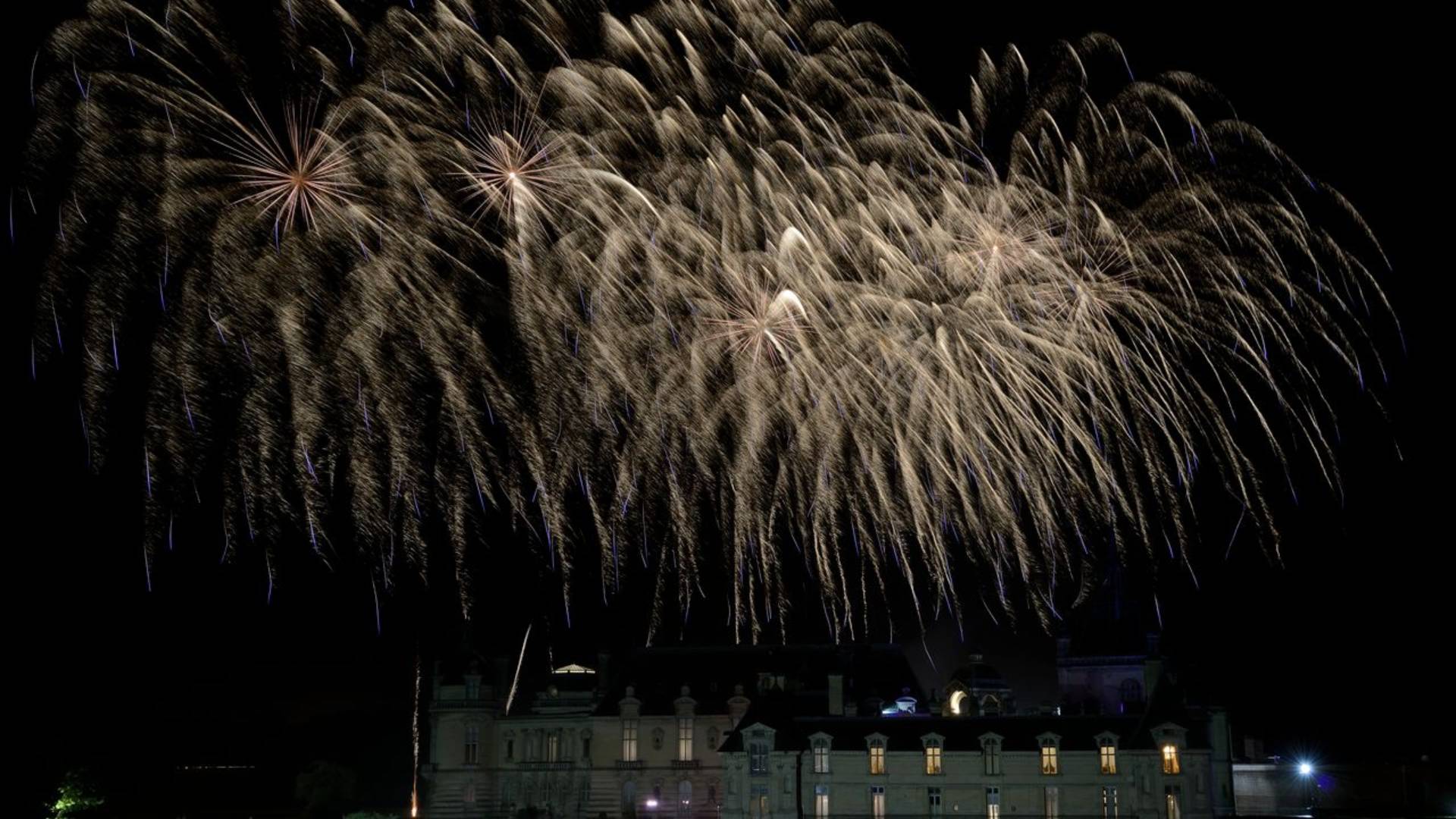
At a heritage site, our pyrotechnicians fire behind the building rather than above it: the façade is silhouetted against the fireworks. This choice protects the building.
Products in category F4 – Decree No. 2010-455 of 4 May 2010, implemented by an operator holding an F4-T2 certificate.
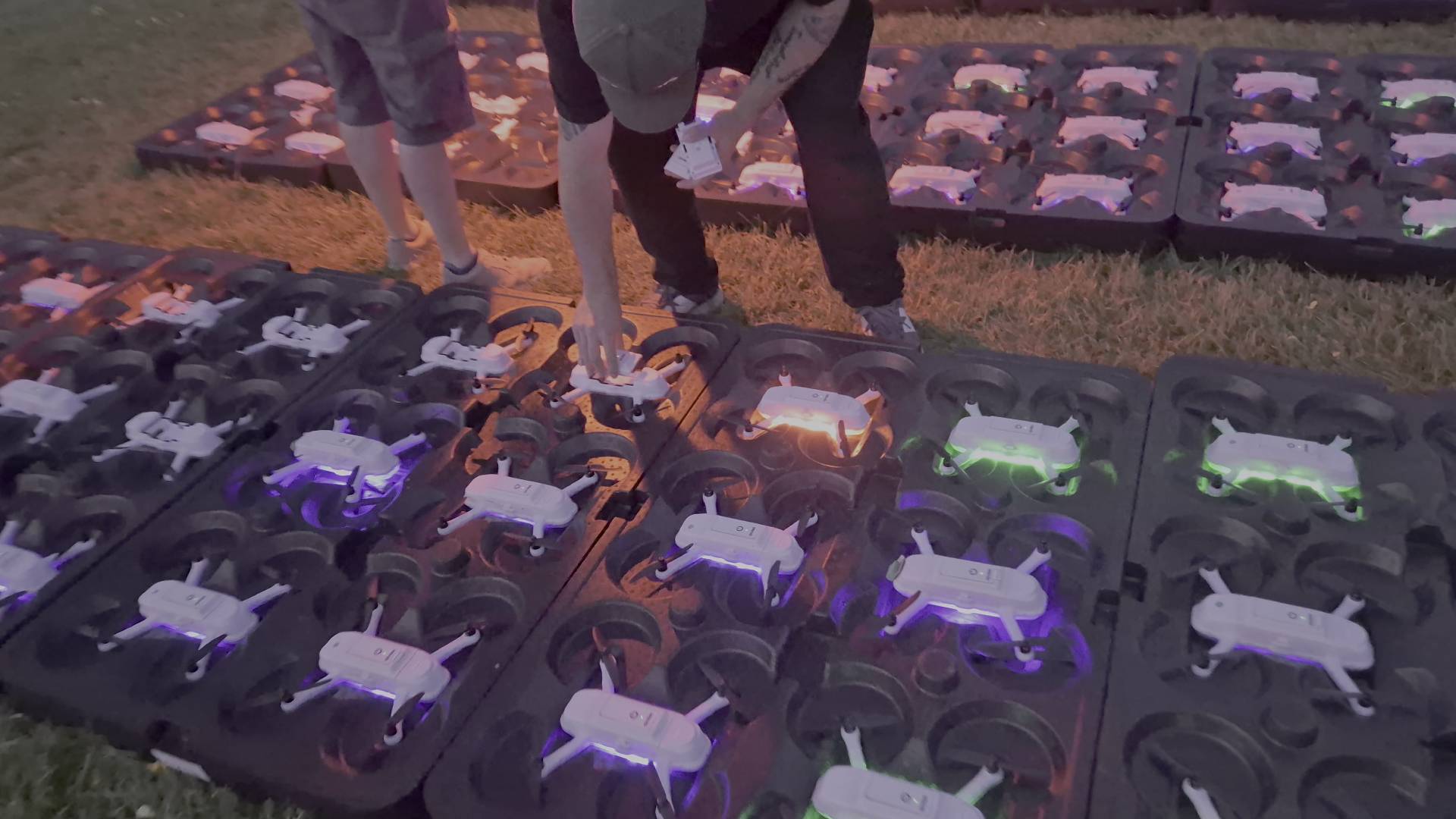
Light drones
Drones: when the historic centre bans open fires
Many heritage sites are hemmed in by narrow streets where the safety perimeter of a fireworks display cannot be held. Drones, with no detonation or fallout, can draw the town’s coat of arms, a founding date or the outline of a lost monument.
Registered drone pilots; flight clearance applications processed by the DGAC.
Performers and effects
Performers, cold flames and a procession
Illuminated stilt-walkers, fire bearers, street processions, cold flames in front of a porch: these effects take place among the audience, a few metres away and need no exclusion zone.
They act as a link between the venues when the festival takes place at several locations across the town, guiding the audience from one stage to the next.
The hybrid format
Mapping, drones and fireworks all in one evening
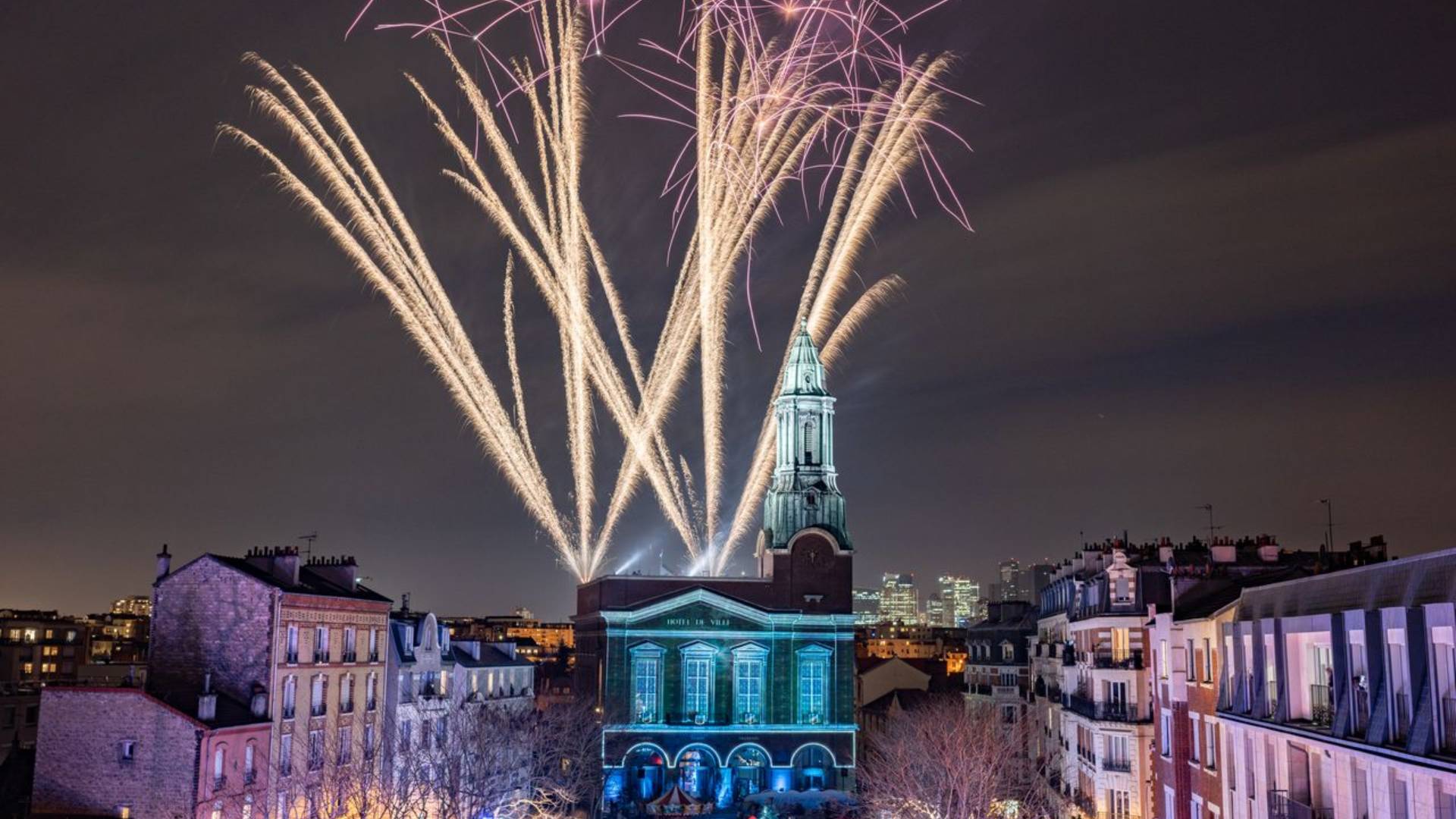
This is the form we recommend for a long history: the mapping sets the story on the façade, the drones carry it into the sky, the fireworks close it.
All three disciplines are handled by our teams, on a single running order.
The constraints of a protected site
Three rules decide the format before the writing. We deal with them from the first meeting.
The opinion of Bâtiments de France
As soon as a building is listed, registered or simply located within a protected perimeter, the Architecte des Bâtiments de France is involved. Their opinion covers the placement of equipment, the light output and the nature of the effects, not the artistic content. We consult them early to avoid a refusal three weeks before the date.
Self-supporting equipment, nothing fixed to the building
We use no anchoring, no drilling and no load on the stone: all the equipment rests on the ground, on self-supporting, ballasted structures, and we measure the necessary projection distance before committing. In a narrow space, it is this distance that determines the number of projectors and therefore a large part of the budget.
A nearby gauge, in an old town centre
Unlike on 14 July, when the public spreads out along the riverbanks or in a park, a heritage festival brings people together on a forecourt, just a few dozen metres from the buildings and homes. This calls for smaller-scale displays, drones or video mapping, and means that noise levels and crowd control must be taken into account right from the planning stage.
Research in your archives
Before the first image, our teams go through the municipal archives, the local historical society and the department’s image collections.
We look for three things: a date that structures the story, two or three strong images residents will recognise, and a detail almost nobody knows.
This approach adds two to three months to the timeline compared with a traditional shoot. In return, it produces content that you own, which you can replay, extend or reuse in your communications materials.
The stages of a heritage show
The process of staging a heritage show is similar to that of any other production, with one extra step at the start and an additional administrative requirement at the end. These two steps bring the lead time to ten to twelve months.
01
Research
Municipal archives, historical society, pictorial collections.
02
Writing
The script, soundtrack and storyboard are hereby submitted to you.
03
The statement
The façade has been measured using a laser, and the projection setback has been approved.
04
Authorisations
Prefecture, Bâtiments de France, overflight permissions.
05
That very evening
Set-up, securing the set to the façade, rehearsals, production control, dismantling.
Research, writing and technical production
A heritage festival brings together a researcher, an author, a videographer, a pyrotechnician and a drone pilot, often on the same evening and at the same listed site. At Celesta, these roles are all in-house. A single point of contact oversees the creative, technical and safety aspects, which simplifies communication with your departments as well as with Bâtiments de France.
- Small, medium and large local authorities
- Measures that can be scaled up or down in line with the approved budget
- Original content, owned by the local authority
Protected sites and ownership of the content
01
A company with extensive experience in protected areas
Castles, town halls, collegiate churches, listed sites: our teams regularly work on notable buildings, with the constraints that come with them. Our ICPE-classified depot lets us transport and store our products ourselves, and secures the regulatory chain, from the authorisation request to compliance with the perimeters approved with the prefecture and the civil protection services. Based in Aigremont, in the Yvelines, and present in Normandy, we work in France and abroad.
02
Content that remains with the local authority
The projection mapping film, the soundtrack and the narrative produced for your event are yours to keep. You can replay them the following season, extend them with a new sequence, or use extracts from them for your promotional materials and social media. On a heritage show, the first year funds the creation; in the following seasons, only the staging remains to be funded.
Compliance and implementation
- ICPE-licensed storage facility
- F4-T2 Pyrotechnicians
- DGAC-compliant drones
- Compliance with prefectural regulations
- Aigremont and Normandy
Budget and timetable for a show heritage
A heritage show costs more than a fireworks display of the same size, because it includes original creative work. Here are the price ranges seen on the French market and what makes them vary.
10 to 12
Months before the date: Research in the archives and the opinion of Bâtiments de France add two to three months to the timeframe for a standard planning application.
01
How we calculate the price
On a heritage show, we price the area to be covered and the viewing distance first, before the quantity of equipment. A sixty-metre-long façade viewed from a narrow square requires more spotlights than a façade half that size viewed from a distance. Next come the film’s duration, the level of animation and the number of evenings.
Area and setback take precedence over quantity
02
Who provides the funding?
A heritage show can bring in funders that other festivities do not. Depending on the circumstances, the organisation may involve the local council, the inter-municipal authority, the county council, the regional authority (in the context of heritage promotion), the DRAC, the tourist office, and sometimes local sponsors. Bringing all these parties on board takes time, so we start the planning early.
Dedicated heritage ticket offices
03
Spread the cost over several seasons
The video mapping film we produce remains your property: once created, it can be replayed in subsequent years at little more than the cost of staging it, and a new sequence can be added with each new edition. The cost difference compared with an annual fireworks display thus narrows with each edition.
The film remains your property
Figures representing the general price ranges observed on the French market, provided for reference purposes only and not as a Celesta price list.
The price depends on
- The façade area
- The available headroom
- The running time of the film
- The number of evenings
- The research component
Tell the story of your local area with Celesta
Town festivals, anniversaries, Heritage Nights: tell us about your venue, your date and your budget, and our teams will provide you with a proposal and a tailored quote. For heritage projects, it’s best to start planning a year in advance.
- Free quote
- Quick reply
- Bâtiments de France application handled
Your questions about heritage festivals
What budget should you set aside for a heritage festival show?
You should expect to pay between 2,500 and 5,000 euros in a municipality with fewer than 5,000 inhabitants, between 5,000 and 20,000 euros for a medium-sized town or an inter-municipal authority, and between 20,000 and 50,000 euros for a large city. A heritage-themed show costs more than a fire display of the same scale because it involves a significant amount of scriptwriting and research. On the other hand, the film produced can be replayed in subsequent seasons at no cost other than the initial production costs.
Is it permitted to project an image onto a listed monument?
Yes. The projection does not affect the building structure: no anchoring, no drilling, and no load on the stone. All the equipment is placed on the ground on self-supporting, weighted structures. However, approval must be obtained from the Architecte des Bâtiments de France regarding the installation, the light output and the nature of the effects, as well as authorisation from the owner or the person responsible for the monument.
Is approval from Bâtiments de France required?
As soon as a building is listed, registered or simply situated within a conservation area, the opinion of the Architecte des Bâtiments de France is required. This concerns the positioning of the equipment and the lighting design, not the artistic content. Our teams prepare the application and submit it with your departments; we start this step first, to avoid a refusal three weeks before the date.
Is it allowed to set off a fireworks display near a historic building?
Yes, subject to safety distances based on the calibre of the projectiles and the approval of the relevant authorities. Our recommended approach at a heritage site is to set off fireworks behind the building rather than above it: this allows the façade to stand out in silhouette against the fireworks, creating a more striking image whilst better protecting the building. In a historic town centre where the buildings are too close together, a drone light show takes over, with no explosions or fallout.
Can the show be performed again next year?
Yes. The mapping film, the soundtrack and the story belong to you. They can be replayed as they are, extended with a new sequence, or used in extracts in your communication. For later editions, only the staging remains to be funded.
How long does it take to put on a heritage show?
Allow ten to twelve months, against three to six for a standard fireworks display. Two stages explain the difference: documentary research in the municipal archives and local collections, which takes two to three months, and the review by the Bâtiments de France. A project started in spring for a late-summer festival the following year leaves the time needed.
Who is responsible for authorisations?
Our teams prepare the whole regulatory application and file it: pyrotechnic show declaration at the prefecture, safety perimeter plans, Bâtiments de France opinion, DGAC overflight authorisations for the drones. Your departments are kept informed at every stage and receive the documents to attach to the municipal order.