Celesta, service provider cultural venues.
At a festival, the drone show fits into a running order written by others, between two sets, in a slot that often moves. We write flights that launch on your stage manager’s cue and adapt to these shifts.
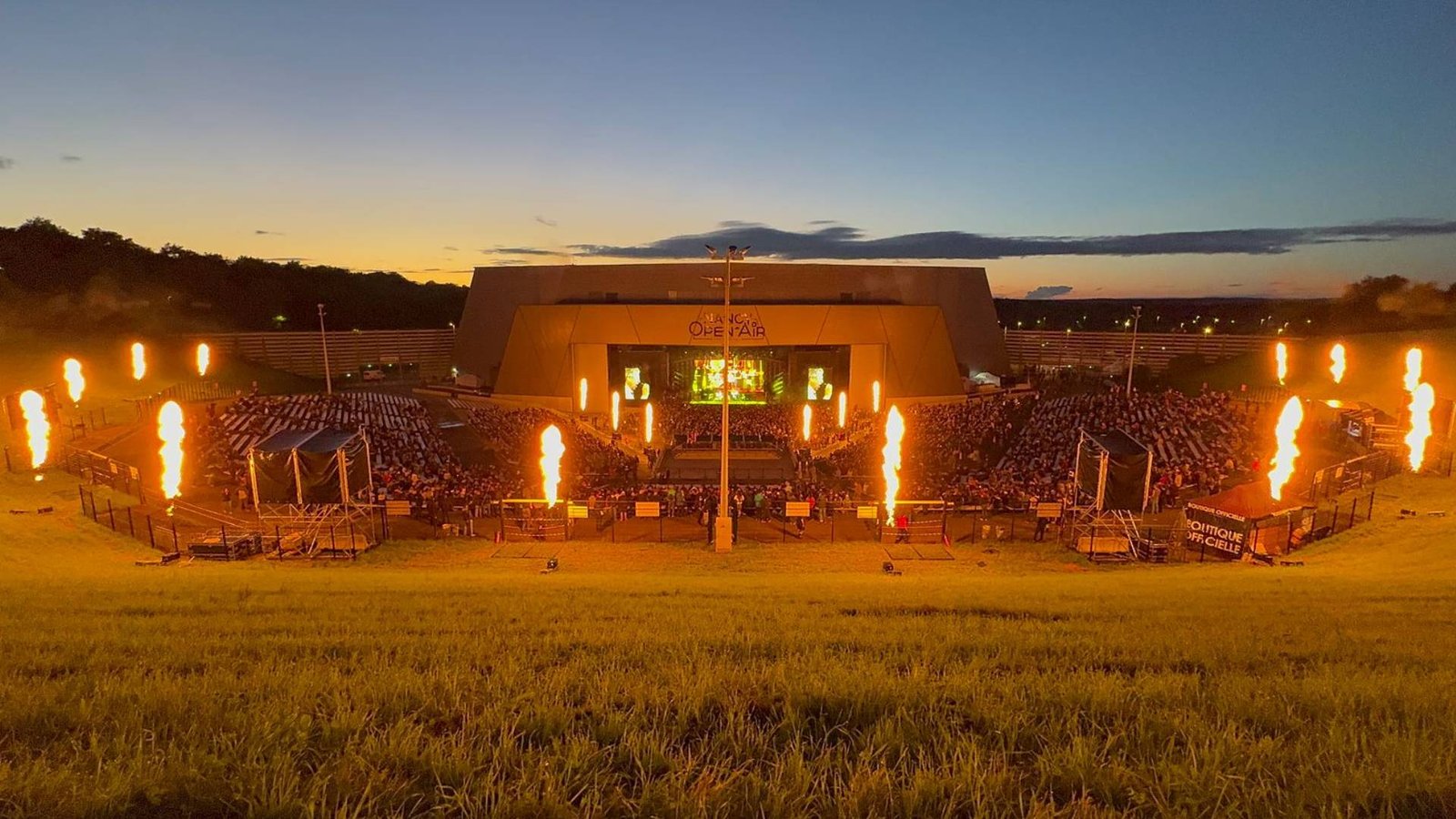
The differences between a stand-alone show and a festival flight
For a stand-alone show, we choose the time, the darkness and the running order. At a festival, the production sets them, and we write the flight around them.
The stand-alone show
- He sets the time and duration.
- He gets the total black he asked for.
- The audience is seated, facing him.
- He opens and closes the evening.
- It follows its own running order.
The flight within a festival
- His slot depends on the programme, which is running late.
- Black is a matter of negotiation, and rarely lasts long.
- The audience is standing, moving about, and watching the stage.
- It accompanies an artist.
- Its operations are aligned with those of the production control.
Who we work with in the performing arts
The Ministry of Culture’s mapping lists more than seven thousand festivals in France, nearly two-thirds of them in the performing arts. Each has its own capacity, stage and night-time constraints, and we write the flight from there.
01
Programme coordinators and artistic directors
Contemporary music, electronic music, street arts, seasonal highlights. The performance opens the festival, brings it to a close or showcases the headliner.
02
Producers, cinemas and tour organisers
Tour, one-off performance, residency: the production is designed with both the filming and the live performance in mind, and is staged identically from one city to the next.
03
Local authorities and cultural institutions
Season openings, town anniversaries, heritage festivals. We write the flight around the local narrative and discuss it with the relevant departments well in advance of the event.
04
Heritage and outdoor sites
Castles, monuments, courtyards and gardens. On these sites, drones avoid the fallout and the wider safety perimeter that a fireworks display would require.
Our latest drone shows
Each project is documented: venue, brief, set-up. The list grows after each performance.
-
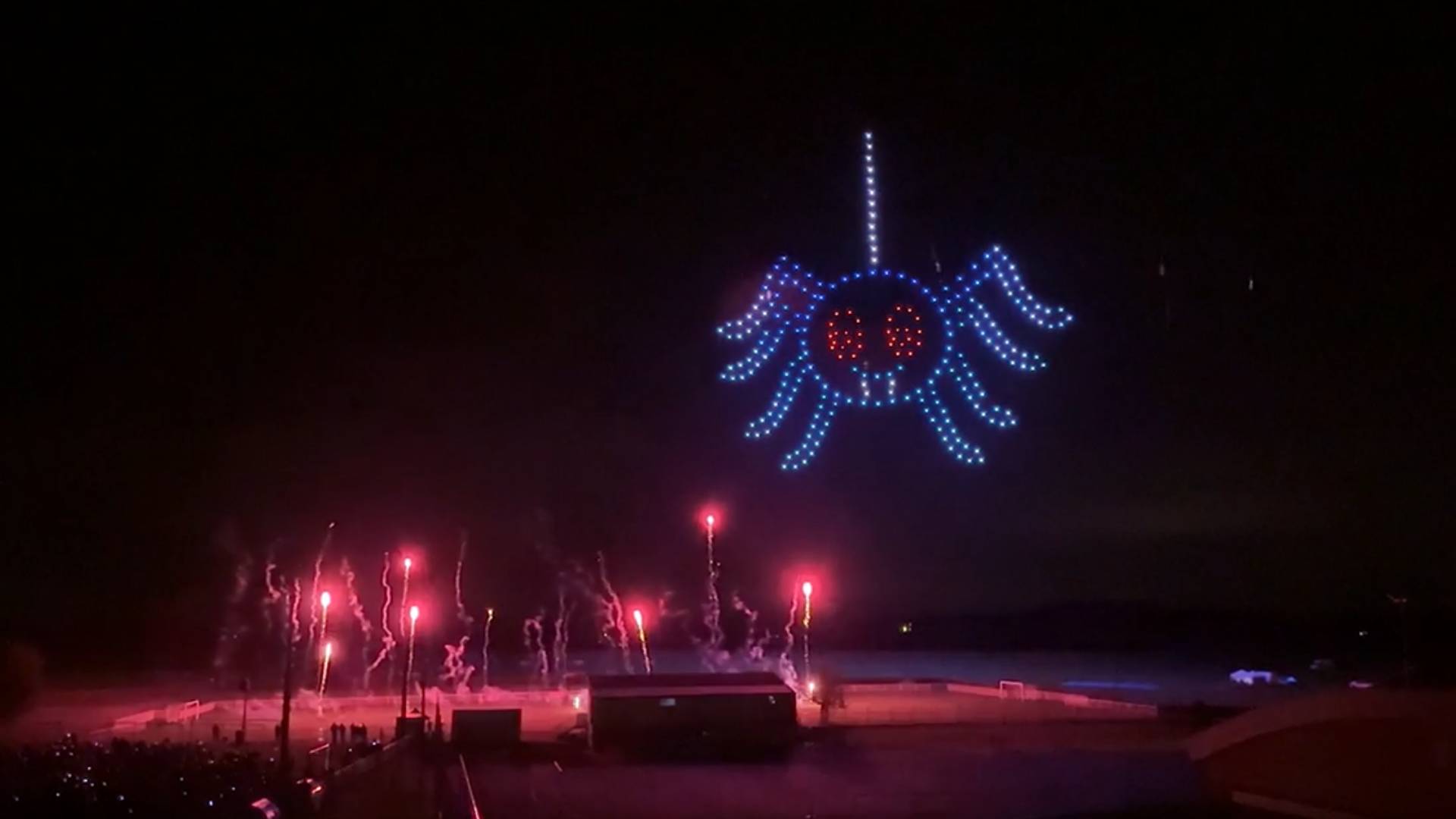
Pyrotechnic display featuring drones in Buchy
View the project: Pyrotechnic display featuring drones in BuchyA demonstration for local authorities In Buchy, we organised a technical demonstration combining a pyrotechnic display and a swarm of…
-
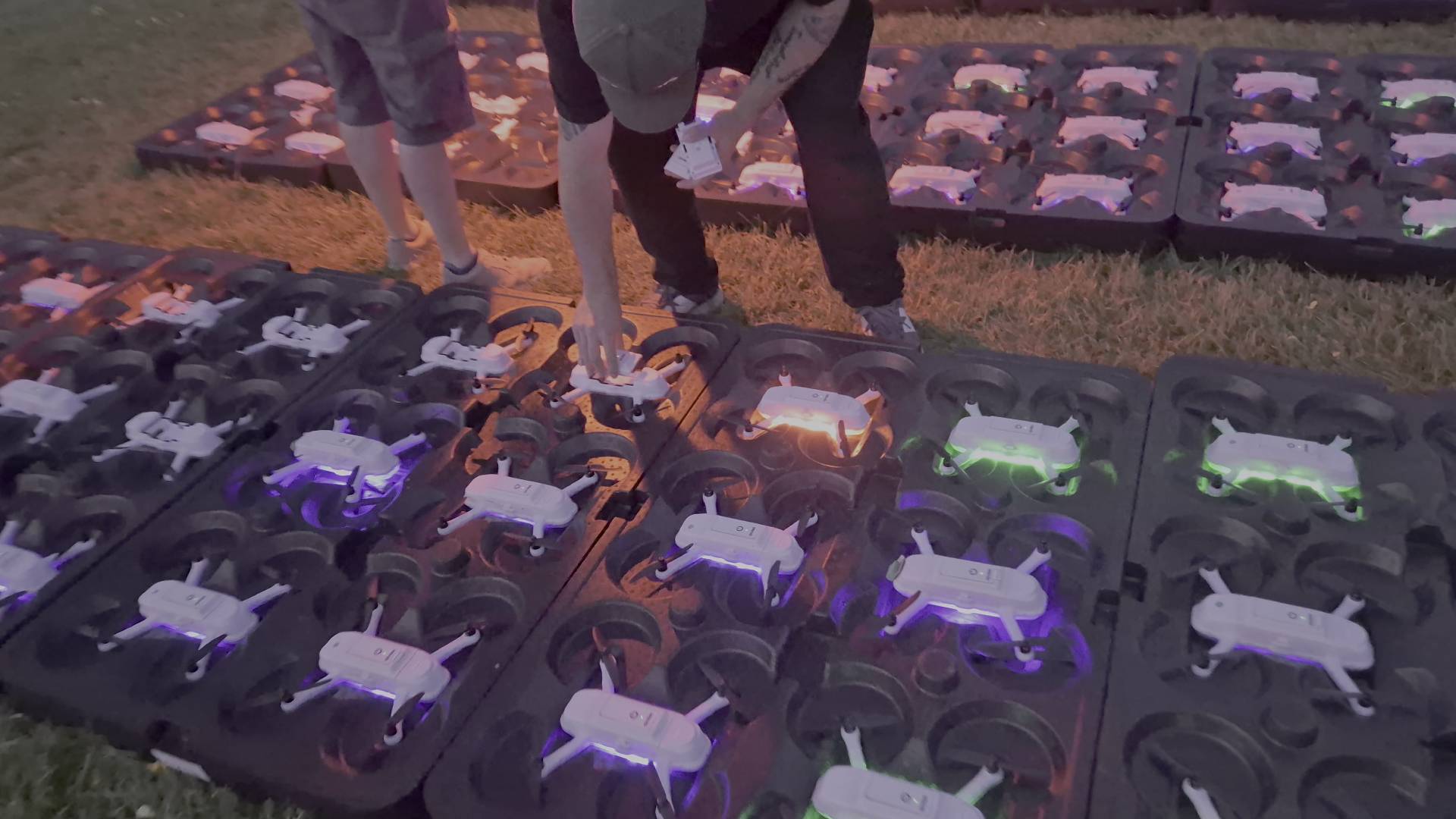
Marly-le-Roi Town Festival 2026: Drones and Fireworks
View the project: Marly-le-Roi Town Festival 2026: Drones and FireworksA town celebration in the heart of a royal park The Fête de Marly returns every June to the grounds…
Flying during a concert: stage management, lighting, audience
We settle these six points with your stage management when we write the flight.
01
Launch on the stage manager’s cue
The flight launches on your stage manager’s cue, whatever time is printed in the programme.
02
The market is changing
A set runs late, an encore goes on: the flight’s start is simply pushed back, with nothing to reprogram.
03
The stage lighting overwhelms the LEDs
Spotlights trained at the sky disperse a swarm in a second. The lighting effects are agreed with the lighting designer before a single figure is drawn.
04
The pit is upright and mobile
A seated audience has a fixed position. A pit moves, becomes denser and alters the safety distances during the flight itself.
05
No fallout over the crowd
Under a festival sound system, nobody notices that the drone is silent. We offer it because there is no fallout above a packed crowd.
06
Airspace shared with filming
Filming, giant screens, camera drones: the airspace is shared. We coordinate with the video production before filing our application.
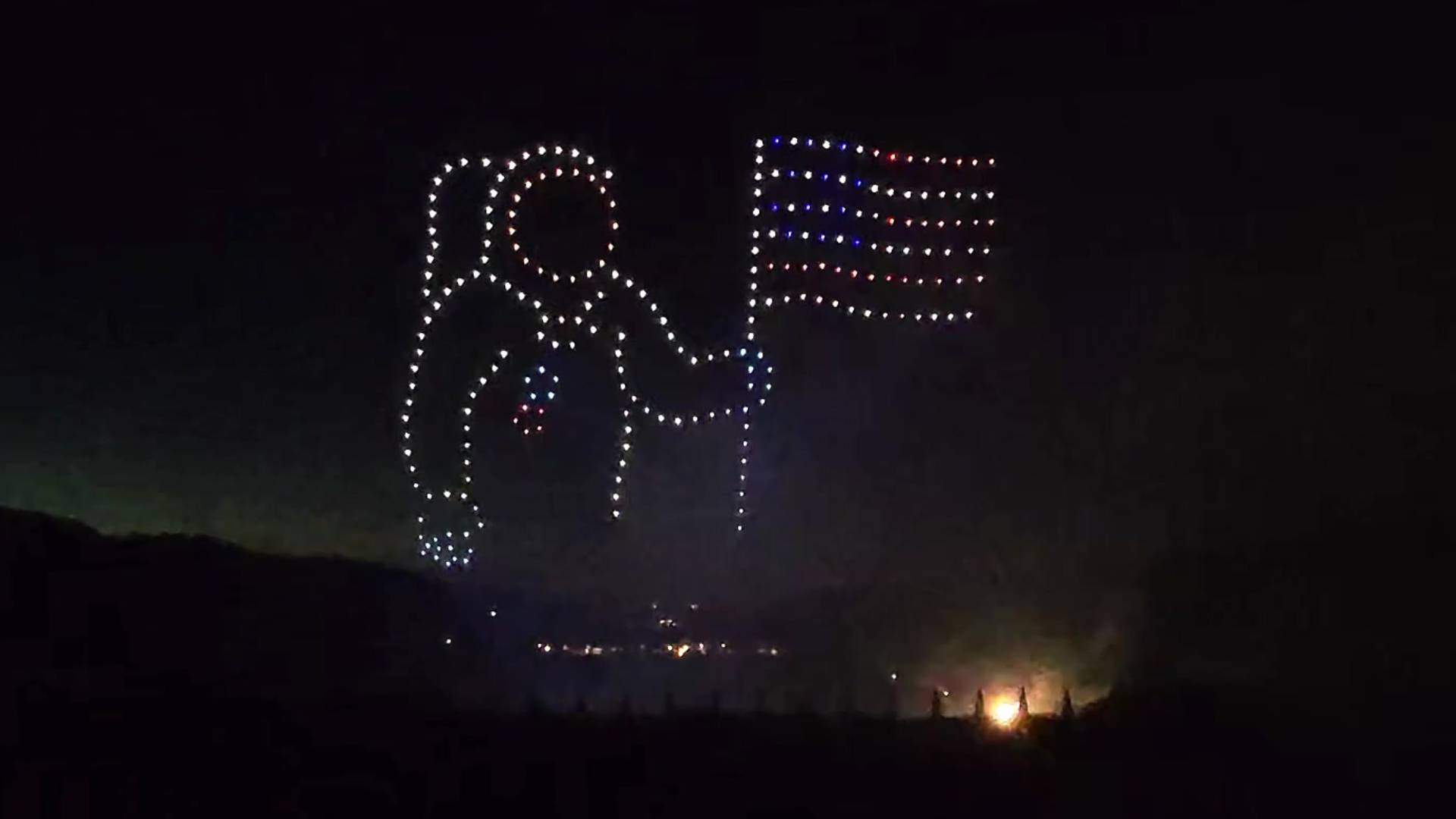
The festival programme initially on order
The first three stages take place with your stage management, before we draw a single figure.
01
The sequence of events
We read your running order before writing: who plays before, who plays after, and how many minutes the flight really has.
02
Black
Switching off the spotlights is negotiated with the lighting designer: we agree it with them before writing the figures.
03
Writing
We write a short flight, five to eight minutes, then the stage takes over again.
04
The file
SORA risk analysis, submitted to the DGAC, the prefecture and the site operator. The visualisation is reviewed at this stage.
05
The rehearsal
A test on the actual site, carried out in conjunction with your production control centre, to check that the system activates and retracts correctly. The wind threshold is set at that level.
06
Live coverage
The flight departs on the instructions of production control. Our operators remain in contact with them throughout the performance.
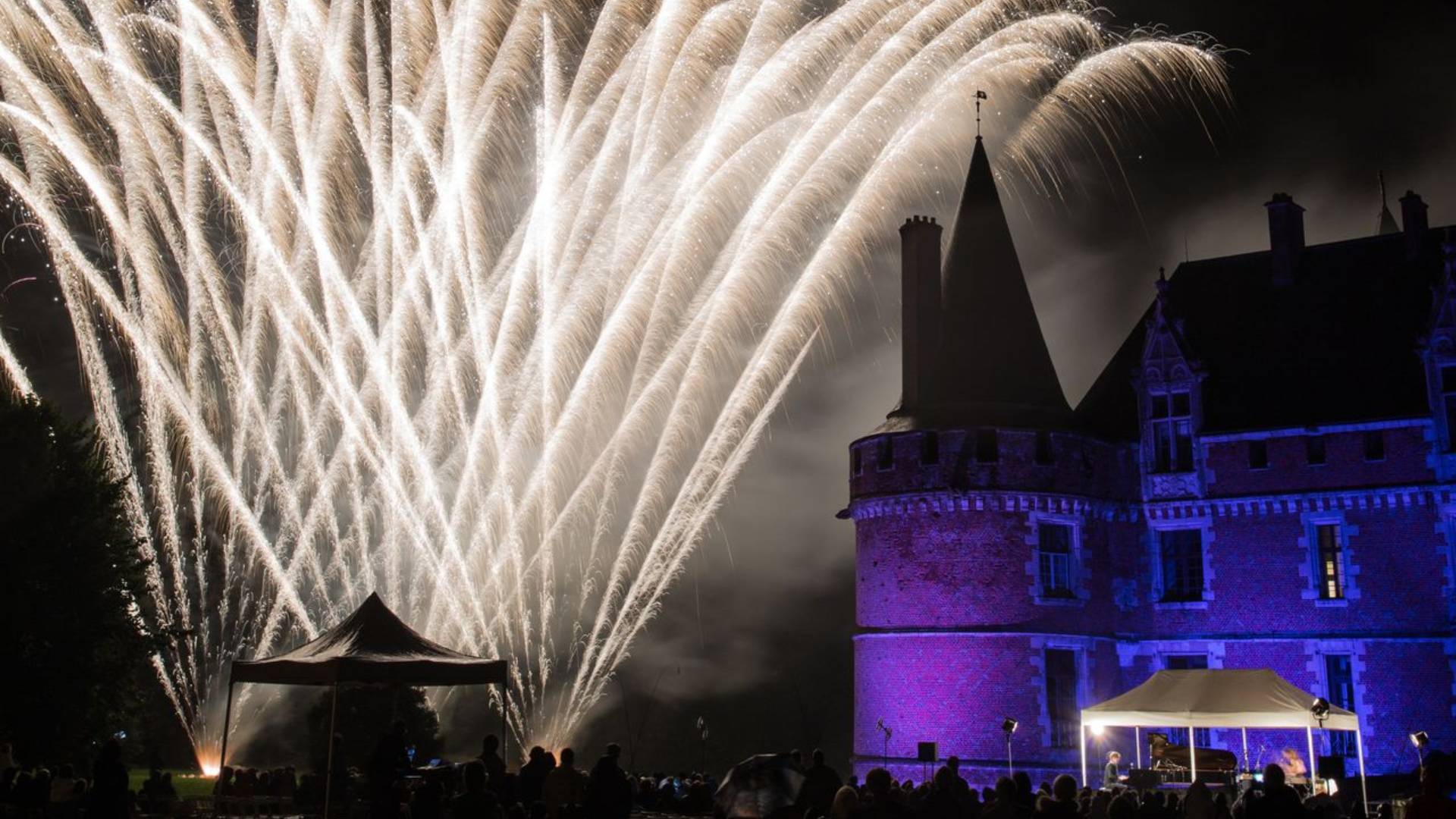
Switching off the stage during the flight
It is the first question we ask: for how many seconds can you switch off the stage?
Uplighters, a lit giant screen or an LED wall at the back of the stage wipe out the swarm. The answer to this question sets the length of the flight, its height and even the number of drones.
Benchmarks for your edition
Here are the lead times and conditions we ask you to plan for a festival flight.
Conditions for a festival flight
Key points
Time required prior to publication, including case review
2 to 6 months
Useful duration of a flight inserted into a flight path
5 to 8 minutes
The timing of when the spotlights are switched off is to be agreed with the lighting designer
Essential
Coordination with the visual production team and the production control team
Understood
Drone light show: from
€10,000
The cost then depends on the number of units, which is determined by the distance between the pit and the flight zone.
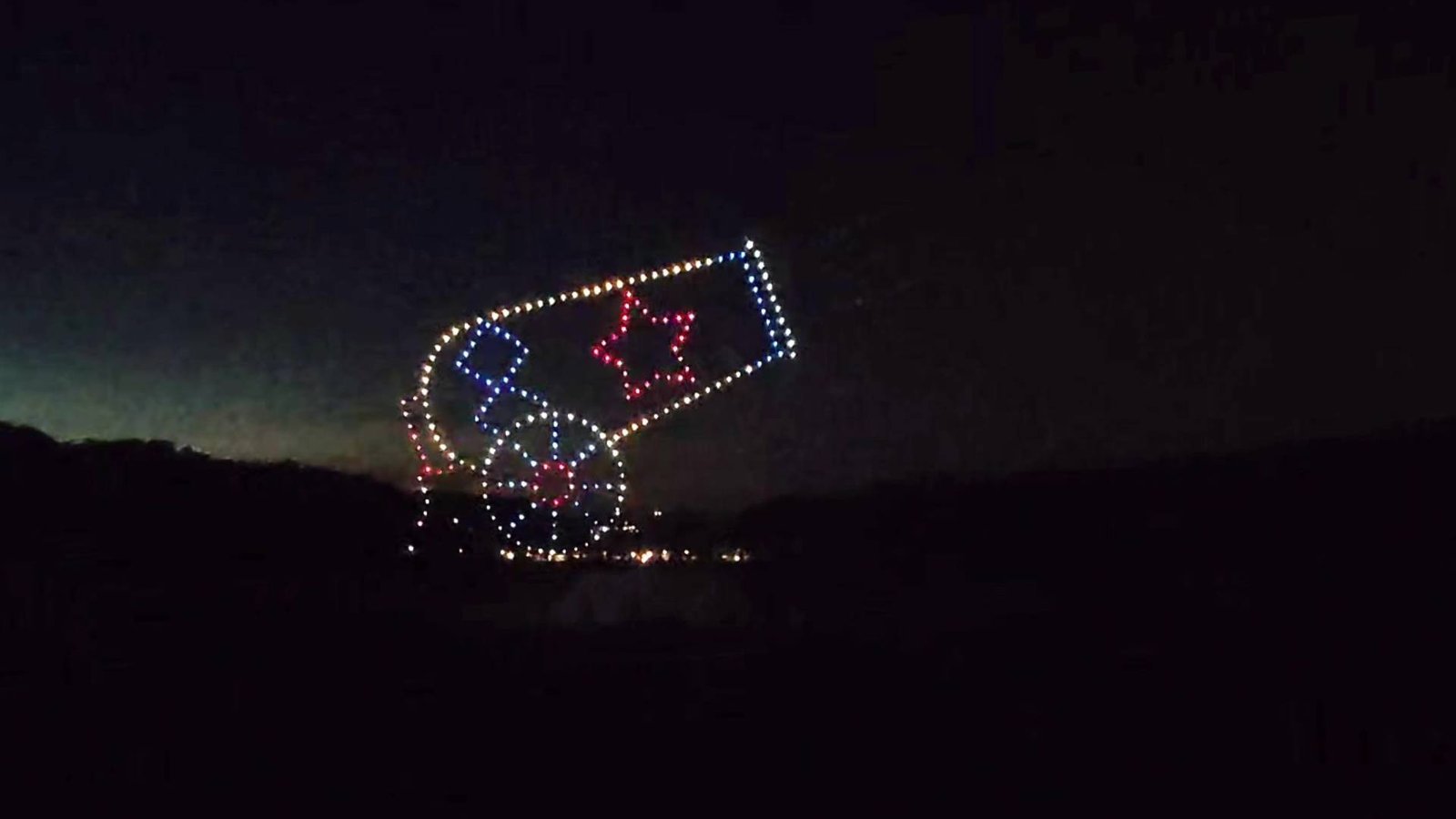
A study of your slot
Give us the venue, the date and the provisional running order. Within 48 hours you receive a letter of intent and a costed estimate. If the planned slot does not allow the darkness needed, we tell you before quoting.
Your questions about drones at festivals
How long does a festival flight take?
Five to eight minutes. We write a flight that sets its image and then hands the view back to the stage: any longer and it eats into the stage programme.
Do we really need to cut to black?
Yes, at least the spotlights pointing at the sky. Drone LEDs cannot compete with a wall of light: without a blackout, the audience sees pale dots instead of a figure. We agree this with your lighting designer before writing.
What happens if the set falls behind schedule?
The flight launches on your stage manager’s cue, so it waits for the end of the set, with no reprogramming.
Is it possible to fly over a pit whilst standing?
Subject to conditions. Flying over an audience falls under a specific category of European Regulation 2019/947 and requires a dedicated risk assessment. A mobile pit requires wider buffer zones than a seated audience.
Can we draw the name of the edition or an artist?
Yes. A name or a logo can be read from across the esplanade and stays sharp on camera feeds and giant screens.
How does this tie in with the filming?
The airspace is shared with camera drones. We consult your video production before filing the application, and the flight paths are agreed together.