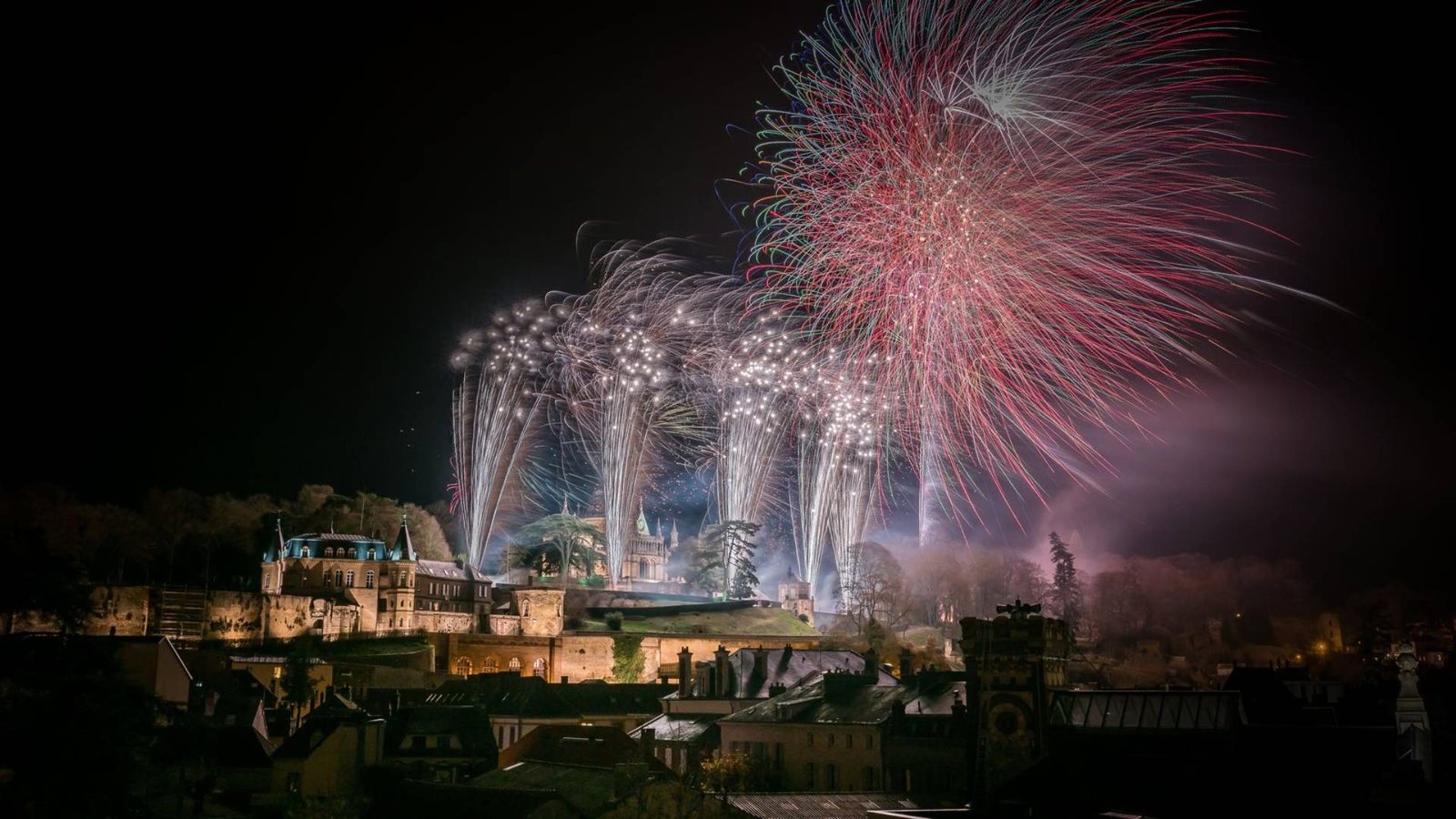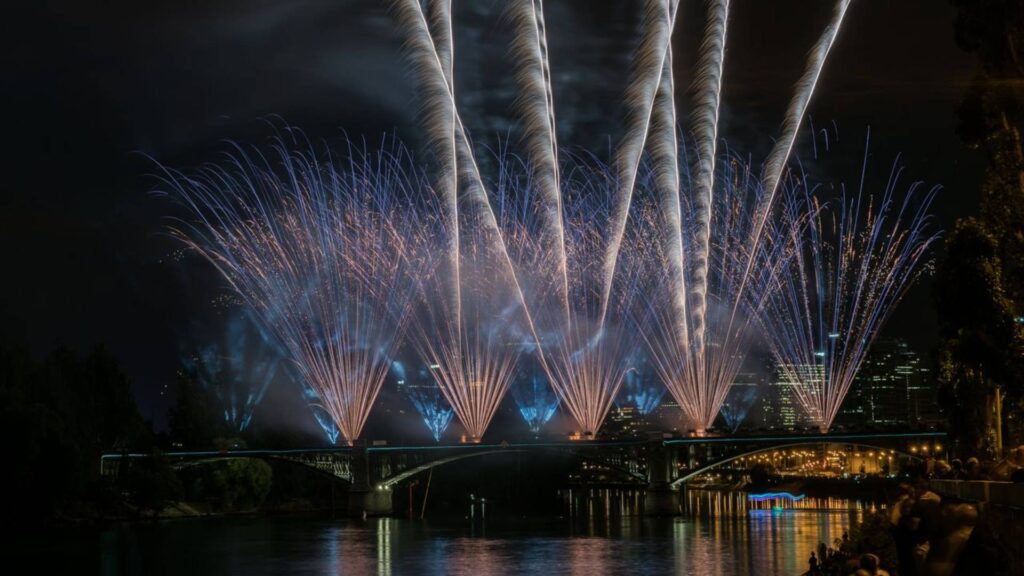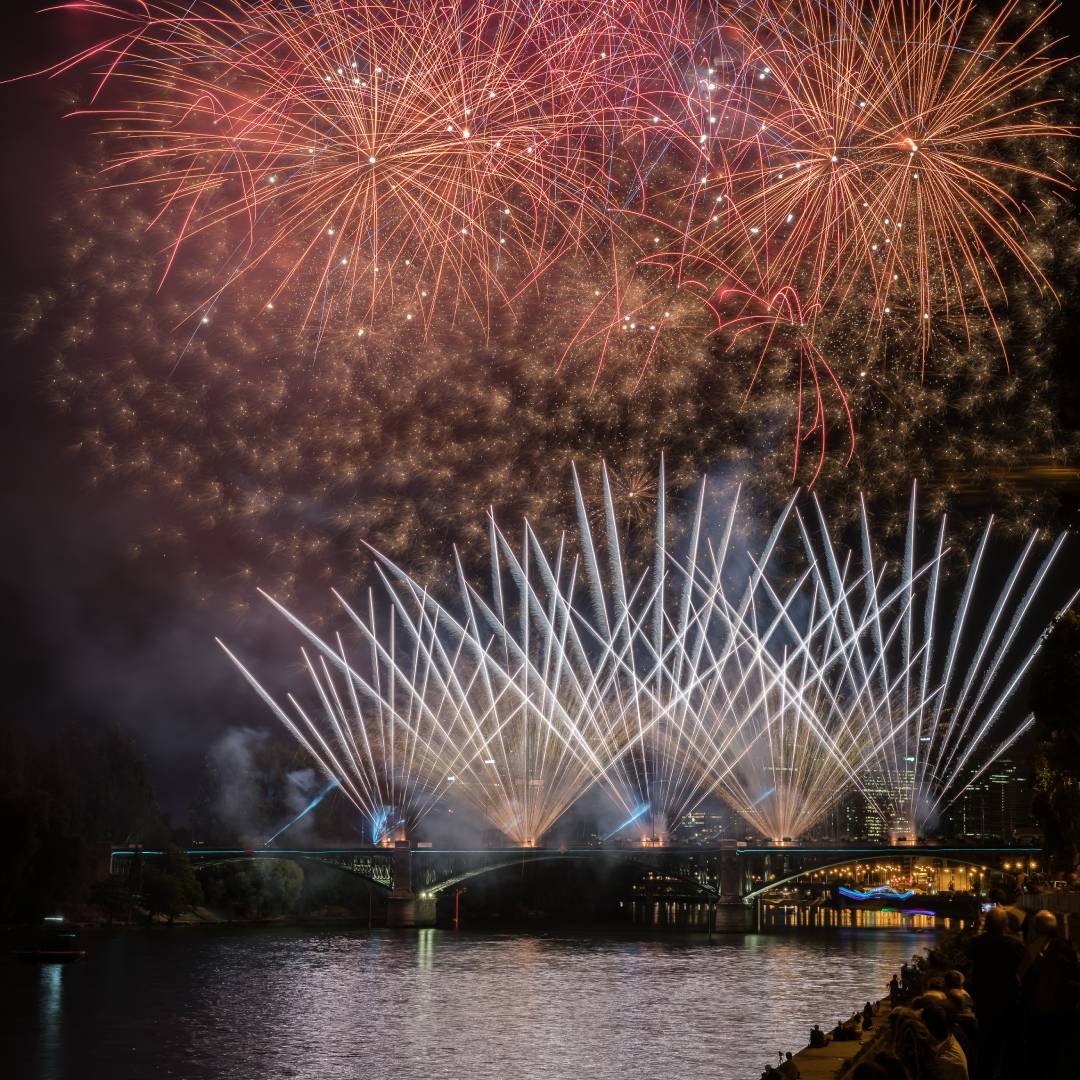
Pyrotechnics spans nearly thirteen centuries of invention, from the discovery of gunpowder by Chinese alchemists to the drone light shows. This story weaves together chemistry, warfare, celebration and the performing arts. We look back at the key milestones in the history of fireworks displays, the families of pyrotechnicians and the technological breakthroughs that have shaped the craft, shedding light on the profession as practised today by the teams at Celesta, both in France and internationally.
Chinese origins: the invention of black powder
It all began in China, during the Tang dynasty, in the 7th century. Taoist alchemists were searching for an elixir of immortality. Instead, they ended up with the opposite: a mixture that ignites and explodes. The physician Sun Simiao recorded one of the first known recipes. Black powder was born, consisting of approximately 75 per cent saltpetre, 15 per cent charcoal and 10 per cent sulphur. This proportion, which remained virtually unchanged for a thousand years, still governs the combustion of fireworks displays today.
During the Song dynasty, the practice became widespread. The Chinese would stuff the powder into bamboo stalks, and later into paper tubes. In the 12th century, the first firecrackers were set off during festivals, believed to ward off evil spirits. Fireworks displays already existed as a collective ritual long before they became a courtly art form.
The Italian Renaissance: fire becomes an art form
Gunpowder reached Europe via trade and military routes. It was in Italy, during the Renaissance, that fireworks displays took on a new status. As early as the 15th century, Florence organised fireworks displays for St John’s Day. Venice and the princely courts vied with one another in ingenuity. Italian pyrotechnicians were no longer content merely to make a noise. They created architectural displays of fire, decorated wooden contraptions, and plays of colour achieved by carefully measuring out metal salts.
The art of pyrotechnics is built upon expertise passed down through the family. The trades we recognise today were already present back then: selecting chemical compositions for colour, calculating trajectories, and staging a narrative.
Ruggieri and the Golden Age of Court Fires in France
France was introduced to these spectacular displays thanks to Catherine de’ Medici. When she married Henry II in 1533, she brought Florentine pyrotechnicians to the court. A taste for royal fireworks took hold and endured for several centuries, from the Louvre to the gardens of Versailles.
One family dominated this period: the Ruggieris. Originally from Bologna, the brothers settled in Paris around 1730. In August 1739, they staged a now-famous fireworks display at Versailles to mark a royal wedding. Ten years later, in 1749, Gaetano Ruggieri orchestrated the fireworks display in London set to Georg Friedrich Handel’s *Music for the Royal Fireworks*. The Ruggieri company, founded in 1739, has endured through changing regimes and the centuries.
From the 20th century to musical synchronisation
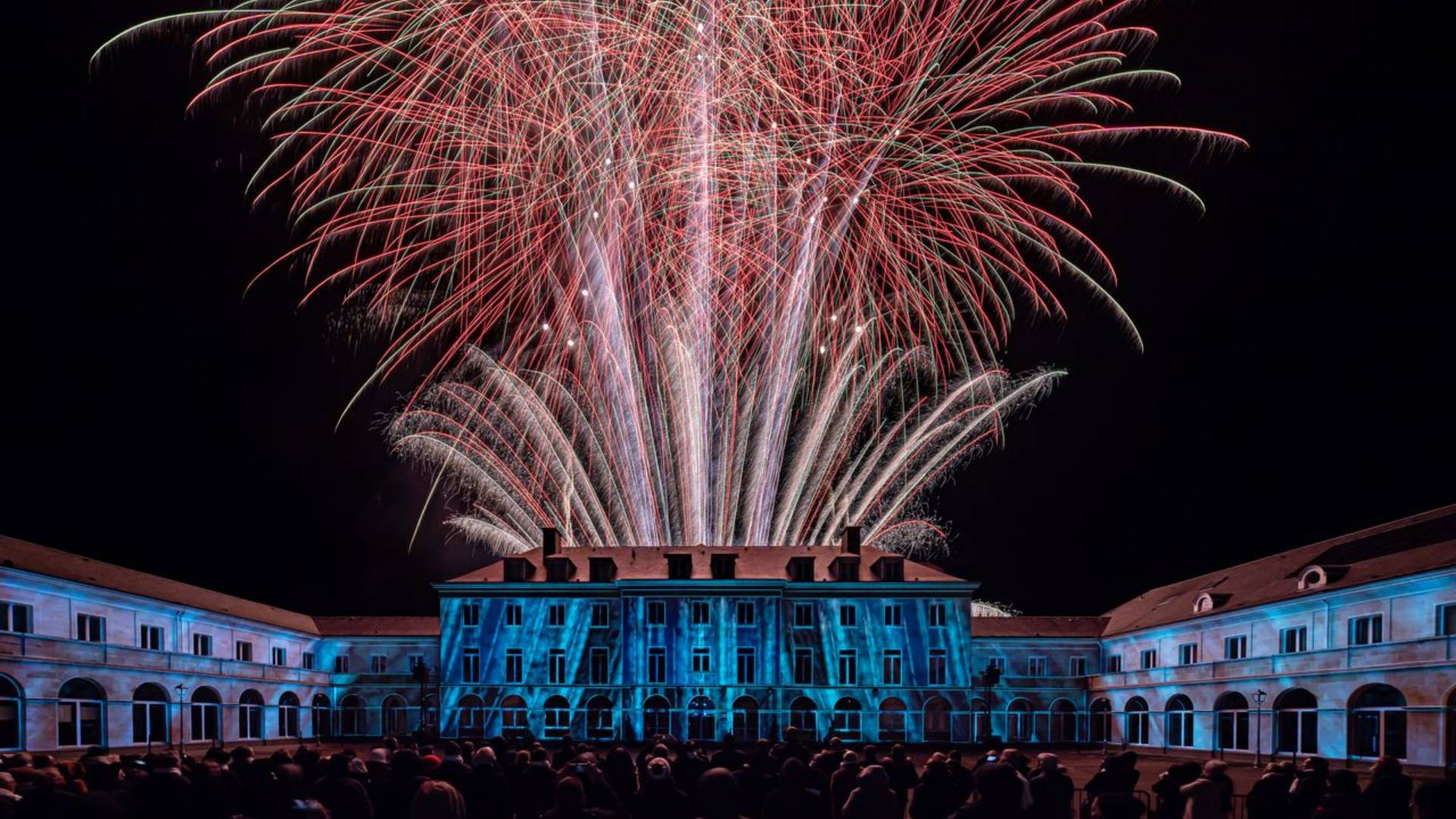
The 20th century brought modern colour chemistry, electricity and then electronics. Manual firing gave way to automated firing. Pyrotechnicians achieved greater precision and safety. Timecode then made it possible to synchronise each ignition to a soundtrack: each firework bursts on a specific note, to the nearest hundredth of a second.
This requirement for musical synchronisation remains at the heart of the pyrotechnic shows that Celesta designs, both in France and abroad. We time these displays to the fraction of a second, with meticulous planning, rehearsals and coordinated production control for sound and light. For every display, our teams draw up a firing plan, a safety perimeter and a prefecture declaration.
Today’s light drones and special effects
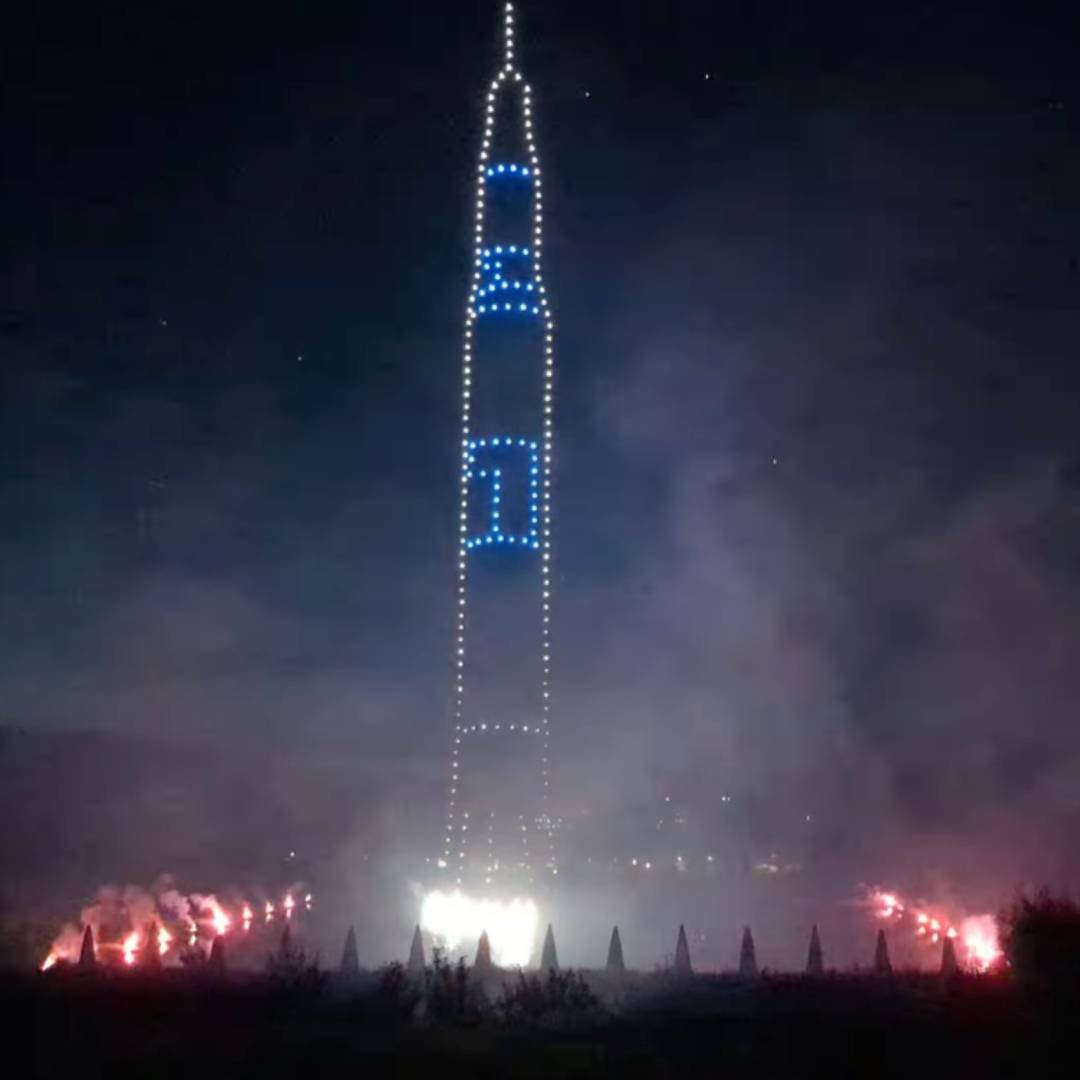
The latest major milestone is taking place in the sky, without any fireworks. In 2018, at CES in Las Vegas and then at the opening ceremony of the Pyeongchang Winter Olympics, Intel lined up 1,218 light drones in formation – a record recognised by Guinness World Records. The previous record, of 500 drones, dated back to 2016. Drone displays are emerging as a new form of expression: silent, programmable, reusable and generating less waste.
In our shows, we combine drones with fireworks. A swarm of drones traces out a logo, a face, a continuous movement through the night; the pyrotechnics provide the heat, the blast, the physical thrill. The two forms of expression combine, often with video mapping, cold sparks or stage flames. This is where Celesta excels as a special effects provider: bringing these techniques together within a single narrative, both indoors and outdoors.
Celesta: expertise in special effects in France and internationally
Based in Aigremont, in the Yvelines, with a presence in Normandy, Celesta designs and produces bespoke pyrotechnic shows. Fireworks displays for local authorities and heritage sites, drone shows, synchronised concerts, high-end private events, and stage special effects for live performances and film shoots.
The regulatory framework governs every project. In France, Decree No. 2010-455 of 4 May 2010 governs the placing on the market of explosive products, and the setting off of Category F4 fireworks requires a Level 2 qualification certificate. Drone flights are governed by European Regulation 2019/947 of 24 May 2019, which has been in force since 31 December 2020. Celesta’s pyrotechnicians operate within this dual framework, supported by a licensed storage facility which gives the company logistical autonomy. This technical and administrative expertise applies equally to a large public fireworks display in front of tens of thousands of spectators as it does to a production abroad.