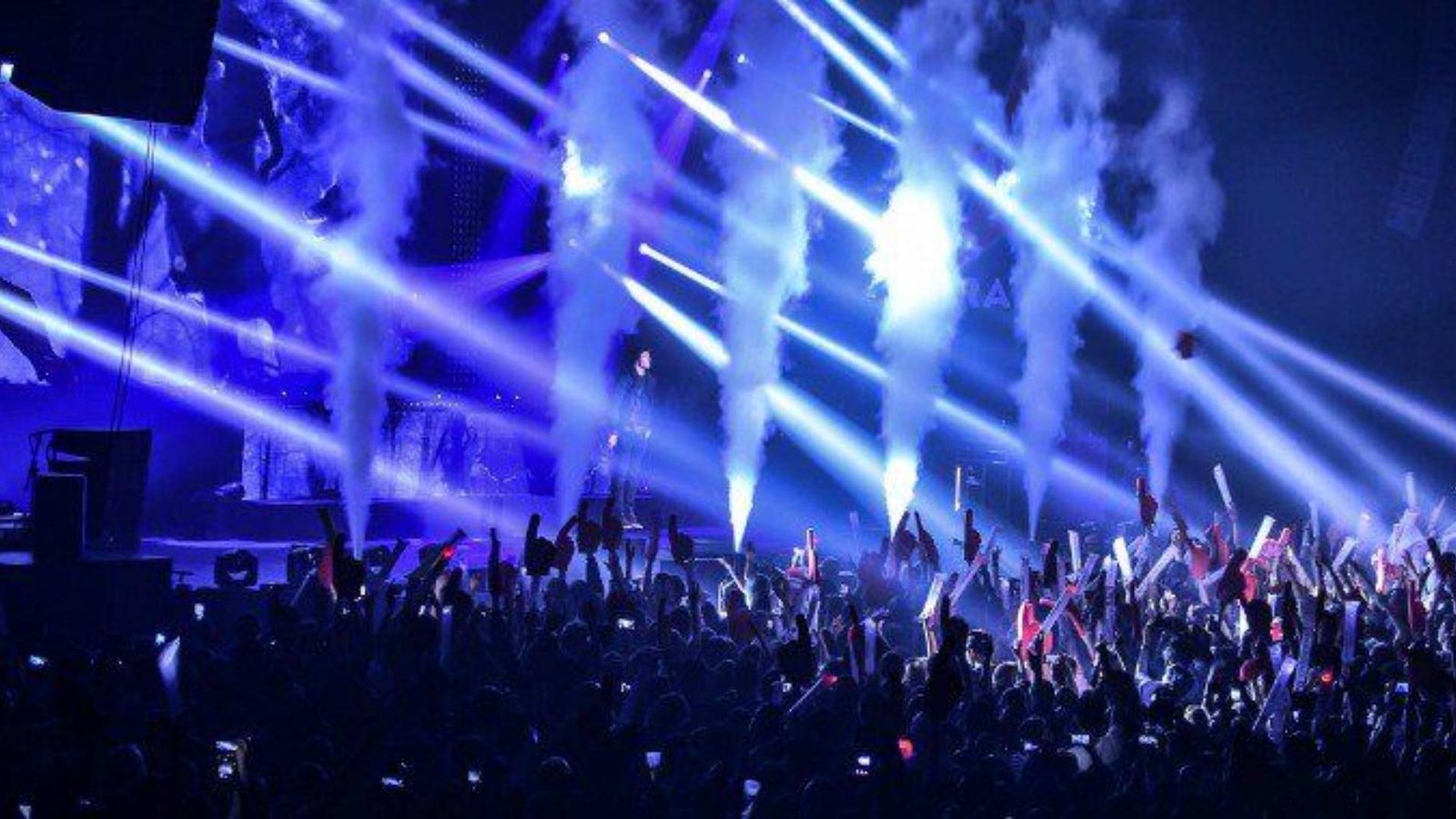
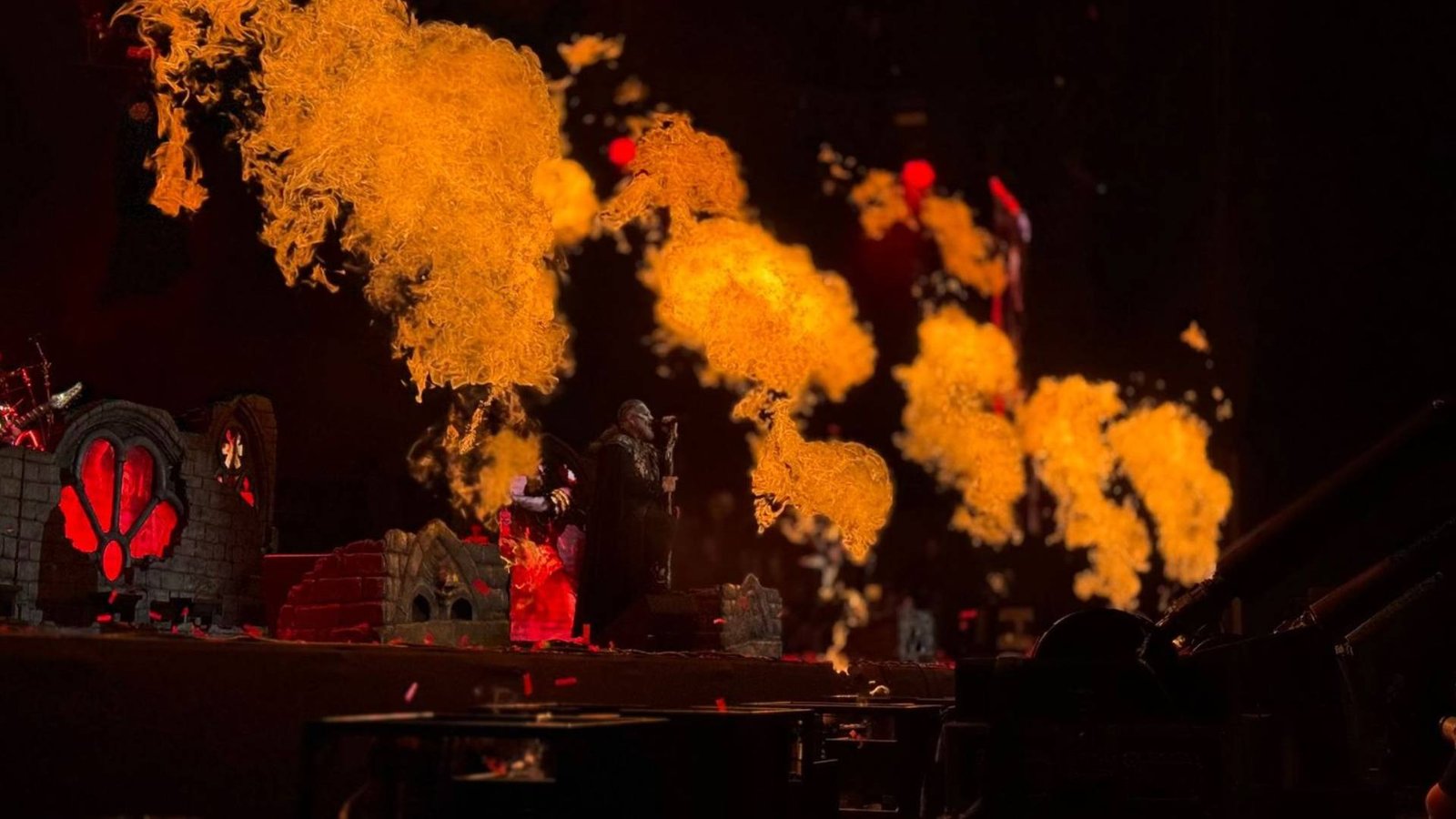
A flame shooting up during the chorus, a shower of sparks highlighting an artist’s entrance, a curtain of smoke isolating a silhouette. The teams at Celesta design these stage special effects with the director. This article covers the types of effect, how they are cued, their safety and their regulatory framework.
Stage special effects: flames, smoke, sparks and CO₂
A stage special effect is a technical device that produces a specific visual or auditory sensation on a stage, in a theatre, auditorium, etc., or outdoors. Flames, smoke, sparks, confetti, CO₂ jets: we match each special effect to a specific directorial purpose.
Demand has kept pace with the vitality of the performing arts. The National Centre for Music recorded nearly 70,000 ticketed concerts in 2024, attended by 38 million spectators, generating 1.6 billion euros in ticket sales.
The main types of stage special effects
Stage special effects can be divided into broad categories, each with its own conventions:
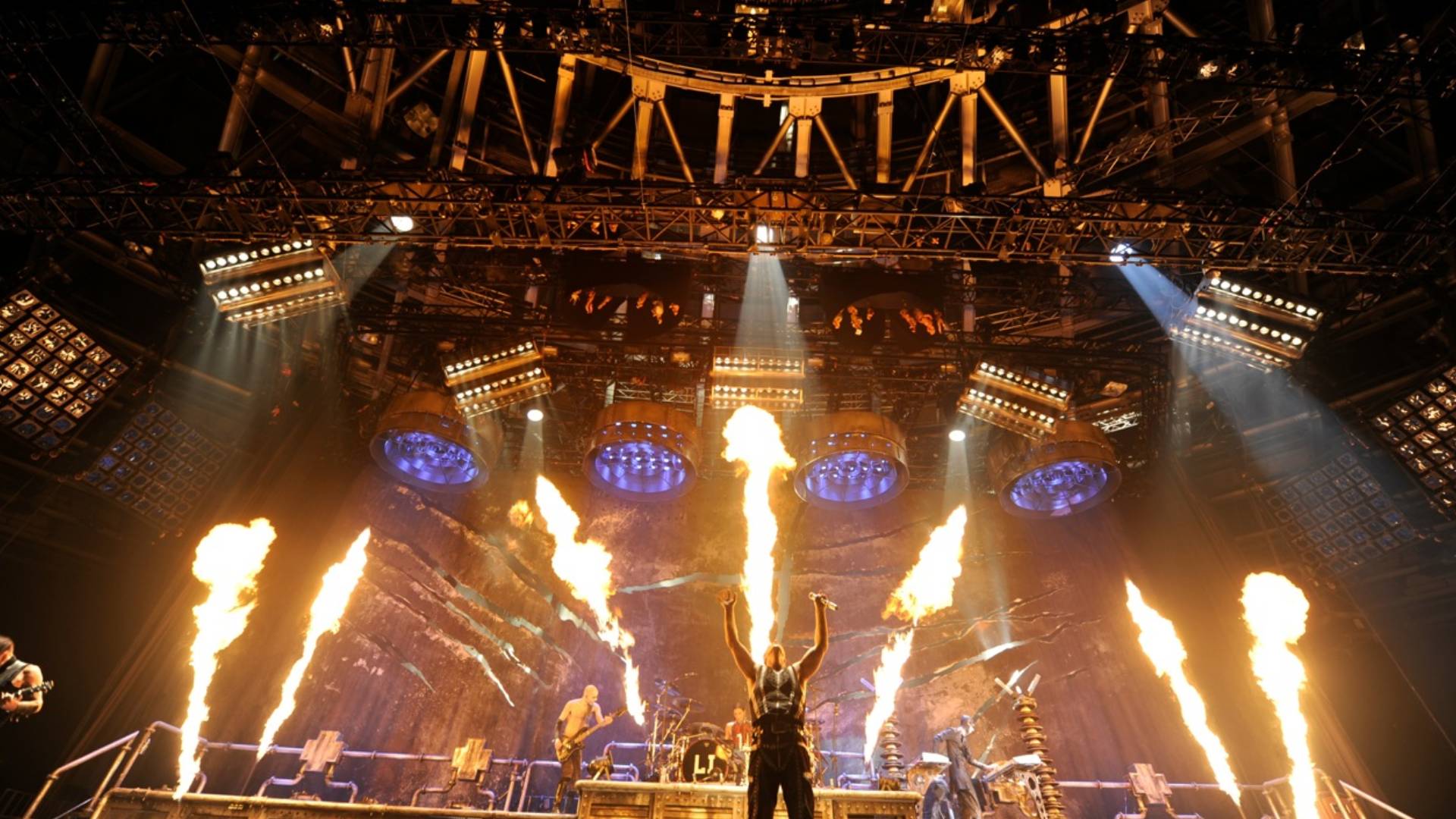
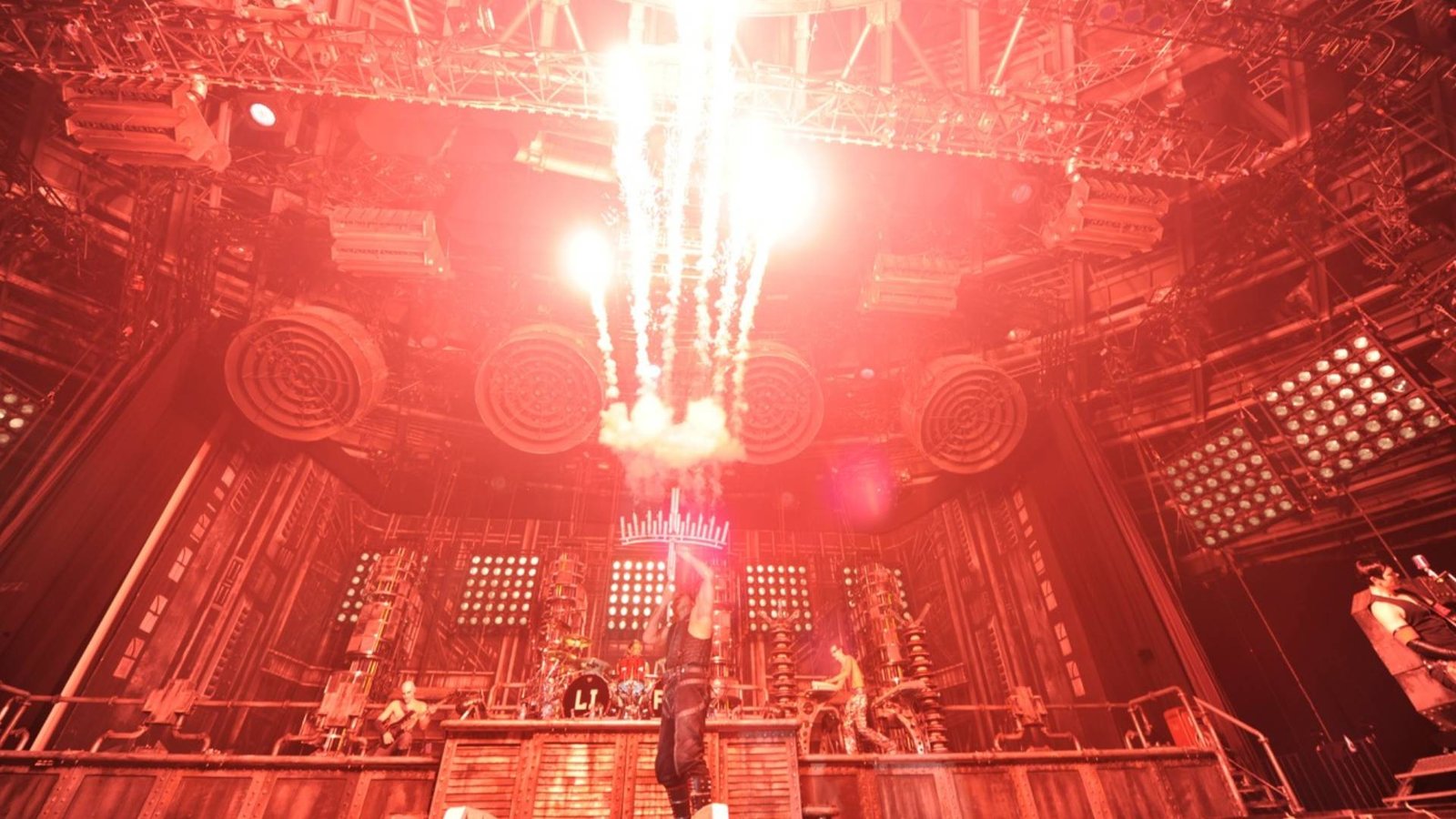
- Stage pyrotechnics include jets, showers of sparks, comets, fire pots, cascades and cannon shots, all precisely timed to suit the show.
- Real flames – whether straight, angled or computer-controlled – create walls of fire, fireballs or fire pools.
- The smoke creates a more pictorial effect: columns of colour, thick smoke creeping along the ground, jets of CO₂, atmospheric mist.
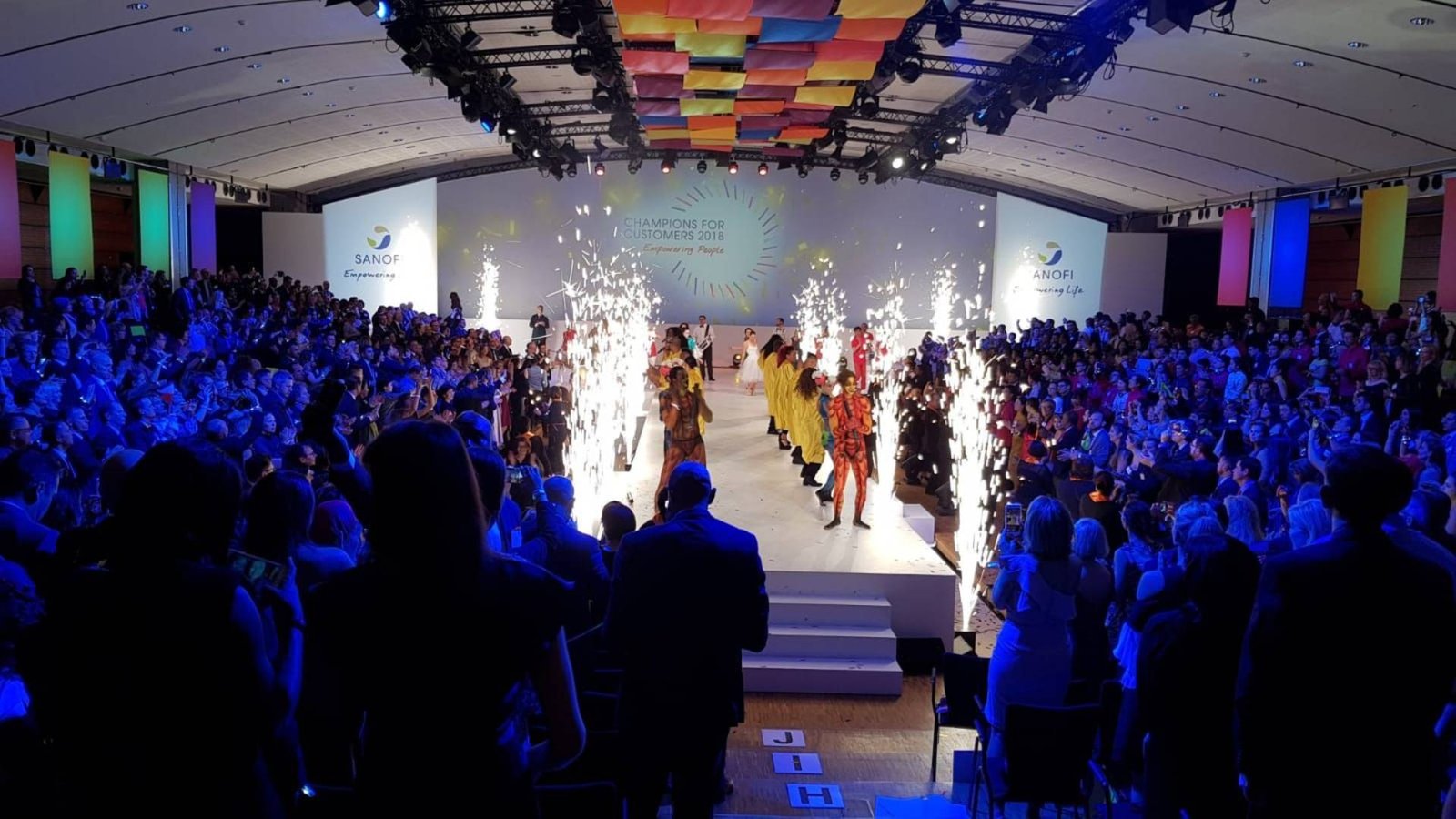
Two types of special effects have become increasingly popular for indoor use. Cold sparks, produced by generators of varying heights – some of which rotate – project a brilliant, flameless spray at a low temperature.
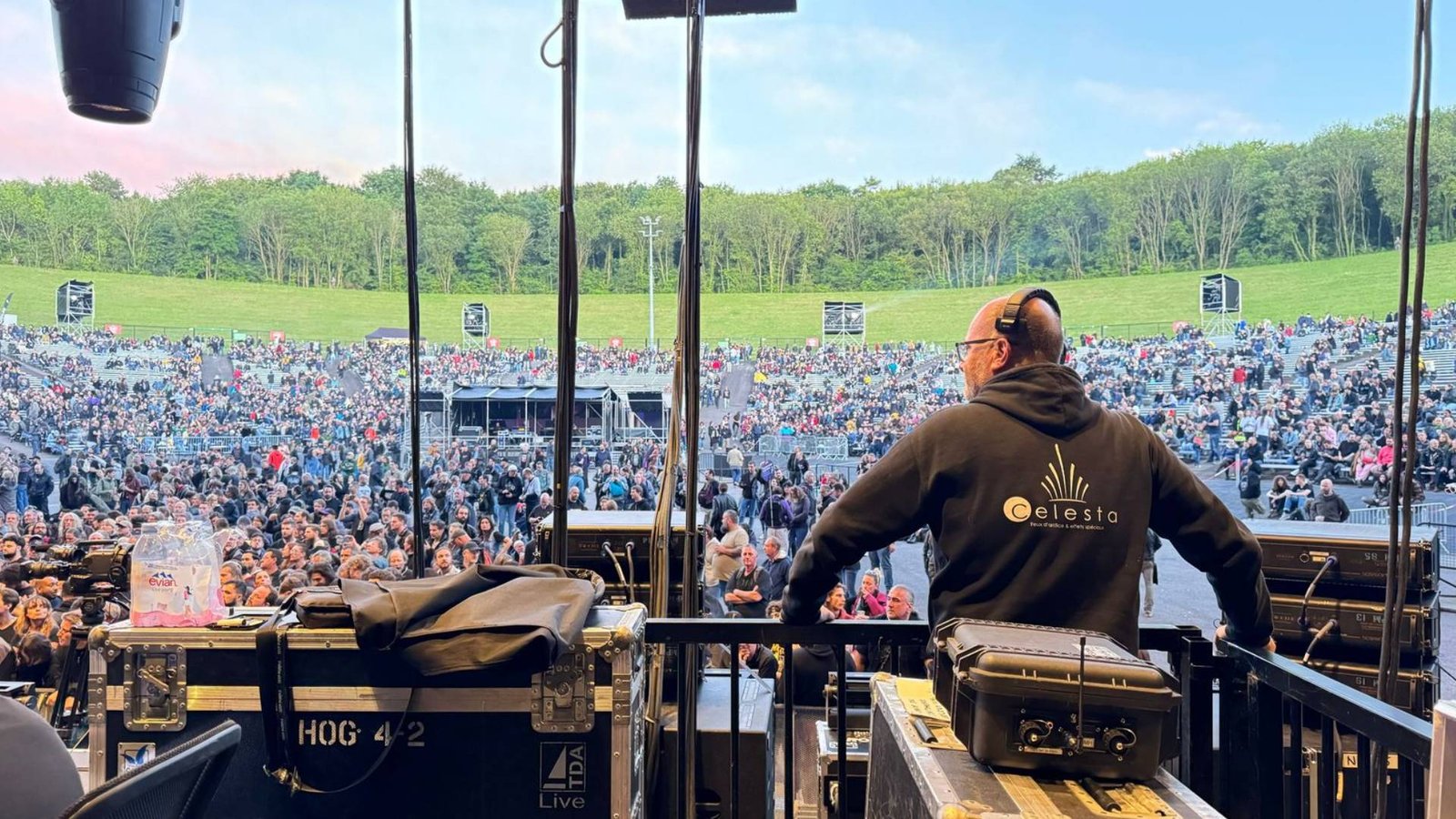
Confetti and streamers – whether raining down, exploding or being shot out – often bring a finale to a close. Falling balloons, foam, bubbles or simple stage fans round off the range of effects, creating striking visuals at a reasonable cost. On a festival stage such as that of Les Vieilles Charrues, these elements combine in a matter of seconds to bring a set to a close.
The director and the pyrotechnician: a technical collaboration
We build the effect into the director’s script, just like lighting or sound. The question posed to the Celesta teams remains the same from one project to the next: what should the audience be feeling at that precise moment?
The work begins with an interpretation of the artistic vision, followed by its technical realisation. Each trigger is set to a timecode, synchronised with the music and the lighting movements. A spark display that lasts too long detracts from a chorus; a poorly positioned flame overwhelms an actor. The timing is down to a tenth of a second. Celesta’s pyrotechnicians design their special effects plan in advance, test it during rehearsals, and then operate it from production control on the day itself.
Safety and the regulatory framework: the unseen side of the job
In France, the use of Category T2 pyrotechnic articles intended for the theatre and Category F4 fireworks is governed by the F4-T2 qualification certificate, as set out in Decree No. 2010-580 of 31 May 2010 and the Order of the same date, which can be consulted on Légifrance. This certificate, issued at Level 1 or 2, attests to knowledge of the products, their use and the risks involved.
Not all effects are pyrotechnic. Cold sparks, for example, produce a spray whose temperature remains low – around 23 °C according to manufacturers – and some machines have passed the APAVE flammability and toxicity tests for premises open to the public. For a venue, this distinction determines the necessary declarations, safety distances and the area that must be kept clear. The teams at Celesta deal with this aspect right from the quote stage, with a licensed storage facility that gives them genuine logistical autonomy.
Celesta, a special effects provider in France and internationally
Celesta, based in Aigremont in the Yvelines, designs and produces bespoke special effects for concerts, festivals, private and sporting events, as well as for television and film productions. Every enquiry is subject to a dedicated technical assessment, from the initial sketch right through to production control.
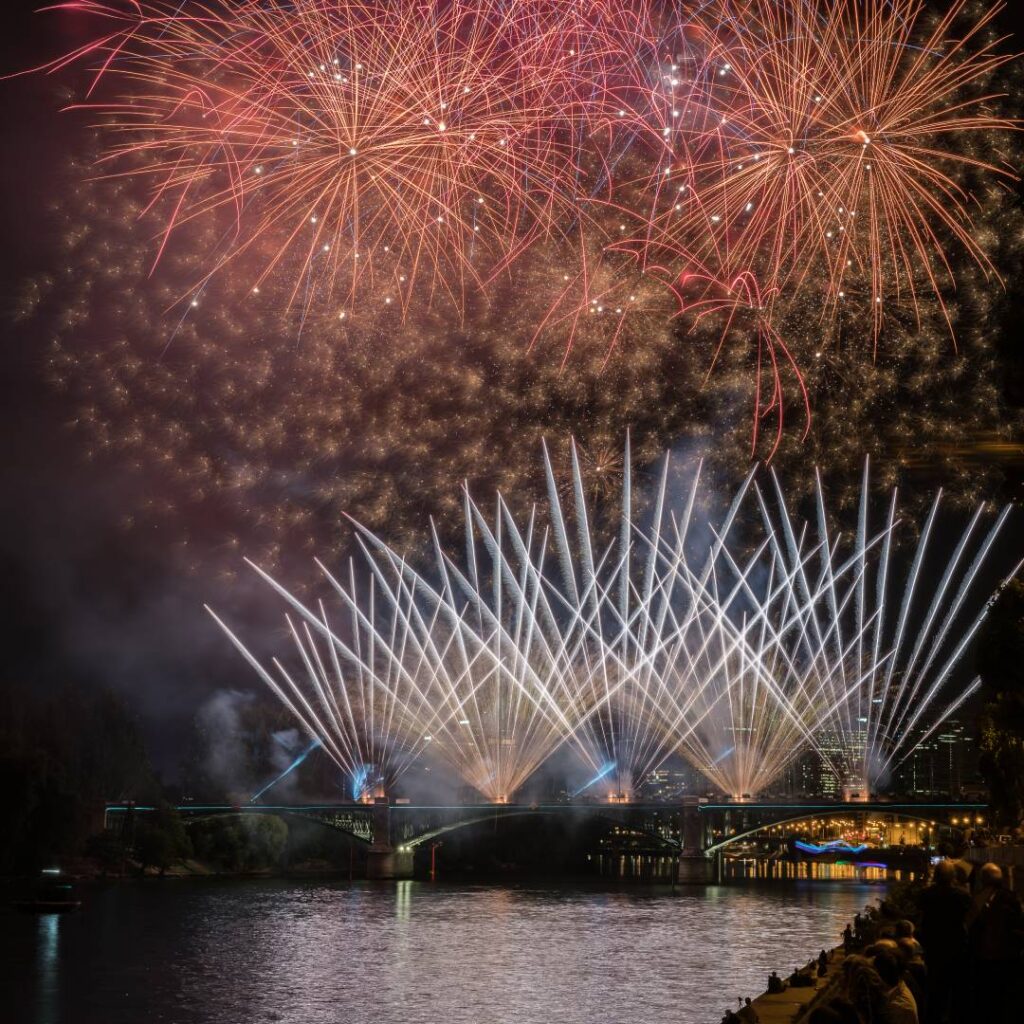
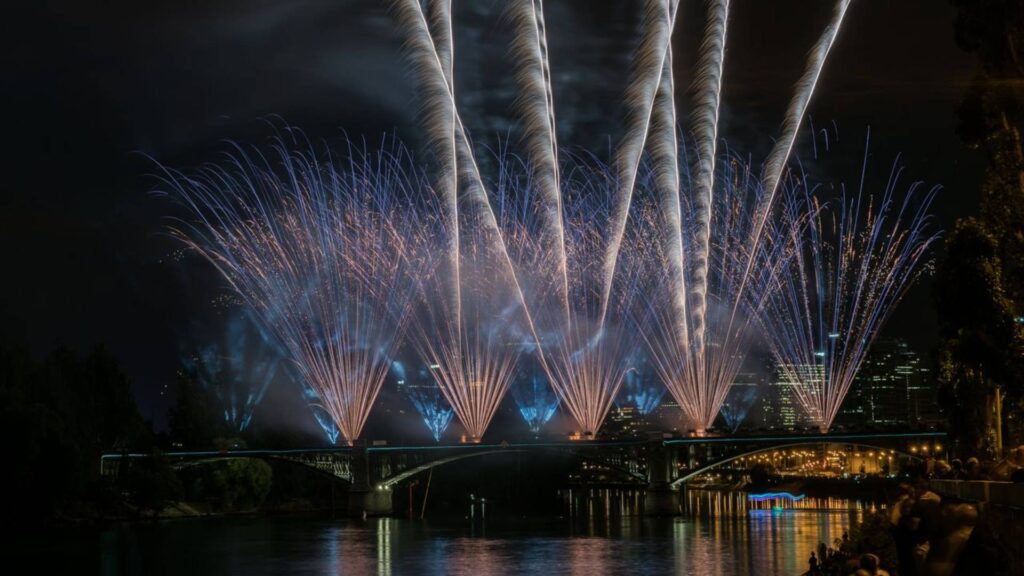
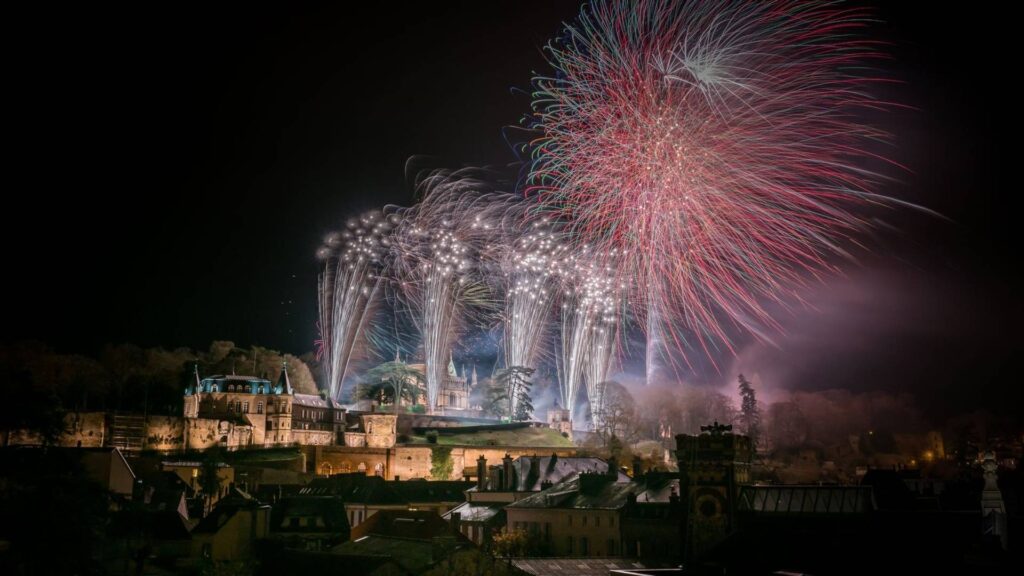
Our productions range from large-scale public fireworks displays to meticulously choreographed effects on a television set. The teams have worked in front of more than 700,000 spectators on the Champs-Élysées for a New Year’s Eve celebration, at the Carrousel du Louvre for a product launch, as well as in Dubai, Guangzhou, Mulhouse, Rouen and at the Château de Chantilly. When it comes to concerts, Celesta’s pyrotechnicians have worked on projects for artists such as David Guetta, Kungs and Lost Frequencies, providing stage pyrotechnics and special effects. Our dual artistic and technical expertise serves local authorities, event agencies and tour producers alike.
Getting in touch with the Celesta teams at an early stage allows plenty of time to plan, test and finalise each sequence, both in France and abroad.