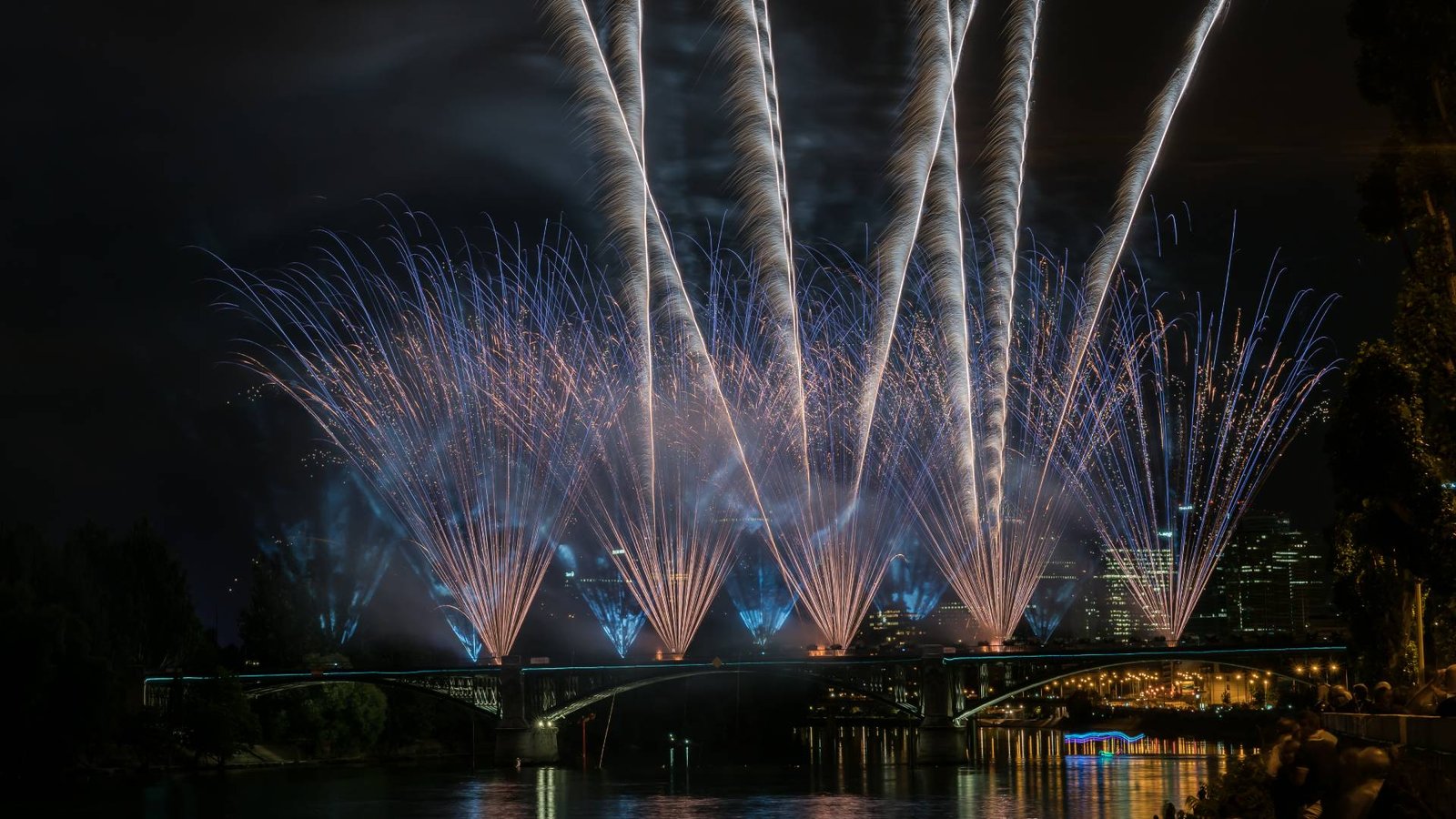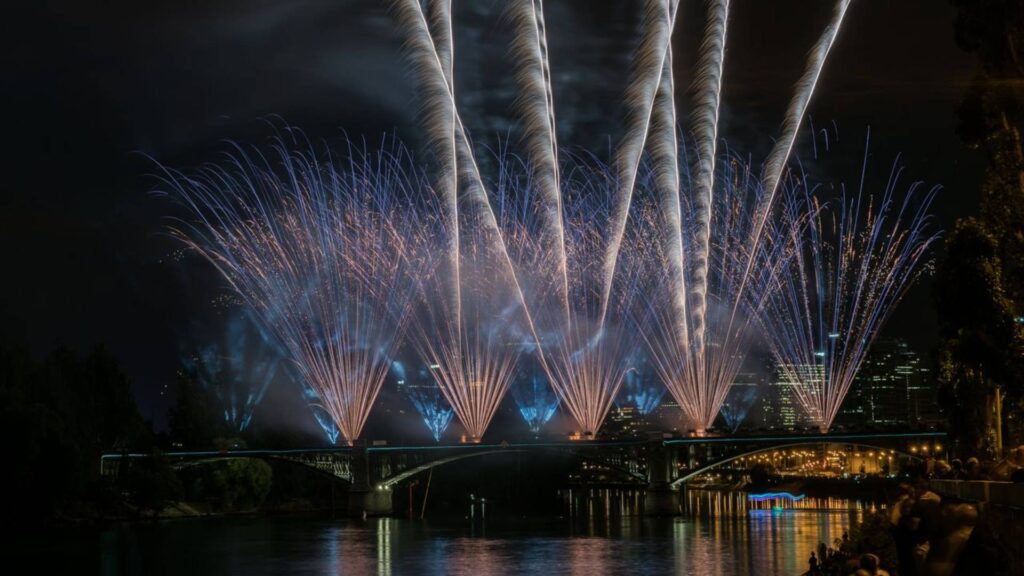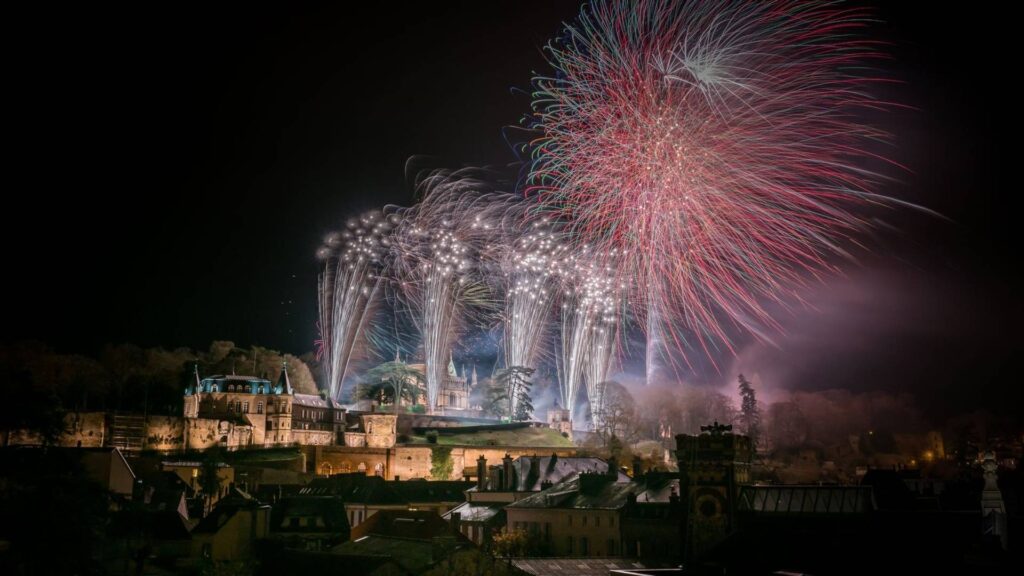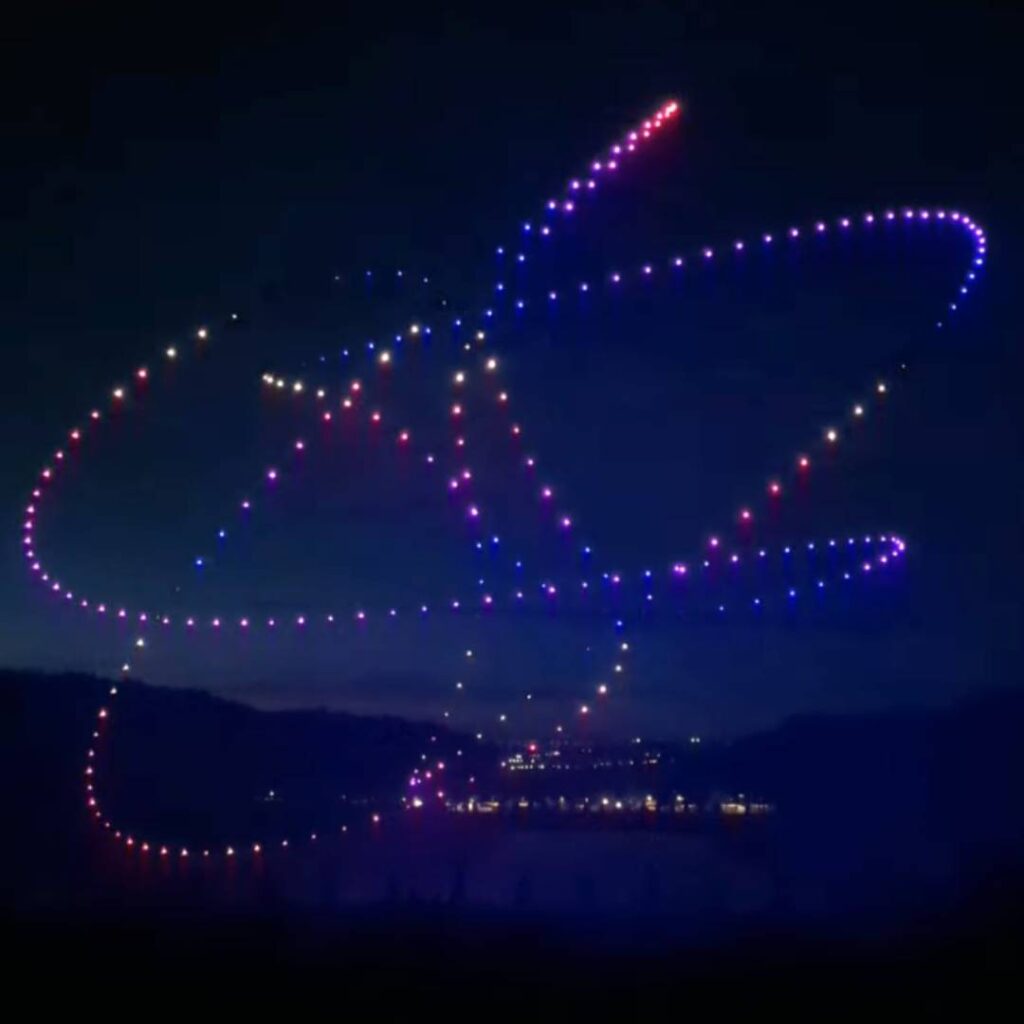
For centuries, fireworks displays have symbolised celebration and collective memory. Drone light shows, on the other hand, project sharp, almost cinematic images into the sky. Our teams combine the two at various events, both in France and abroad. This article explains how this combination works, what it requires in terms of safety and how we stage it.
Pyrotechnic shows and light drones: the effects of each discipline
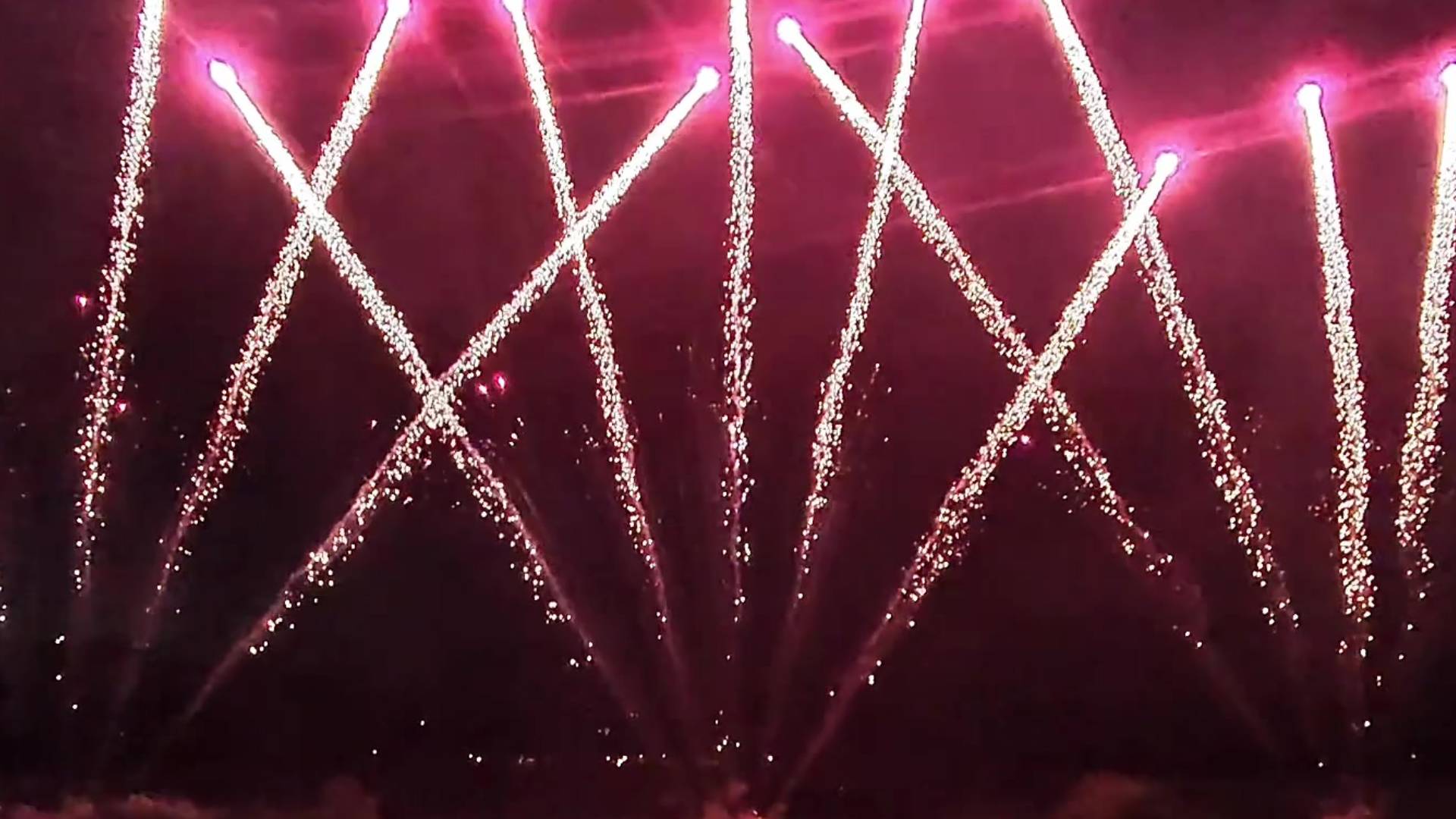
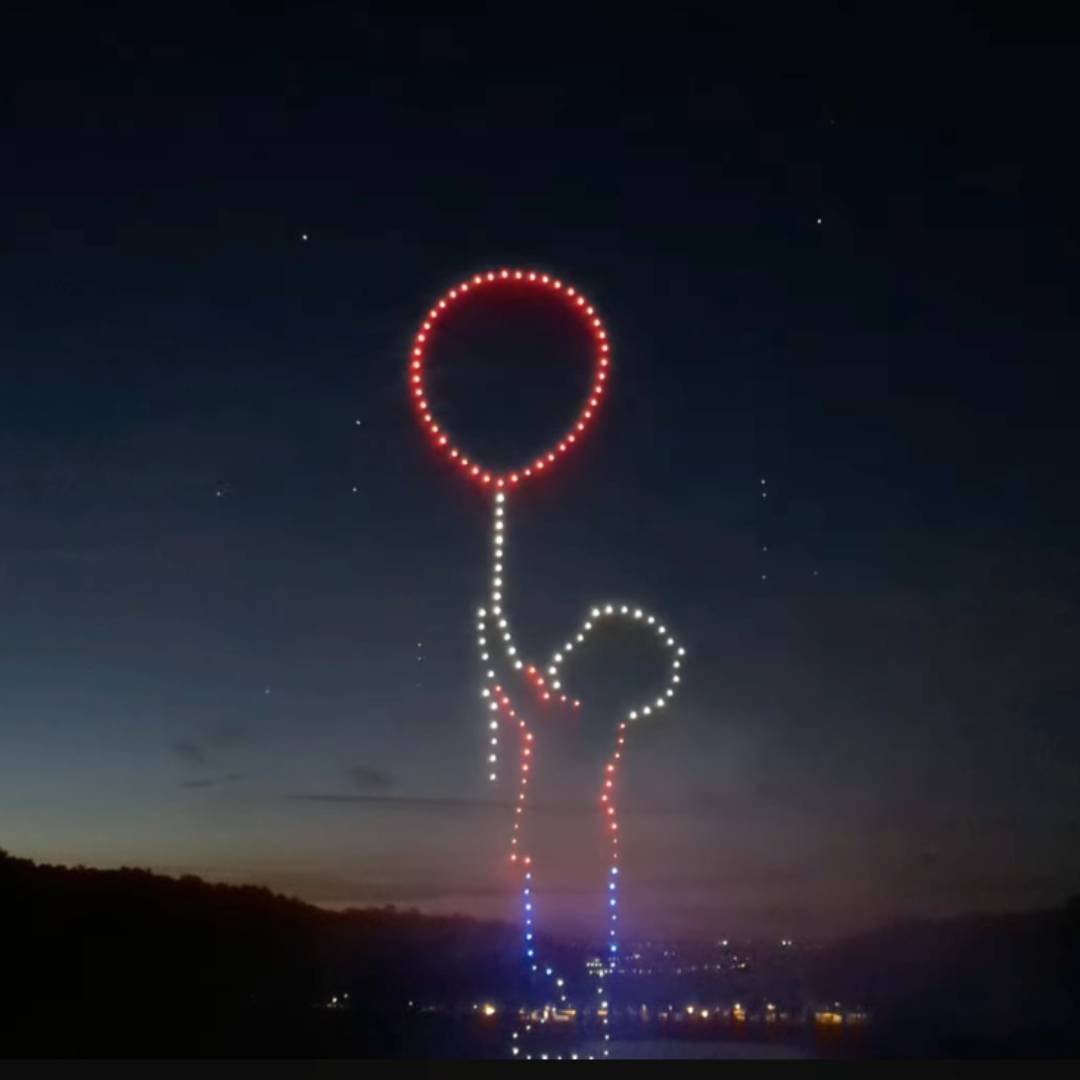
Fireworks displays play on the physical elements: heat, the blast, the smell of gunpowder, and falling sparks. They evoke a physical emotion that is felt as much as it is observed. A drone light show, on the other hand, creates images. Each drone becomes a point of light in the sky, capable of forming a logo, a face or a wave gliding slowly over a castle.
For the client, pyrotechnics impress with their power and visual impact, whereas a swarm of drones conveys a figurative narrative that is clear and reproducible from one evening to the next. The first drone shows appeared in the 2010s, becoming very popular in East Asia before spreading to Europe. In September 2024, the city of Shenzhen flew 10,197 drones simultaneously, setting two Guinness World Records in the process.
How is a show that combines fire and drones put together?
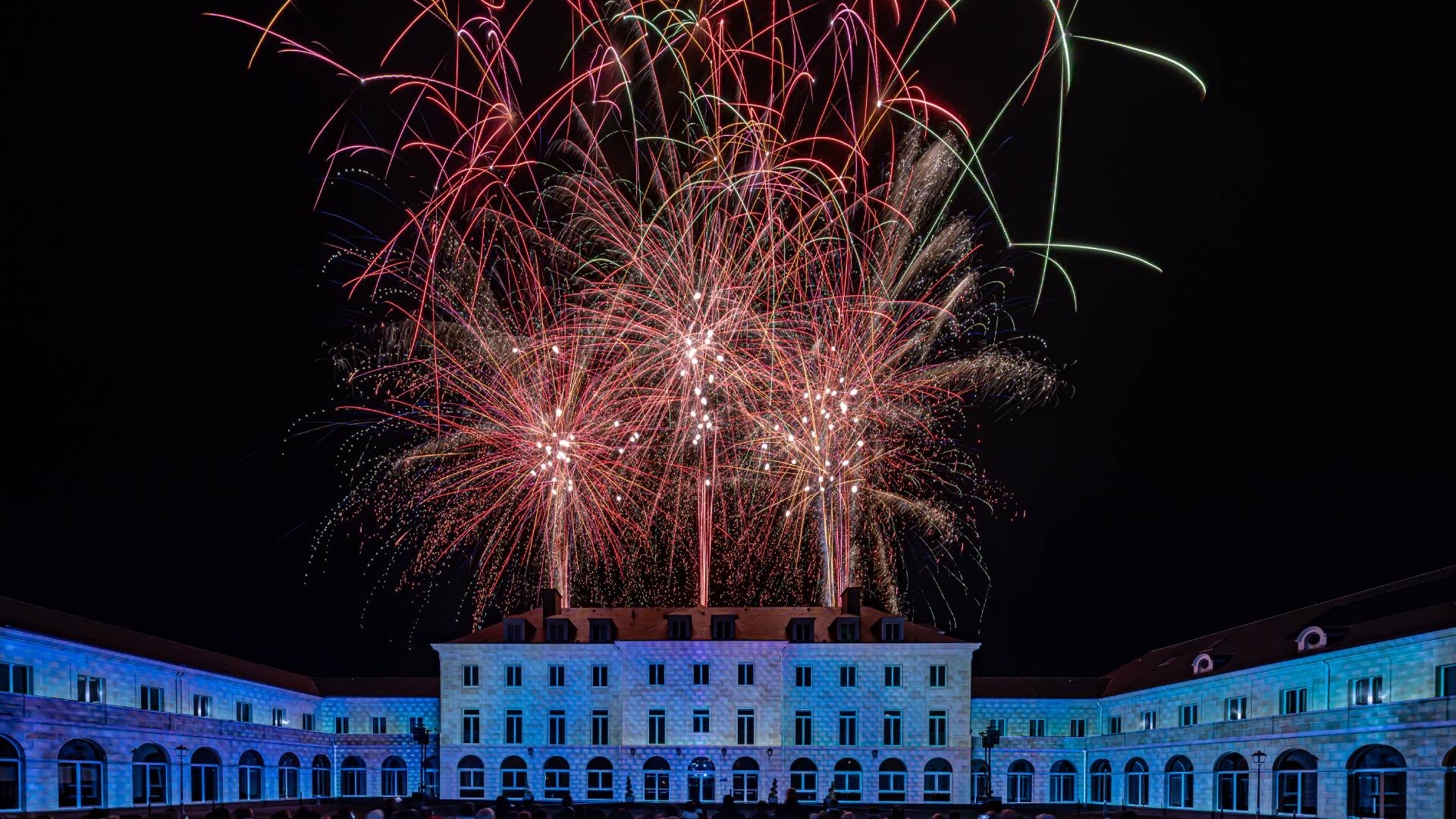
On a combined display, we time every effect to go off at the precise moment planned. Celesta’s pyrotechnicians fine-tune the ignition to the nearest hundredth of a second, synchronised with the soundtrack. The drones follow a pre-programmed choreography, with each flight path calculated to avoid collisions and remain within the authorised flight envelope.
Three layers of writing then overlap.
- Pyrotechnics provide the power.
- The swarm of drones creates the design.
- Sound and light bring it all together.
A finale might open with a formation of drones spelling out a town’s coat of arms, then cut to a barrage of bombs synchronised with the chorus. Production control pulls the strings, frame by frame.
The planning begins well before the big day. Artistic writing, site reconnaissance, calculating safety perimeters, administrative formalities, rehearsals: every stage contributes to the final precision.
Safety and regulation: two systems that must be managed in tandem
Ensuring that fire and drones can coexist requires a thorough understanding of two distinct legal frameworks. As regards pyrotechnics, Decree No. 2010-455 of 4 May 2010 governs the acquisition, possession and use of recreational fireworks, classified in categories F1 to F4. Professional fireworks displays fall under category F4 and are restricted to holders of the Level 2 C4-F4-T2 qualification certificate. The Celesta teams hold these qualifications and have a licensed storage facility, ensuring logistical autonomy.
As regards drones, Implementing Regulation (EU) 2019/947 of 24 May 2019 lays down the European rules, which have been in force since 31 December 2020. A drone swarm display falls within the so-called ‘specific’ category, which is subject to notification or authorisation from the DSAC, the supervisory authority attached to the DGAC. An exemption exists for carrying certain equipment on drones within a swarm. Combining the two disciplines at the same site therefore requires a thorough review of the operational areas, flight parameters and flight slots. This must be validated with a safety officer for each location.
The contribution of Celesta’s teams, in France and internationally
Celesta designs and produces bespoke shows from its base in Aigremont, in the Yvelines, with a presence in Normandy and projects carried out internationally. The company has staged the New Year’s Eve celebrations on the Champs-Élysées for over 700,000 spectators, as well as a product launch party for 700 guests at the Carrousel du Louvre. Its productions have travelled as far afield as Dubai and Guangzhou, via Rouen, Mulhouse, the Château de Chantilly and the Vieilles Charrues festival.
Celesta’s pyrotechnicians select their effects from the finest European and Asian productions, then integrate them with drones, video mapping, performers and stage special effects such as cold sparks or thick fog. Our teams coordinate the whole project for the client, from the initial concept right through to the dismantling of the installation.
Fire, drones or both: our report from the field
Between fireworks displays and a drone show, we choose according to the venue and the narrative we wish to convey. At a heritage site at risk of fire or subject to noise restrictions, a swarm of drones offers a cleaner solution: less smoke, less fallout and a reduced noise footprint. Measurements taken after certain fireworks displays have revealed unusual levels of sulphates, chlorine and metals in the air and water – a key consideration for a local authority mindful of its environment.
For a national celebration eagerly anticipated by tens of thousands of people, we favour a fireworks display. We propose combining the two when a client wants both impact and a message: a coat of arms taking shape, a countdown traced across the sky, followed by the final explosion.