Celesta, drone shows for theme parks.
A park show is replayed forty, sixty or a hundred evenings in a season. That changes the equipment, the programming, the authorisation and the price: we write the flight for the whole season, with the reserve fleet and the DGAC application that go with it.
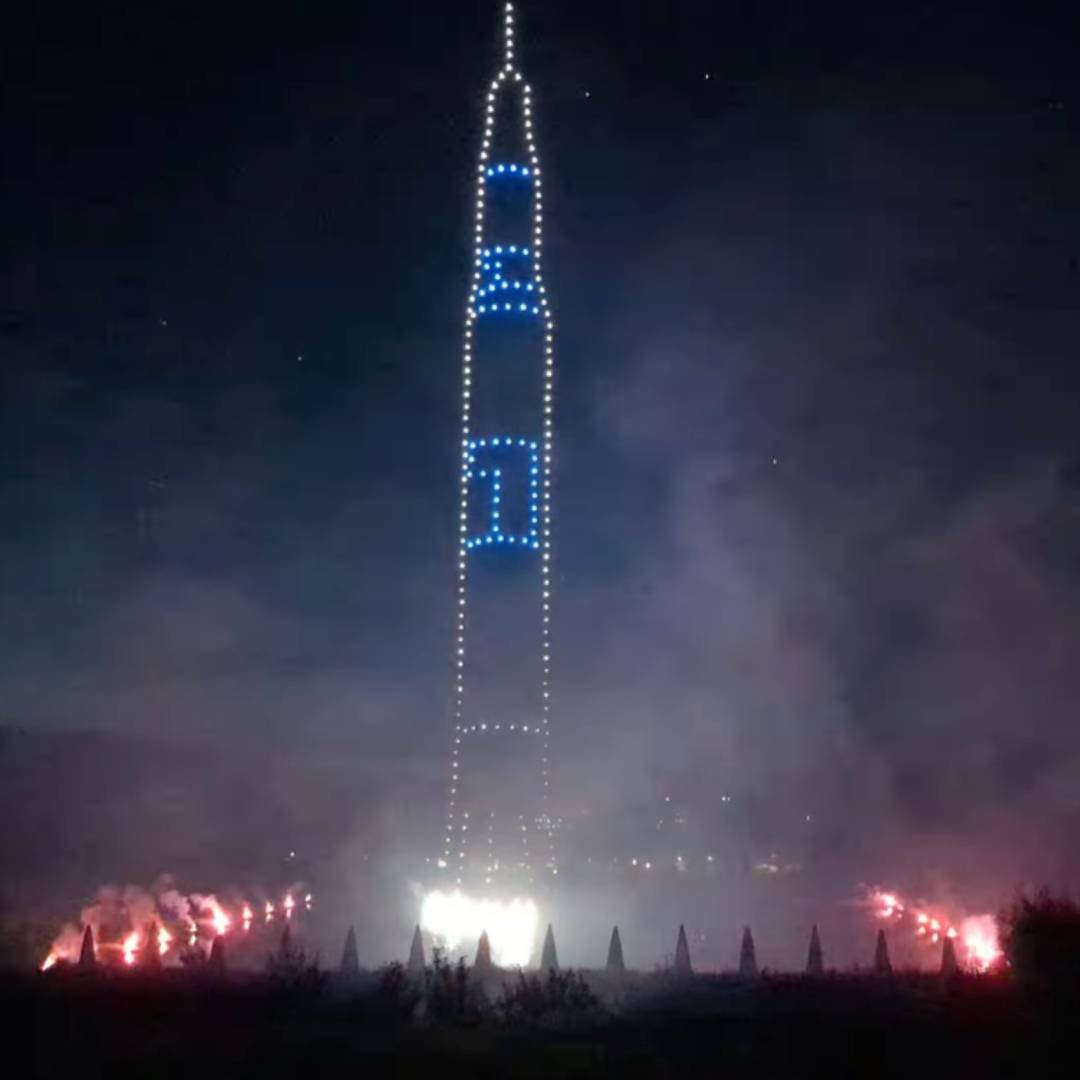
One-night show or season-long operation: the differences
For an event, we prepare one date, one flight and one dismantling. For a park, the show becomes a fixture that has to last all summer, and the differences show up evening after evening.
The spectacular show
- The flight is scheduled for a specific date and with a specific aircraft type.
- The fleet arrives, makes one stop, and sets off again the next day.
- The authorisation relates to a specific evening.
- The audience sees the show once.
- The price is charged per performance.
The theme park attraction
- We write it so that it replays identically every evening.
- The fleet remains on site and is wearing out: batteries, propellers, LEDs.
- The authorisation covers a range of dates, not just one.
- Some of the audience are returning and have already seen it all.
- The price is calculated at the end of the day’s trading.
Our work with light drones
Each case study details the site, the brief and what was deployed in flight. To see a flight in real conditions, call us: we will give you the next public dates.
-
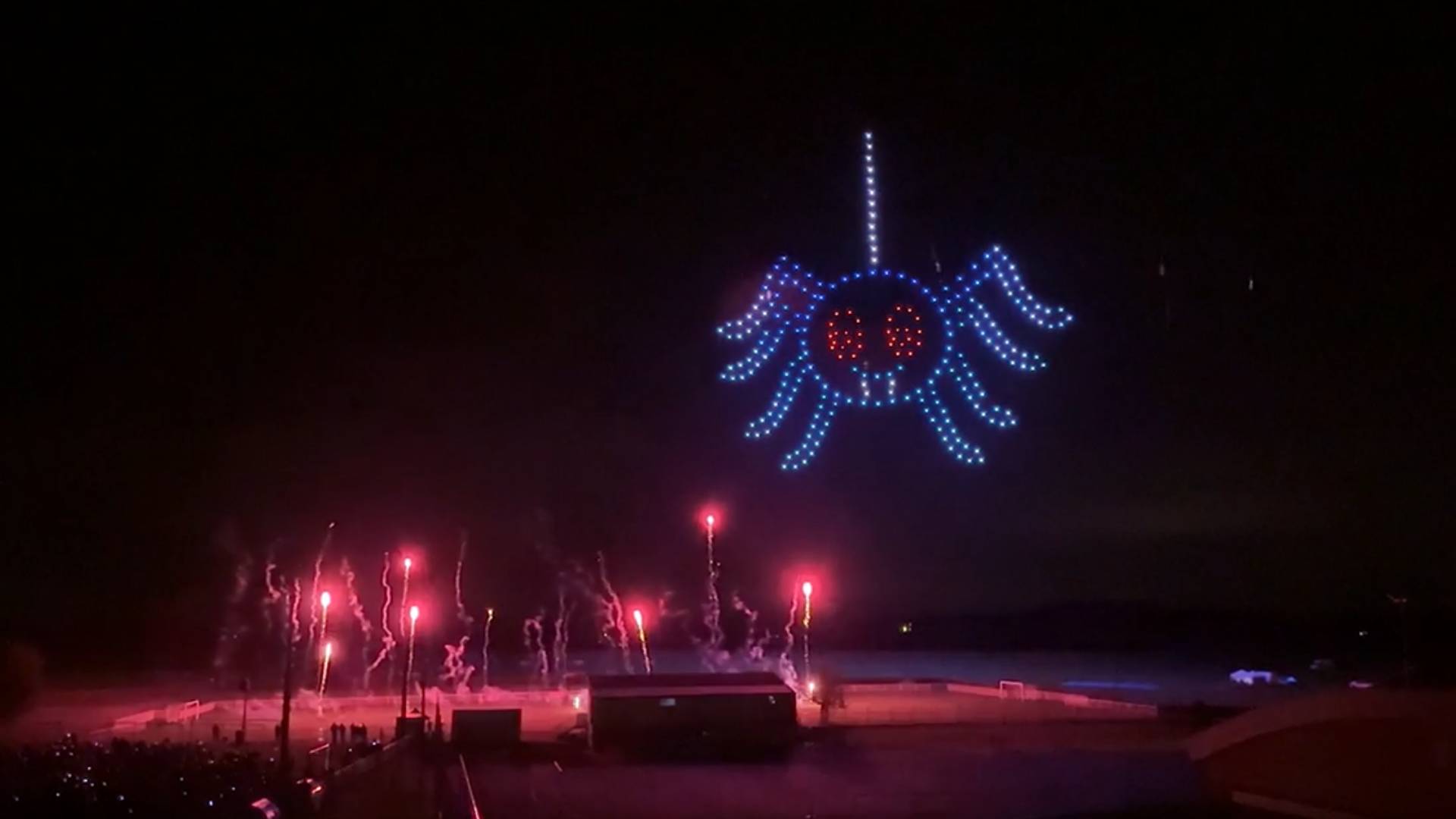
Pyrotechnic display featuring drones in Buchy
View the project: Pyrotechnic display featuring drones in BuchyA demonstration for local authorities In Buchy, we organised a technical demonstration combining a pyrotechnic display and a swarm of…
-
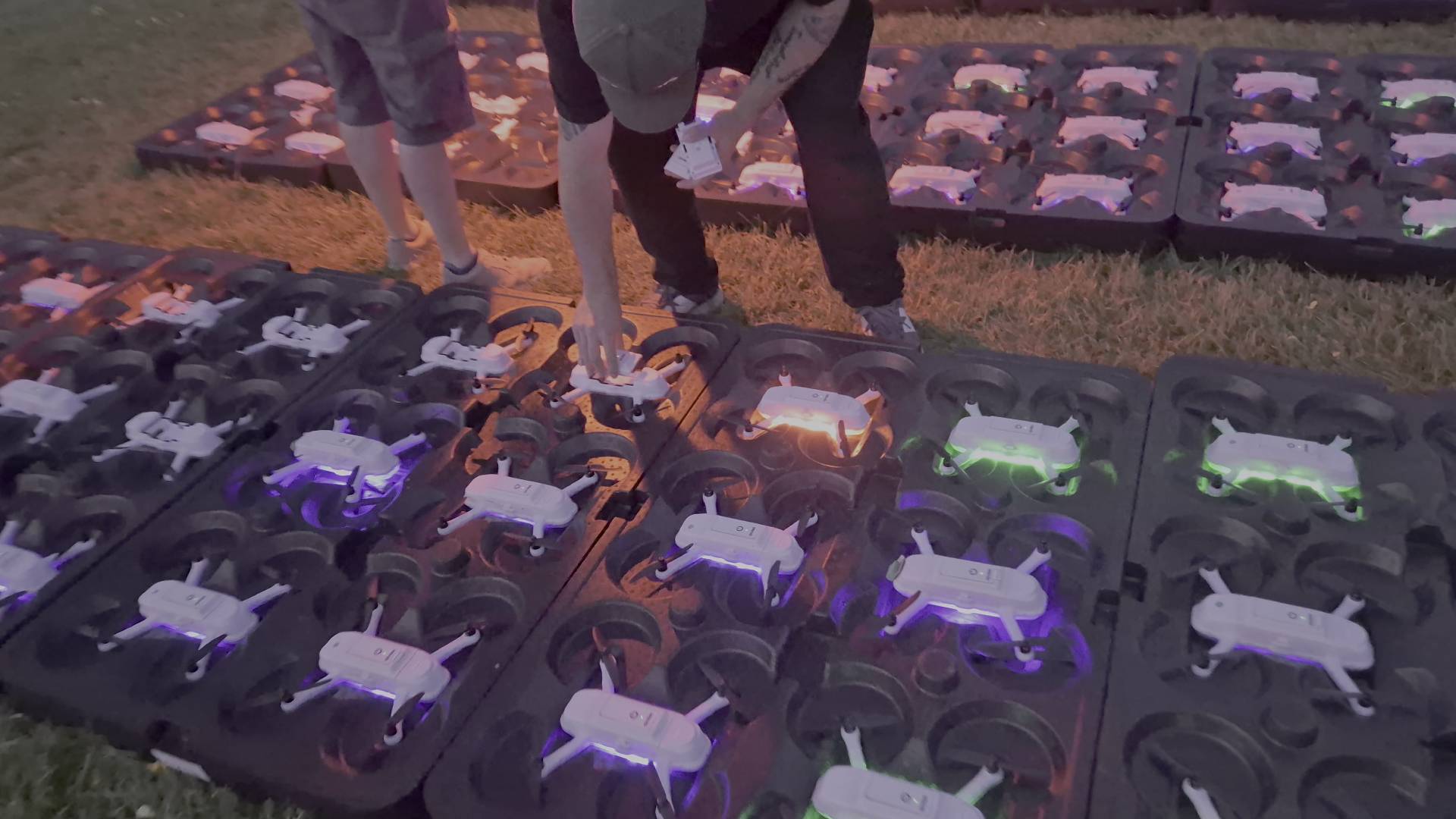
Marly-le-Roi Town Festival 2026: Drones and Fireworks
View the project: Marly-le-Roi Town Festival 2026: Drones and FireworksA town celebration in the heart of a royal park The Fête de Marly returns every June to the grounds…
The constraints of a season-long operation
These points do not show on the mock-up but appear evening after evening, once the fleet has flown several times and visitors come back. We settle them when we write the flight.
01
Fleet wear and tear
Batteries, propellers and LEDs have a finite number of cycles. A fleet sized tightly for opening night will struggle by the end of summer: we plan the reserve from the start.
02
The same show every evening
We lock and document the flight so that a visitor on a Tuesday sees the same show as a visitor on a Saturday, and a team that did not write it can replay it.
03
Variations for returning visitors
Some of your audience has already seen the show. So we plan variations: a sequence that changes, an alternate ending, a motif linked to the date.
04
Serial authorisation
Flights over the public fall into a specific category. For a given season, the application submitted to the DGAC covers a series of dates: we prepare it once, at least 45 days before opening.
05
Launching the flight every day
We train your operators in day-to-day operation and keep control of everything related to piloting.
06
Windy evenings
Over a season, some evenings will be windy. We agree with you the wind threshold above which the flight is cancelled, and the replacement show.
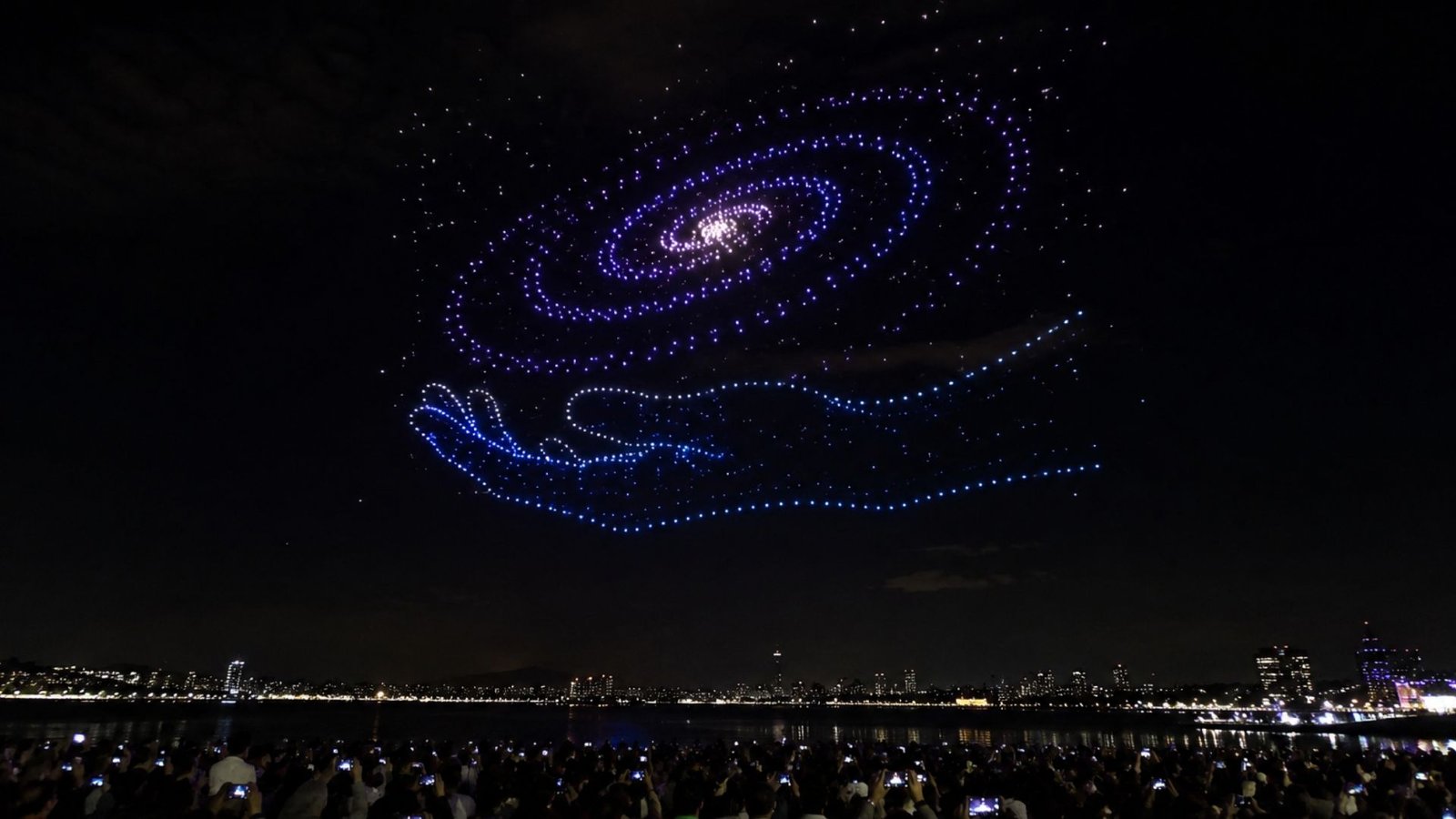
From the first meeting on the final evening of the season
The first four stages take place before the first take-off: they are what sets the opening date.
01
The theme
We start from the park’s world and characters to set with you the theme of the show and its sequences.
02
Location
We map the sightlines from your pathways, the available heights and the areas to keep clear. This site survey sets the number of drones.
03
The model
We model the flight in 3D and show it to you from your visitors’ viewpoints.
04
The file
SORA risk analysis, submission to the DGAC for the entire series and local declarations. We submit this file at least 45 days before the opening date.
05
The trials
On-site test flights, flight path adjustments and a full-scale rehearsal. The threshold for cancelling the flight in strong winds will be agreed with you at this stage.
06
The season
Evening-by-evening operation, fleet maintenance and training your teams in day-to-day operation. We keep control of the piloting.
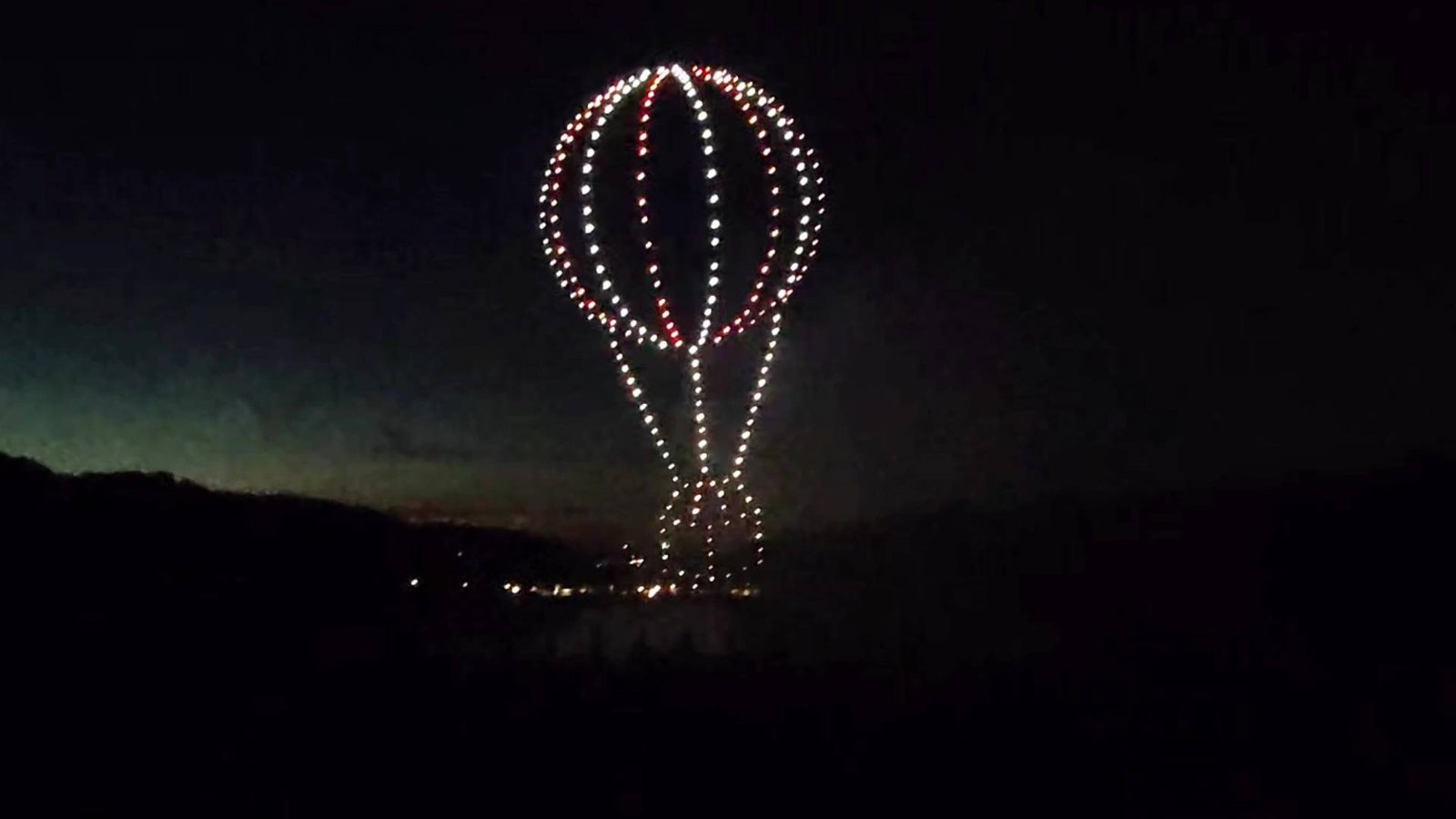
The 3D model of the flight
We model the flight in three dimensions and show it to you from the real viewpoints along your pathways, before the first drone takes off.
The model is taken from the flight plan itself, the one that will be compiled and played: what you approve is what your visitors will see.
Lead times and budget for a drone season
A season show is often decided in committee, the winter before. Here are the benchmarks to prepare that committee without waiting for a quote.
Conditions for a season
Key points
Time allowed before the opening, including the examination of the application
2 to 6 months
Between your call and an initial quote
48 hours
Operating licence filed with the DGAC
For the series
Training for your operators and fleet maintenance
Included
Drone light show: from
€10,000
We then price a run of performances per operating evening.
Request a study for your park
Give us the park, the operating window and the number of evenings planned. Within 48 hours you receive a letter of intent and a costed estimate. If your timetable does not work, we tell you before quoting.
Your questions about drones in theme parks
How many drones are needed for a fleet?
The number depends on the distance between your pathways and the flight zone. We set it after the site survey, adding a reserve of drones to last the season.
Can we put on the show again every evening?
Yes, that is in fact the format for which these flights are planned. The plan is finalised and documented so that it can be repeated exactly, and the fleet is sized to provide the necessary reserve for day-to-day operations.
Do you need a licence for each event?
No. A flight over the public falls under a specific category of European Regulation 2019/947, and the application submitted to the DGAC covers a range of dates. We prepare it only once and submit it at least 45 days before the start of the season.
Can our teams go ahead with the flight?
Partly. We train your operators in day-to-day operation, from preparation to triggering, and keep responsibility for piloting and maintenance.
Can we display our characters and licences?
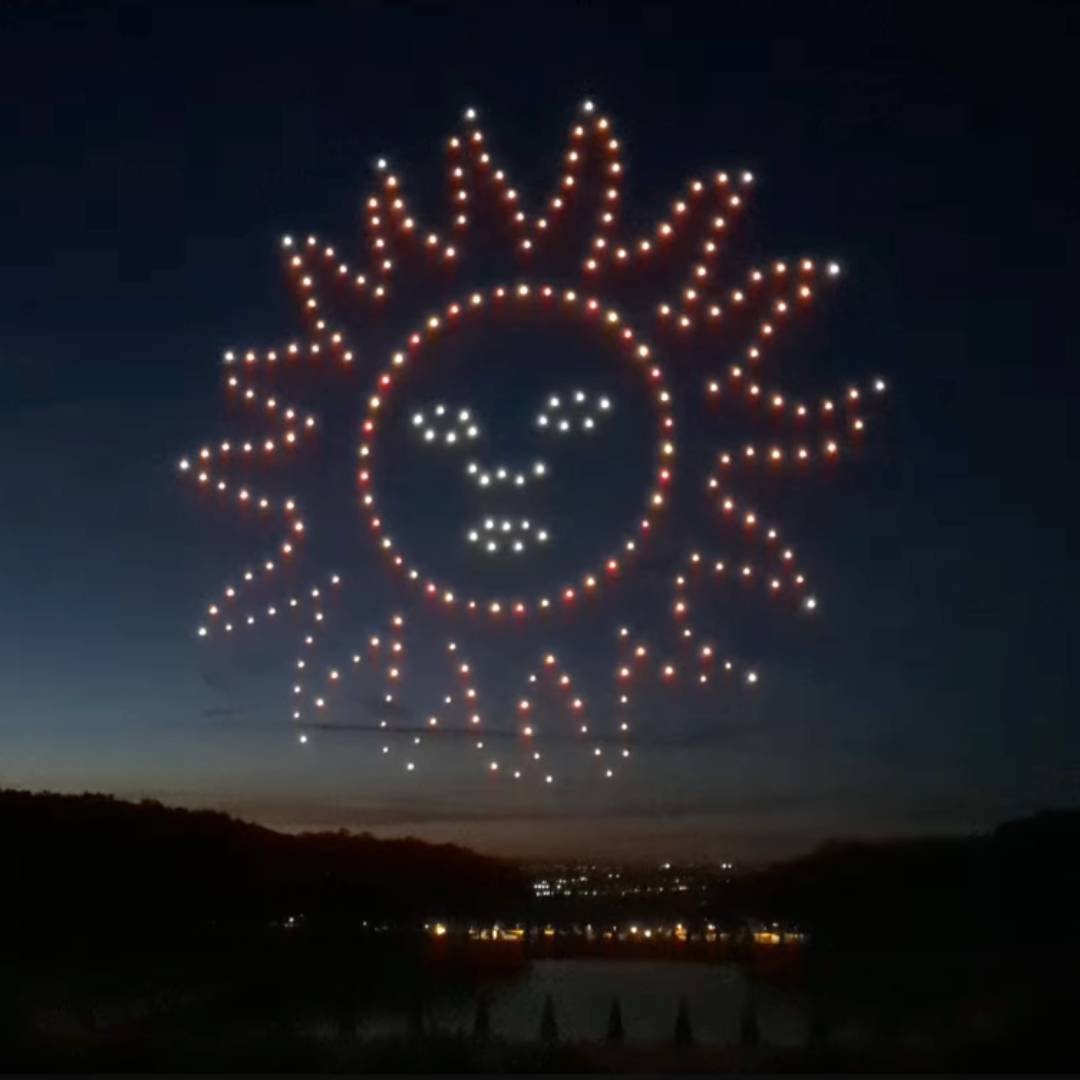
Yes, subject to the rights you hold. A recognisable silhouette draws very well in flight and stays readable from the pathways.
What happens on windy evenings?
The fallback threshold is agreed with you when we write the flight, and the replacement solution is set out in the contract.