Diwali, Chinese New Year, 14 July in France: three festivals where fireworks accompany stories, beliefs and technical skills handed down over several centuries. Here we trace their origins and the demands they place on Celesta, as a special effects designer, both in France and abroad.
Fireworks and festivals worldwide: local conventions, colours and timings
All over the world, fireworks displays mark major occasions: a new year, a victory, the birth of a nation. Every culture has adapted them in its own way, with its own conventions, colours and timings. Three of the most vibrant traditions help to illustrate this, before we go on to outline the technical requirements.
Diwali, the Festival of Lights, where fire tells the story of a victory
Diwali, or Deepavali, is the great Hindu festival of lights. Its name comes from the rows of clay oil lamps, known as diyas, which are lit in front of houses. As the Hindu calendar is lunisolar, the date varies each year, falling between mid-October and mid-November. The symbolism is clear: light triumphs over darkness, and knowledge over ignorance.
Firecrackers and fireworks displays have long played an important role here. Traditionally, the noise and the flashes were believed to drive away evil spirits. These displays also celebrate Rama’s return to Ayodhya after fourteen years of exile and his victory over the demon Ravana. Hence the profusion of rockets and fountains of light seen in northern India.
In the south of the country, the approach is more introspective. There, fountains and sparklers are often preferred, as they are associated with contemplation.
Chinese New Year: from firecrackers to illuminated skies
The Spring Festival marks the beginning of the Chinese lunar calendar year. On 4 December 2024, UNESCO inscribed it on the Representative List of the Intangible Cultural Heritage of Humanity (UNESCO, 2024). These celebrations are observed by hundreds of millions of people around the world.
The origin of firecrackers is told through a legend. A monster called Nian used to terrorise the villages at the turn of the year. The villagers noticed that he was afraid of loud noises and the colour red. They therefore burnt dry bamboo stalks, which burst with a loud bang. These early firecrackers, known as baozhu – literally ‘explosive bamboo’ – were followed by chain firecrackers, or bianpao, and then by modern fireworks displays.
The red of the lanterns and the crackling of firecrackers serve the same purpose: to ward off bad luck and bring prosperity. For a local authority or a brand organising an event to mark the Chinese New Year, we carry these conventions into the writing of the display.
National holidays: when pyrotechnics become a collective ritual
In France, 14 July holds a special place. The date was established as a national holiday by the Act of 6 July 1880. Ever since, the fireworks display has been a feature of every summer in thousands of towns and villages, from major cities to the smallest hamlets. Public dances, parades and fireworks have accompanied it for nearly a century and a half.
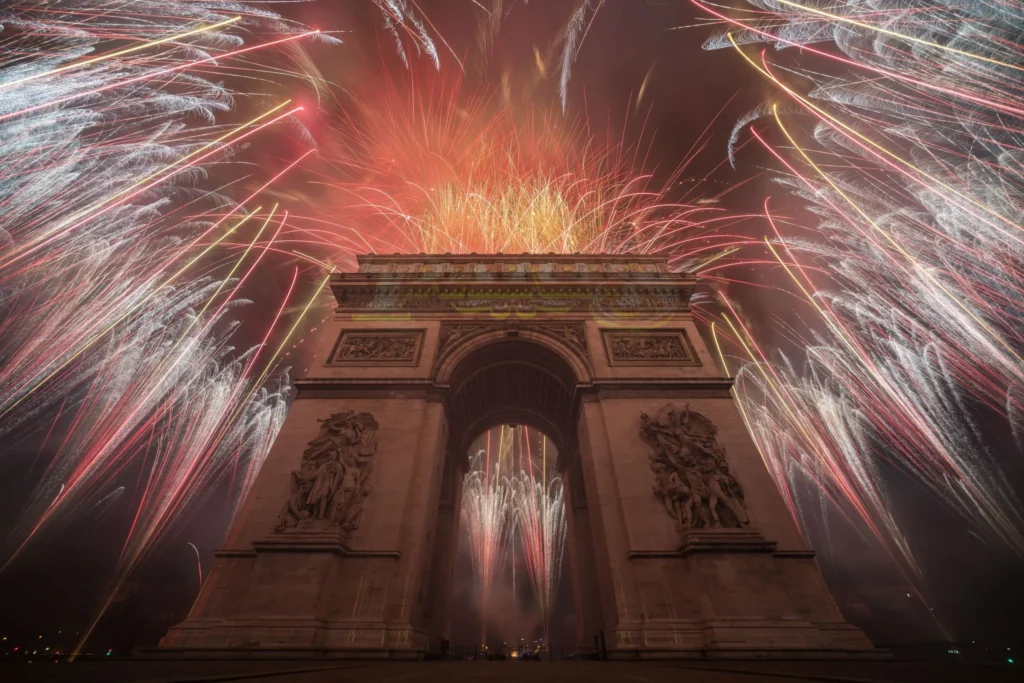
Customs vary from region to region. In Alsace and Lorraine, tradition often dictates that the fireworks are set off on the evening of 13 July, the day before. This discrepancy, seemingly trivial, forces organisers to contend with tight schedules and venues that are sometimes in close proximity.
Outside France, many national holidays are also celebrated with a fireworks display.
Celesta, special effects designer for festivals in France and abroad
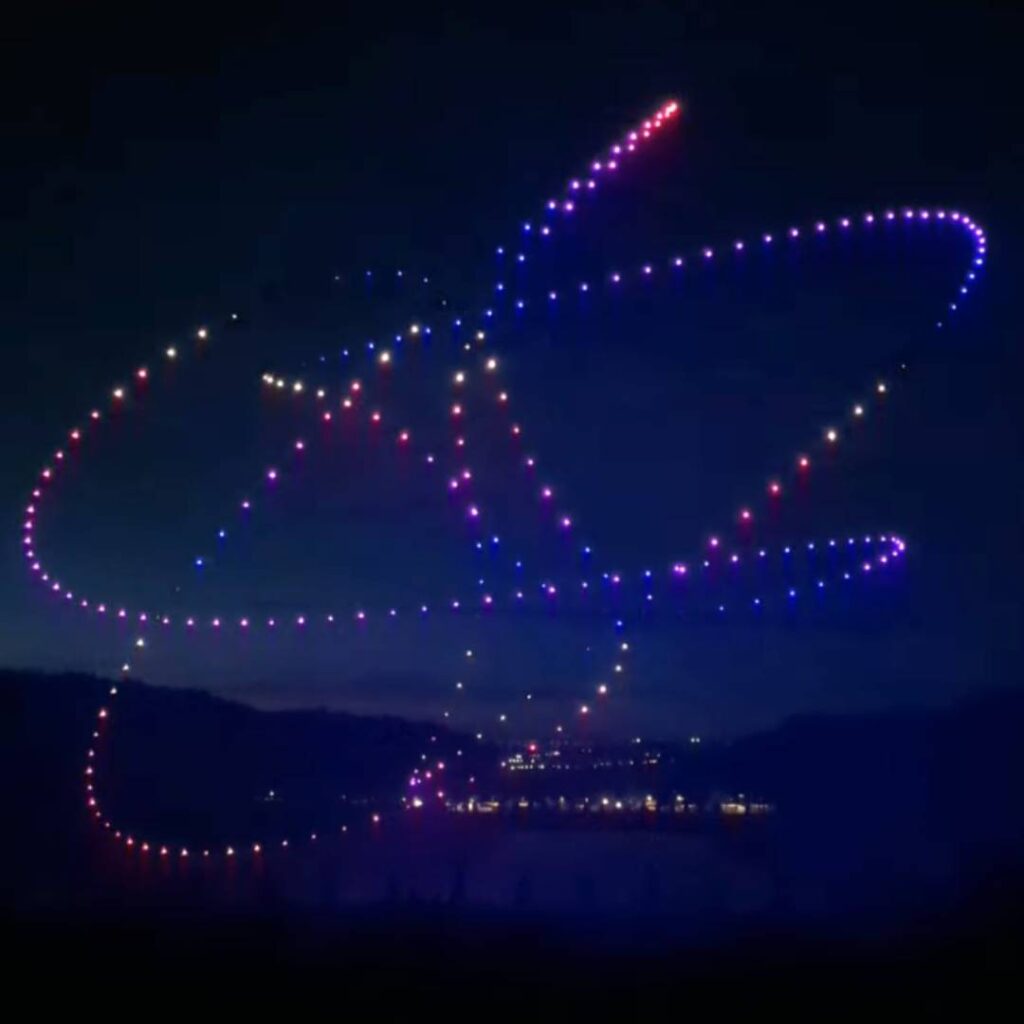
Celesta brings these traditions to life through its shows. Based in Aigremont, in the Yvelines, with a presence in Normandy, the company designs and produces bespoke shows combining fireworks displays, drone light shows, special effects and video mapping. Its pyrotechnicians are certified, and its ICPE-licensed storage facility gives it logistical autonomy on sensitive projects.
Decree No. 2010-455 of 4 May 2010 classifies fireworks for entertainment purposes into four categories, from F1 to F4, according to their level of danger. Professional fireworks displays fall into the most powerful categories, which are reserved for pyrotechnicians holding a Level 2 qualification. As for drones, European Regulation 2019/947, which came into force on 1 January 2021, requires a risk assessment and specific authorisations for swarm flights.
Celesta’s teams synchronise their fireworks displays to the music to the nearest hundredth of a second, whether at heritage sites, in densely populated urban areas or at private parties. Internationally, where we have produced shows in more than 20 countries and where fireworks carry different symbolic meanings, our teams study the conventions of each festival before writing the display.
In brief
- Diwali celebrates the victory of light over darkness; the fires are part of a centuries-old tradition linked to Rama’s return to Ayodhya.
- The Chinese New Year, inscribed on the UNESCO list on 4 December 2024, owes its firecrackers to the legend of the Nian monster.
- 14 July, which has been France’s national holiday since 1880, has made a fireworks display a collective tradition shared by thousands of local authorities.
- In France, Decree 2010-455 and European Regulation 2019/947 govern fires and drones respectively.
- Celesta adapts its pyrotechnic displays to each culture, both in France and abroad.