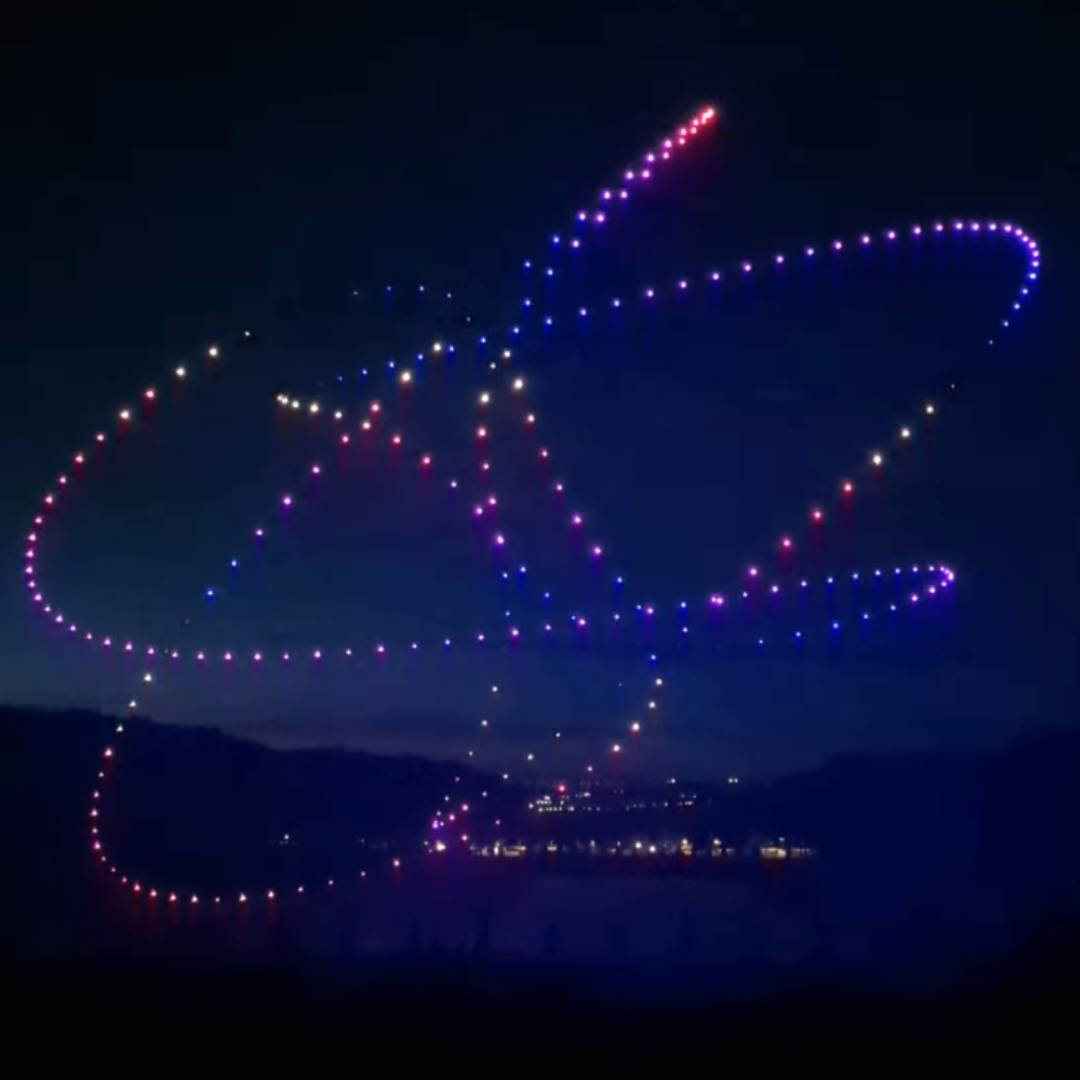
Drone light shows are making their way into town festivals, corporate events and major heritage celebrations. This article explains how it works, its benefits and the place the teams at Celesta give it in their creations, both in France and abroad.
How a drone light show works
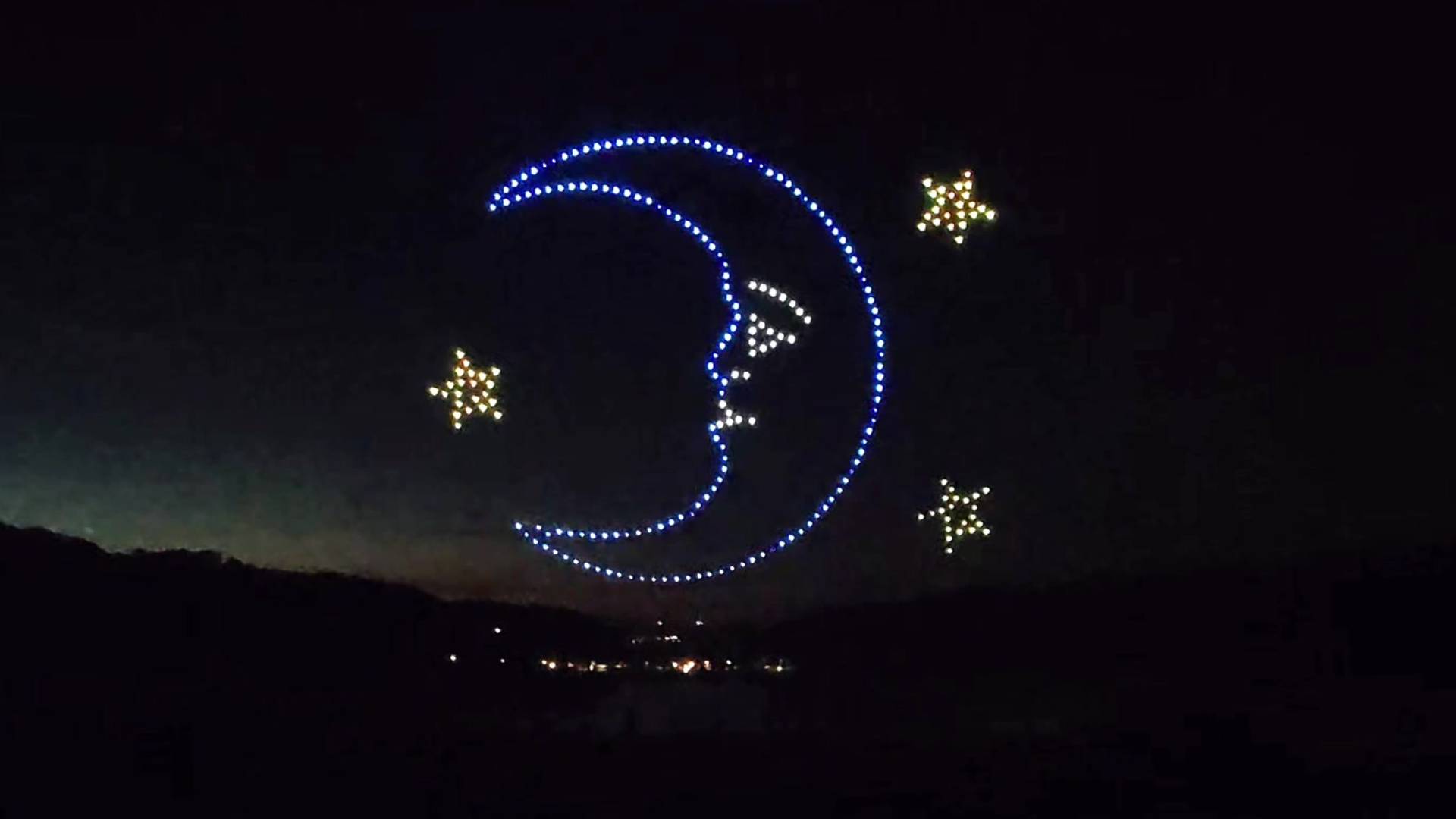
A drone light show is an aerial display in which dozens or hundreds of light drones fitted with LEDs form shapes, logos and animated scenes in the sky. Each drone acts like a flying pixel. Its position, colour and brightness are programmed frame by frame, then synchronised to a soundtrack using timecode.
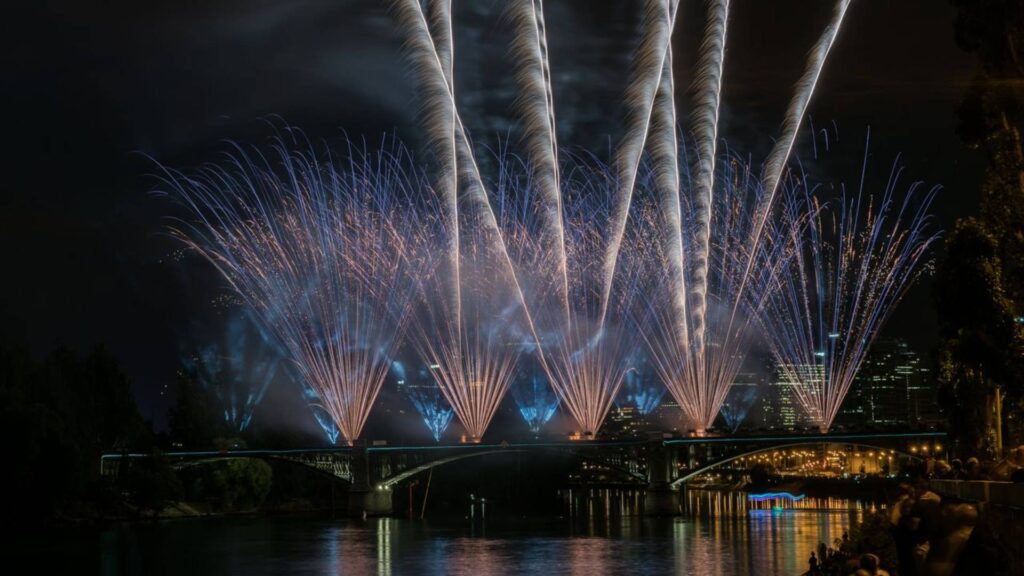
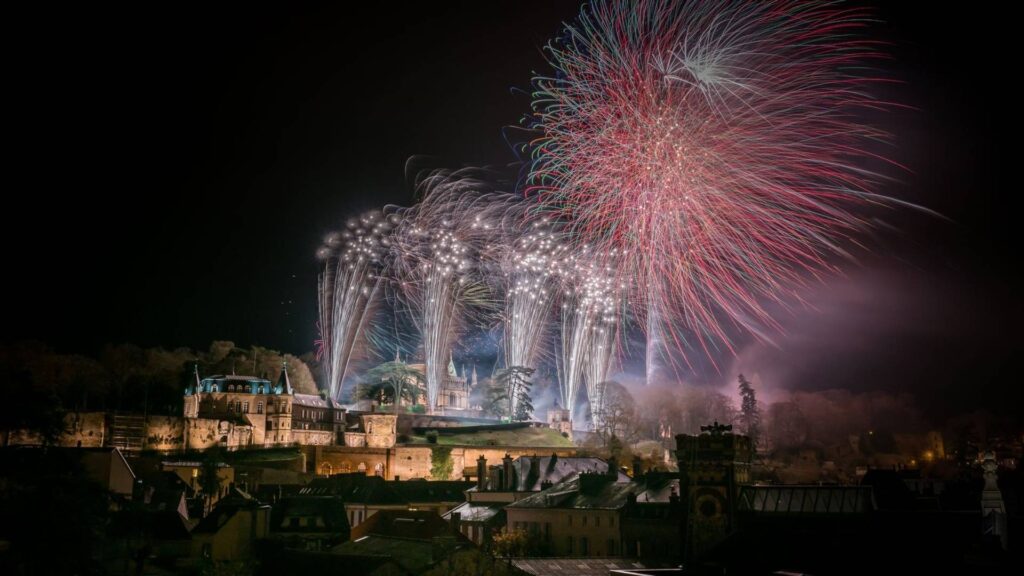
The swarm takes off from a designated area on the ground. It ascends in formation, maintains its patterns, regroups, and then lands. Whereas a fireworks display paints the sky with successive bursts, the swarm of drones sculpts stable, clearly defined shapes.
In 2024, more than 1,500 shows of this kind took place around the world, with set-ups comprising up to 500 devices, according to sector analyses published by WiseGuy Reports.

Why drone light shows are proving popular with event organisers
The rise in the use of light drones is primarily due to their small footprint. A European study published in 2024 measured an average 40 per cent increase in PM2.5 fine particulate matter around launch sites in the half-hour following a fireworks display. A 15-minute municipal fireworks display emits around 200 kg of CO₂, whilst a drone show featuring 500 drones consumes nearly 2 kWh, equivalent to less than 1 kg of CO₂, according to measurements cited by GoodPlanet. For a local authority subject to a climate action plan, this difference carries significant weight in the decision-making process.
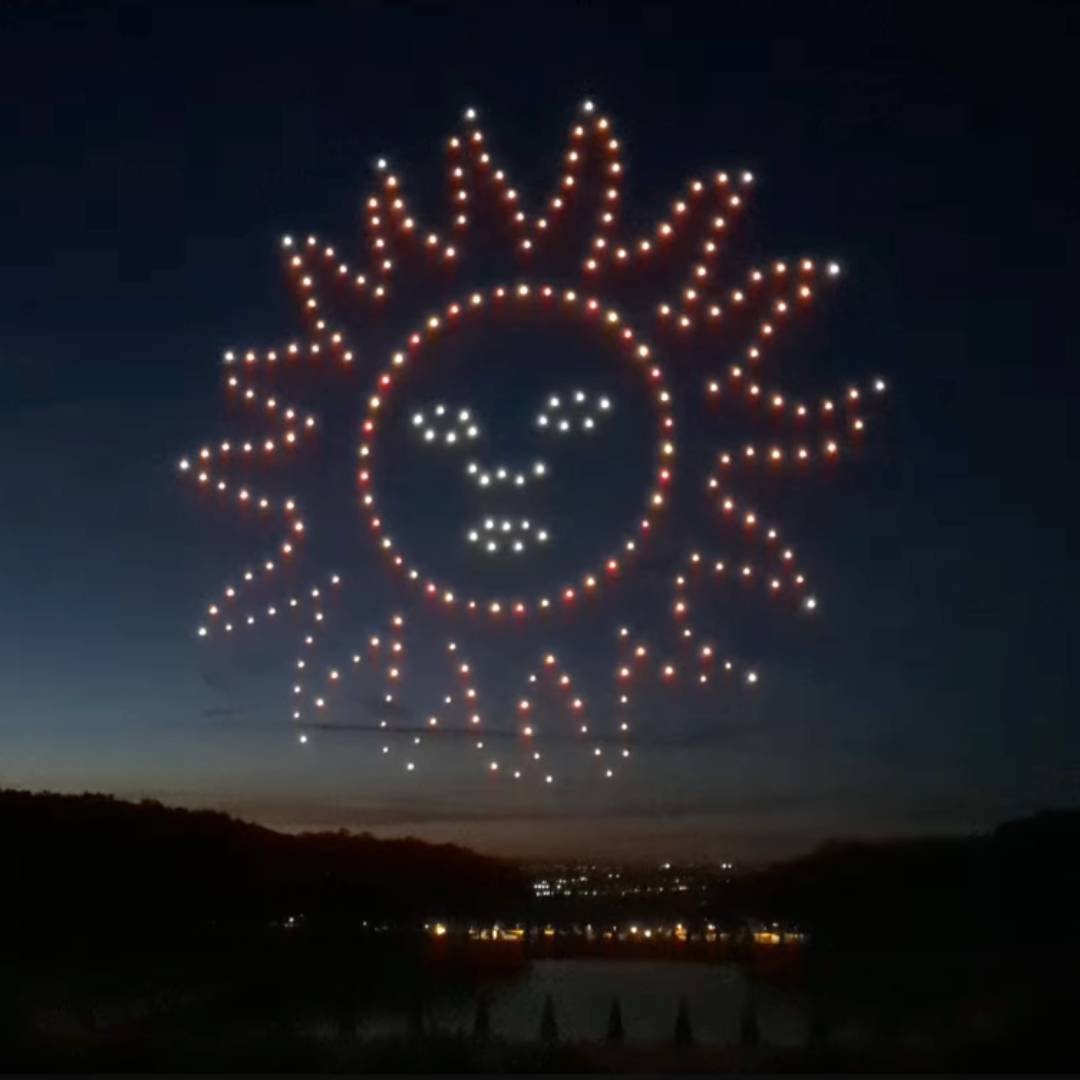
A brand logo, a town’s coat of arms, a character coming to life: the swarm tells a figurative story that pyrotechnics alone cannot convey.
Fireworks displays often exceed 150 decibels, a level that stresses wildlife and disturbs sensitive members of the public. A swarm of light drones operates at a lower noise level.
How to put together a drone show, step by step
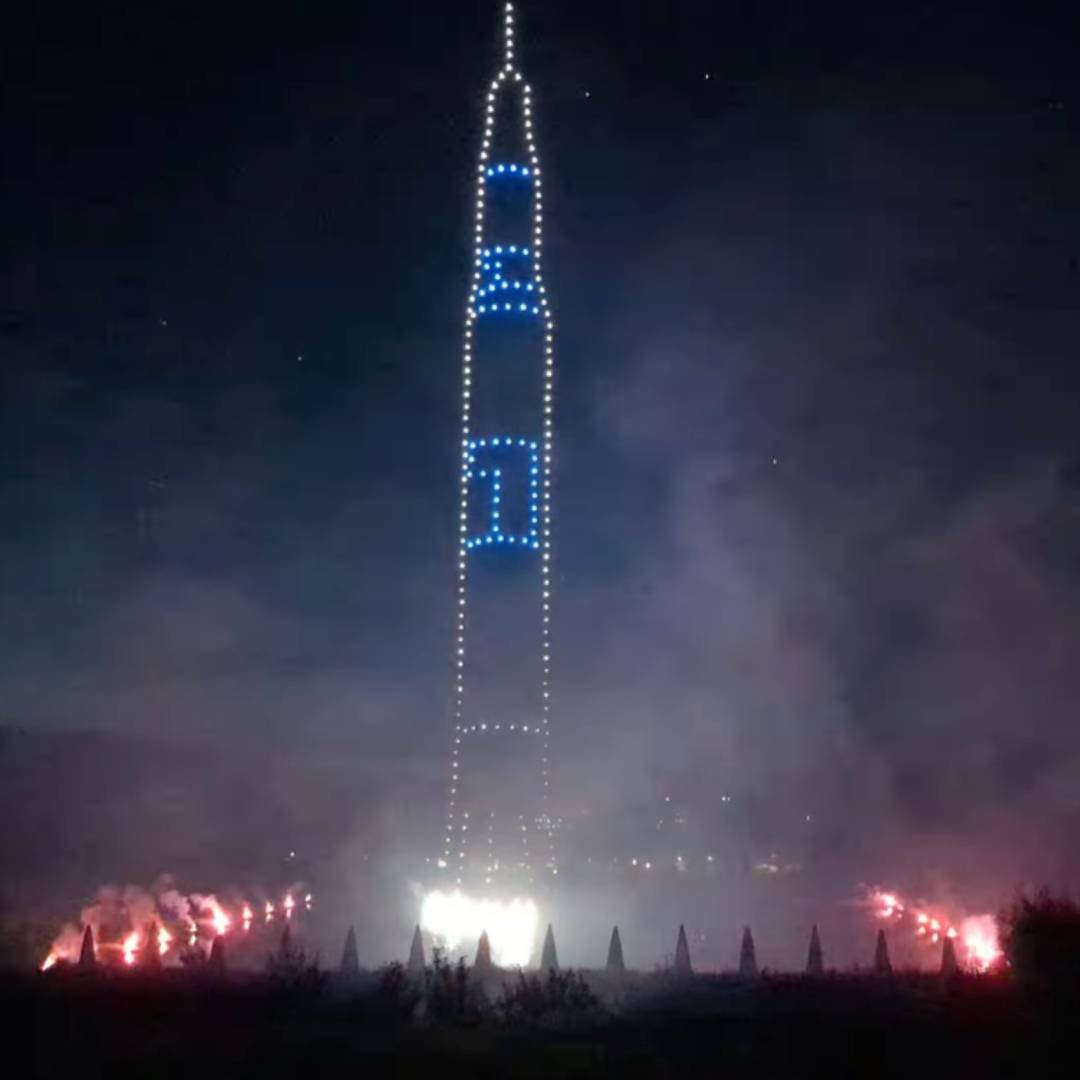
The Celesta teams prepare a drone show over 2 to 6 months of creative work, following an approach drawn from the world of pyrotechnics.
It all begins with the conceptualisation: artistic vision, message, site constraints, audience capacity. Next comes the scriptwriting, where the visual narrative is broken down into sequences. The 3D animators model each figure, frame by frame, before simulating the whole sequence on a computer. Production control synchronises the flight with the music and sound. Rehearsals confirm the flight paths. On the day, a lead pilot supervises the launch from the controlled ground area.
Celesta owes this rigour to its original line of business. The company operates a licensed storage facility, managed by certified pyrotechnicians, ensuring logistical autonomy on every project. Whether in front of more than 700,000 spectators gathered on the Champs-Élysées for a New Year’s Eve celebration, or 700 guests at the Carrousel du Louvre for a product launch, the same safety and coordination protocols apply to the drones.
Drones, fireworks display or special effects: our recommendation
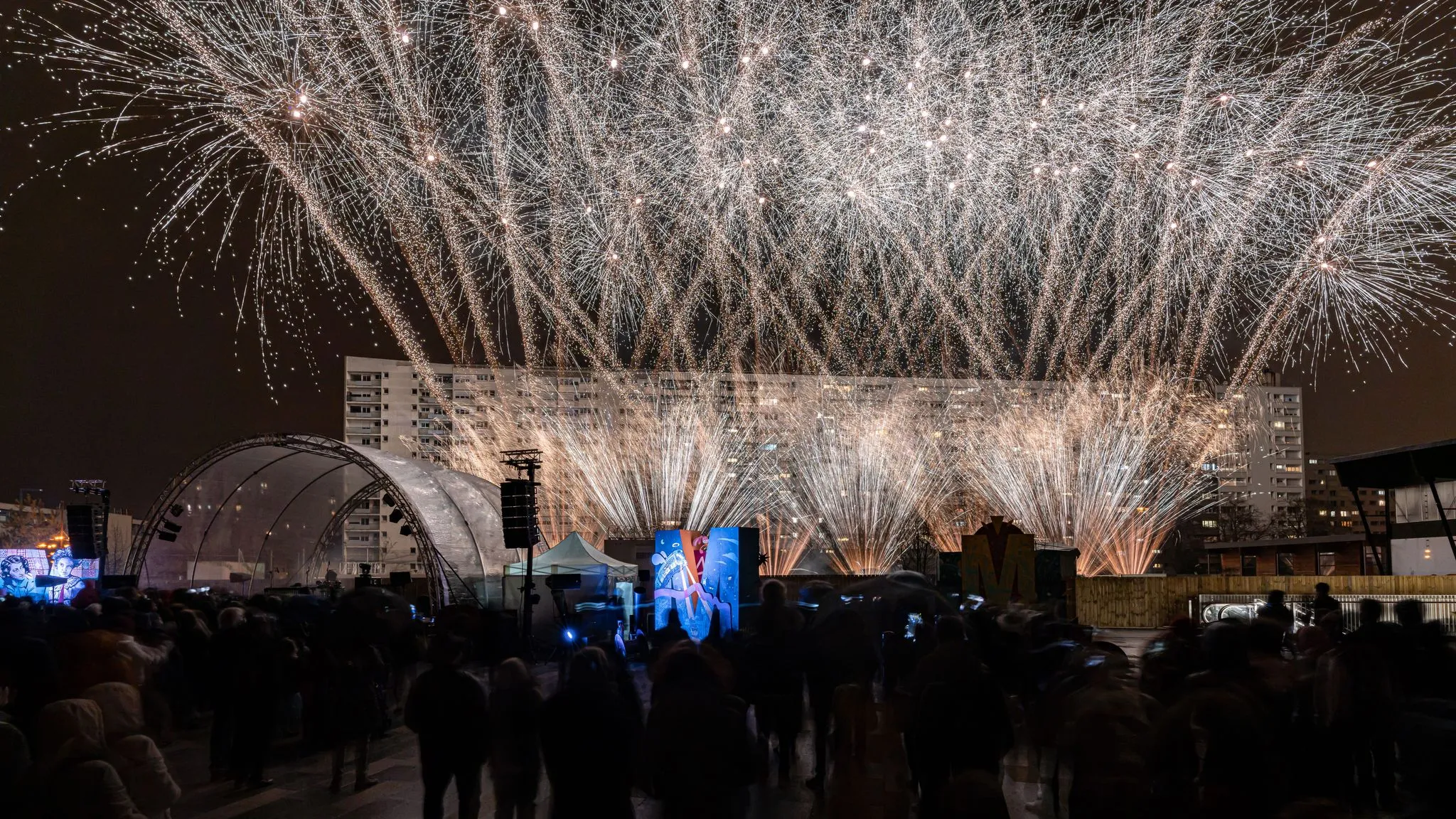
Between drones and fireworks, our experience in the field favours combining the two disciplines.
The fireworks display offers power, warmth and that sensation that courses through one’s chest. The drone light show brings figurative precision and understated elegance. Combined and blended with video mapping, stage flames, cold sparks or performers, they make up our multimedia shows.
This fusion is what the teams at Celesta specialise in, whether in Aigremont in the Yvelines or on the international stage. The company has staged productions in Dubai, Guangzhou, Mulhouse and at the Château de Chantilly, both in France and abroad. Our drone light shows in Switzerland fly with the authorisation of the Federal Office of Civil Aviation. Our dual expertise, technical and creative, is equally suited to a national celebration, a brand event or a high-end wedding.
Drone show regulations in France
The legal framework is based on Implementing Regulation (EU) 2019/947 of 24 May 2019, which has been in force since 31 December 2020. It classifies operations into three categories: open, specific and certified. A drone swarm display falls under the ‘specific’ category, which is the most strictly regulated of the common uses.
In France, the Directorate General of Civil Aviation (DGAC) oversees the implementation of these regulations, whilst the Directorate of Civil Aviation Security (DSAC) carries out monitoring. The operator submits an application for authorisation, defines a controlled ground area and a safety perimeter, and then obtains the necessary prefectural approvals. An exemption exists for carrying certain equipment on drone swarms. Our teams prepare this file, which requires 45 days minimum before the show.