The great royal celebrations turned fireworks into a courtly art. From Versailles to London, these blazing displays told of power, of peace restored and of the magnificence of a reign. That heritage directly informs the way Celesta designs pyrotechnic shows today for castles, monuments and local authorities, in France and abroad.
Versailles, cradle of the great royal celebration
In 1664, Louis XIV was not yet twenty-six. From 7 to 13 May, he offered his court the Plaisirs de l’Île enchantée: seven days of carousel, theatre, ballet and refreshments in the gardens of Versailles, still under construction. On the third evening, a fireworks display set ablaze the palace of the sorceress Alcina, built near the Grand Canal. Nothing about the show was gratuitous: it staged the power of a young king and his taste for the arts.
Four years later, on 18 July 1668, the Grand Divertissement royal celebrated the Peace of Aix-la-Chapelle and the annexation of Flemish towns such as Lille and Douai. Banquet, ball, then fireworks: the sequence was conceived as a narrative, building in intensity towards the luminous finale. The engravings circulated afterwards by the royal printing house extended the event far beyond the night it took place.
London 1749: Handel’s Music for the Royal Fireworks
Across the Channel, one episode lives on in musical memory. In 1749, King George II commissioned George Frideric Handel to write music to accompany the Green Park fireworks, given on 27 April to celebrate the 1748 Treaty of Aix-la-Chapelle. The score, known as the Music for the Royal Fireworks (HWV 351), is written for an imposing ensemble of winds and timpani.
The rehearsal, held on 21 April at Vauxhall Gardens, drew close to 12,000 people and caused a traffic jam lasting several hours on London Bridge. The official evening went less smoothly: rain multiplied the misfires, a pavilion of the Temple of Peace caught fire and the incident cost three spectators their lives.
Celesta has made the synchronisation of fire and music one of its specialities, with firing sequences time-coded to a soundtrack or to an orchestra playing live.
The principles of royal celebrations in our displays today
A great royal celebration rested on dramaturgy, a setting steeped in history and flawless technical mastery. The court’s firework masters already had to reckon with wind, water and crowds, exactly like the teams who today secure a display in front of a listed monument.
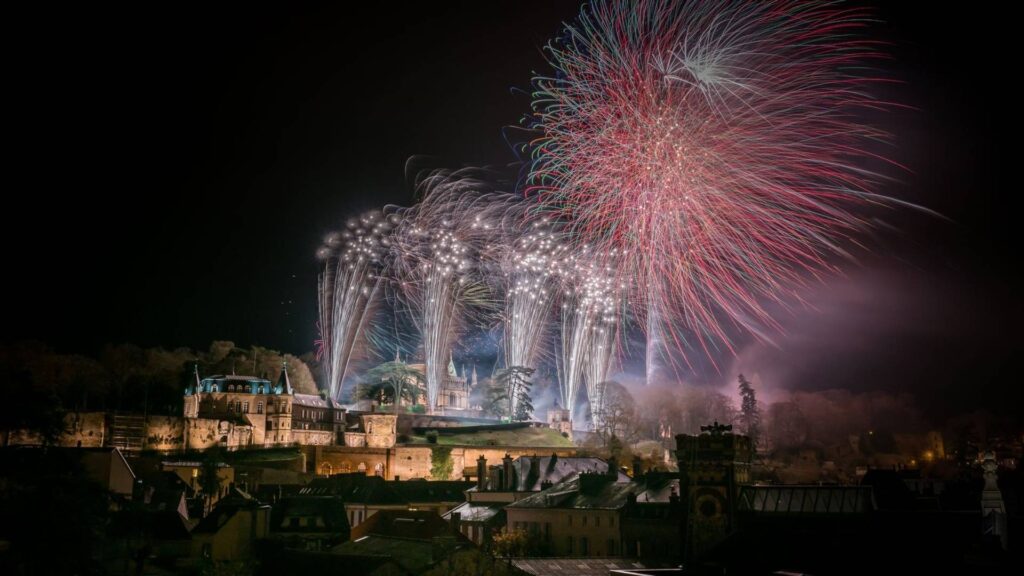
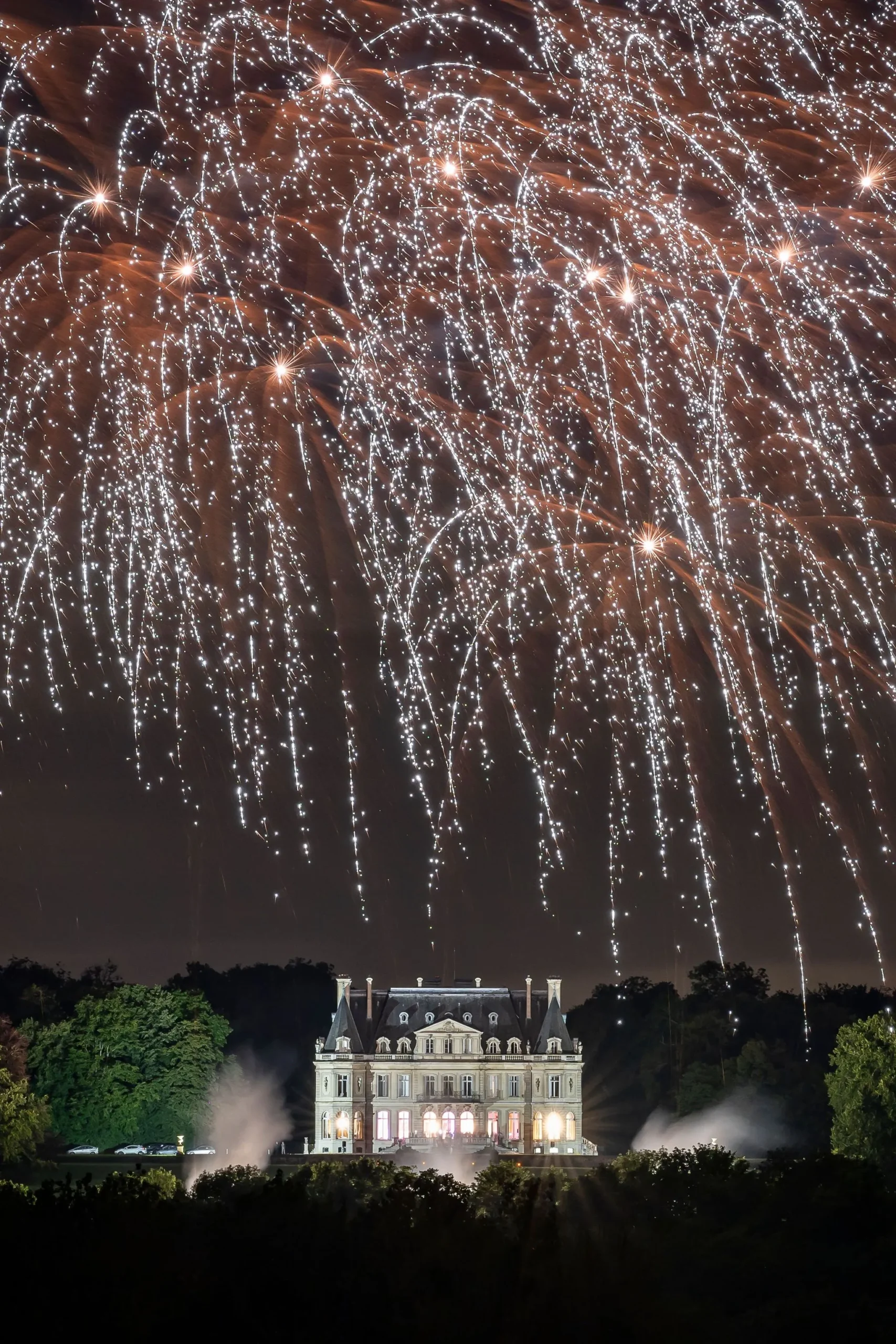
At Versailles as at Chambord or the Château de Vincennes, stone reflects the light, water multiplies it, perspective guides the eye. On our displays at historic sites, we find that restraint often achieves more than excess.
Designing a pyrotechnic show for a heritage site
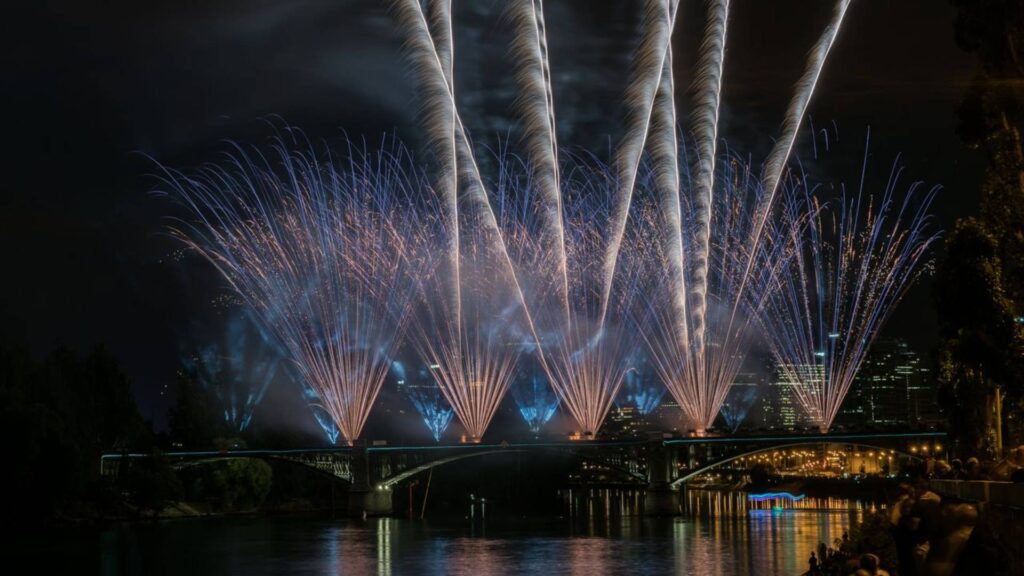
Celesta’s teams design bespoke shows for castles, monuments and major public events, in France and internationally. We start from the story: what do we want the audience to feel? Which turning point are we building towards? What final image should the spectator take home?
Then comes the technical writing: choice of products, calibres, firing angles, safety perimeter and audience capacity. An ICPE-classified storage facility gives the teams genuine logistical autonomy, from preparing the fireworks to transporting them. That independence matters when a site imposes access constraints or tight deadlines.
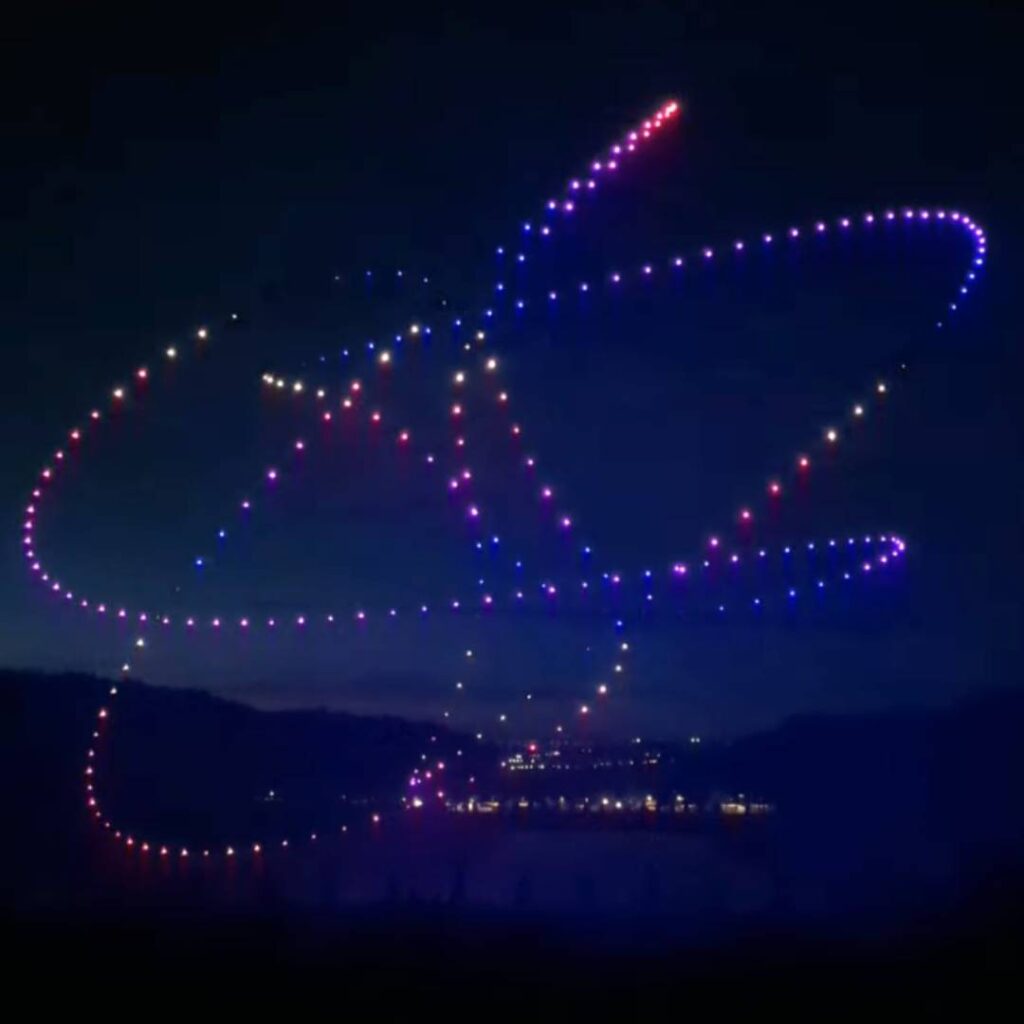
Celesta is not limited to fireworks. Luminous drones, video mapping, stage effects such as cold sparks or low fog, performers woven into the staging: the palette adapts to the venue and the budget. On a sensitive monument or in an area subject to noise restrictions, a drone swarm can take over from pyrotechnics without losing any of the narrative charge.
A telling example: a town celebrating its anniversary can pair a display synchronised to its local music with a few minutes of drones drawing its coat of arms in the sky.
Safety and the regulatory framework
In France, entertainment fireworks are governed by decree no. 2010-455 of 4 May 2010, which classifies them in categories F1 to F4 according to their level of hazard. Firing category F4 products requires a level 2 qualification certificate, whose renewal depends on taking part in at least three pyrotechnic shows over a two-year period.
Drone shows answer to a different body of rules, chiefly European regulation 2019/947. Administrative declarations, safety perimeter, coordination with the local authorities: these steps protect the client legally as much as they protect the public.