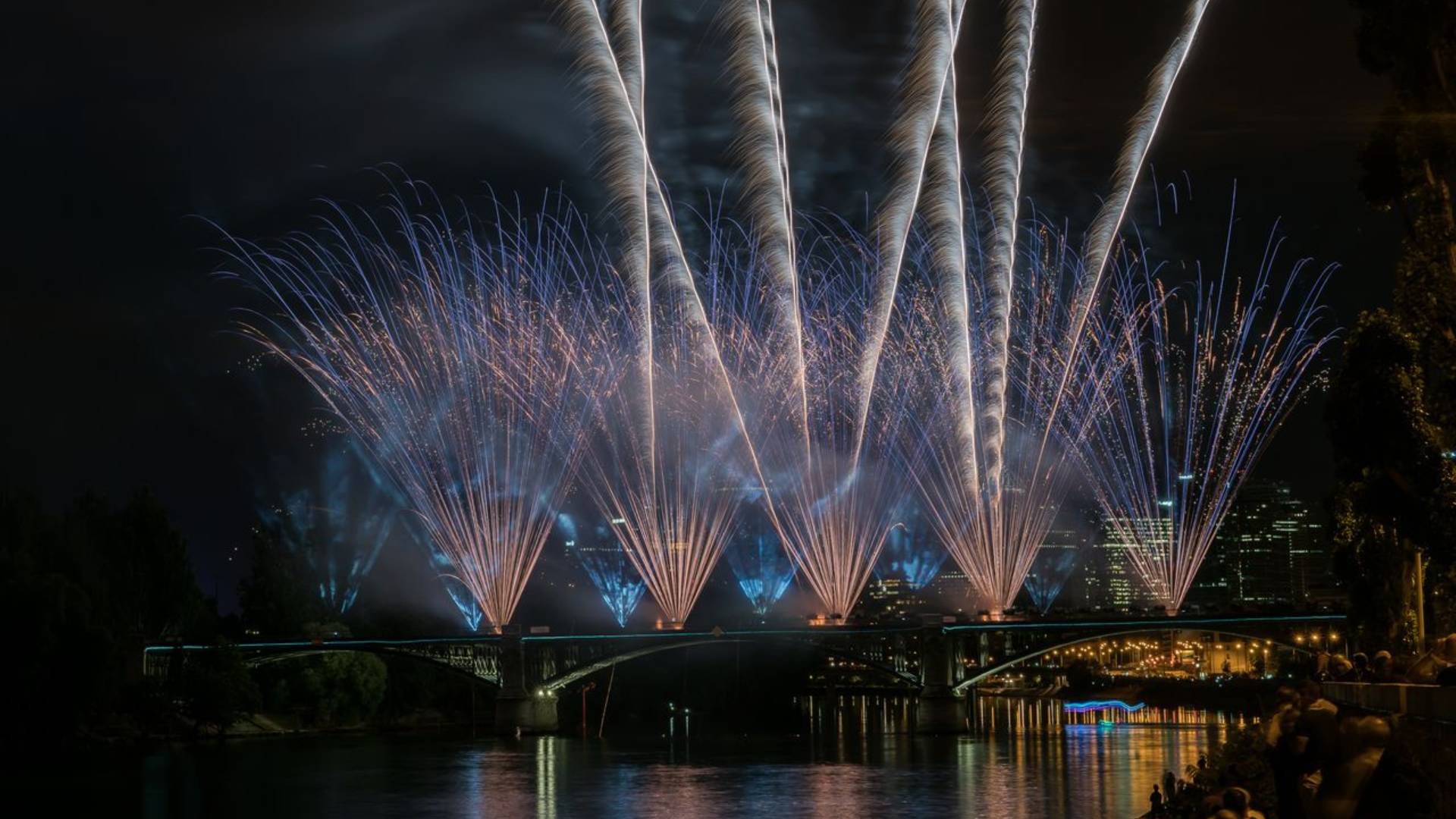
Category: Fireworks

  • Administrative procedures and deadlines for registering a night-time event

    Administrative procedures and deadlines for registering a night-time event

    Organising an event in the open air or on public roads involves striking a balance between artistic creativity and administrative rigour. As night falls, safety requirements become more stringent: crowd management, pyrotechnic displays, laser beams, noise levels, and regulations governing traffic or the use of public spaces.

    For local authorities, festival committees and event organisers, planning ahead is the cornerstone of success. This guide summarises the relevant regulations, the mandatory procedures to be followed with prefectures and town halls, and the precise timetable to be adhered to.

    Notifying an event on public land

    Whenever a night-time event takes place on public land (streets, squares, local parks), the Internal Security Code requires prior notification.

    • Prior notification to the town hall: submit your application for temporary occupation of public land (AOT).
    • Local by-laws: necessary for managing road closures, traffic diversions or the reservation of parking spaces for service vehicles.
    • Statutory deadlines: the application must be submitted between 15 days and 3 months before the event. A minimum lead time of 1 to 2 months is recommended to allow for safety committee meetings to be held if the set-up requires temporary structures (stages, grandstands).
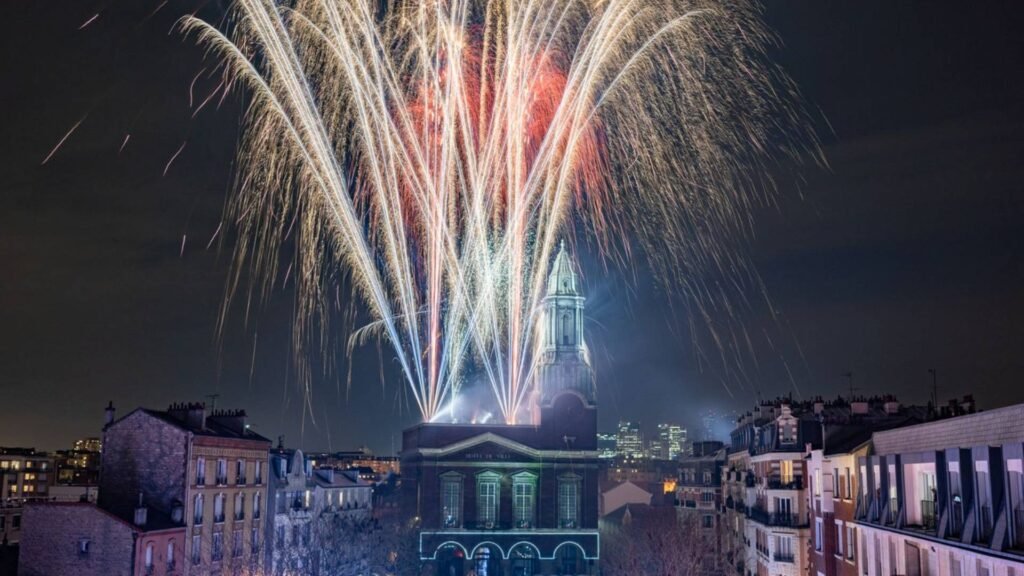
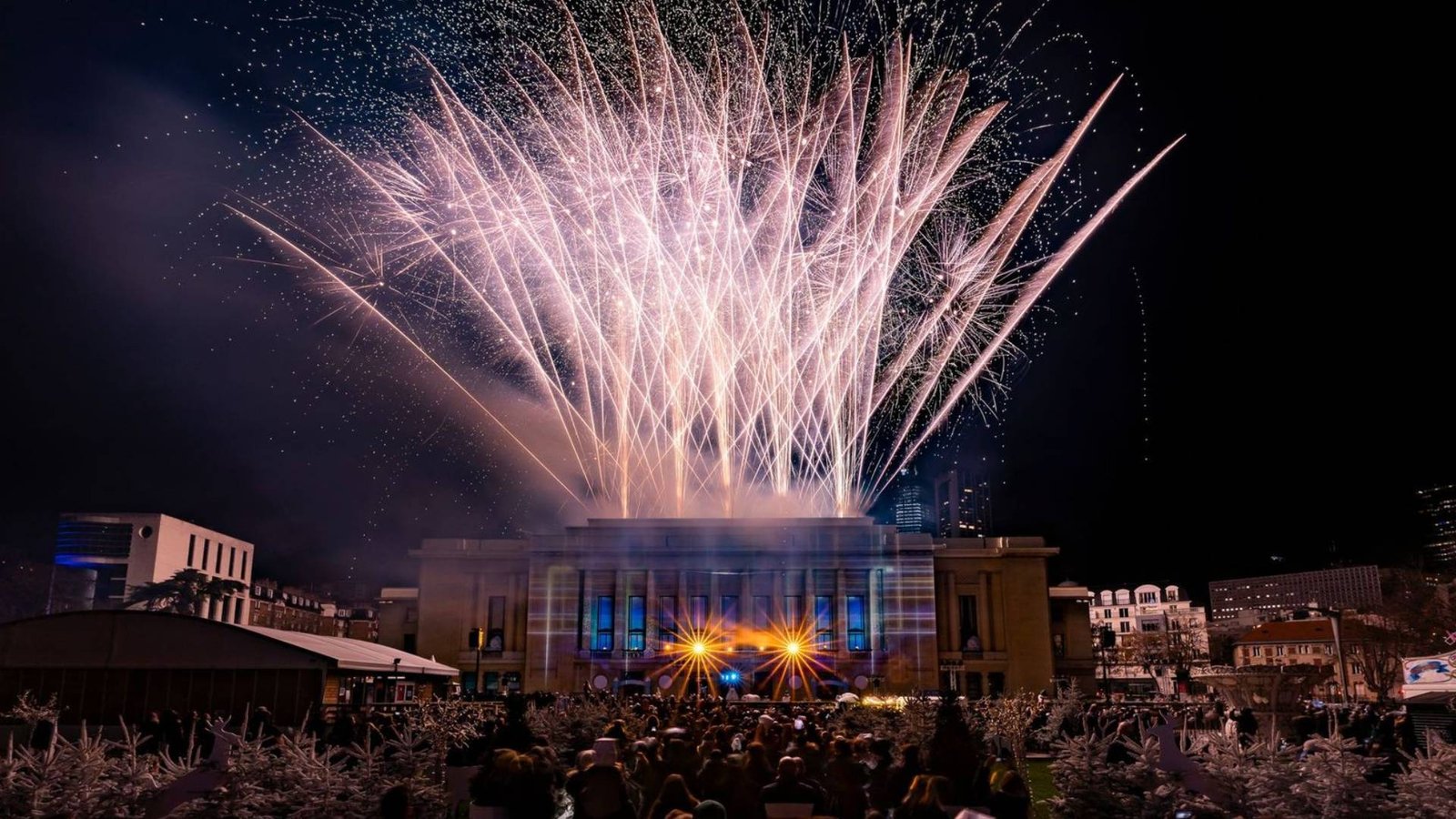
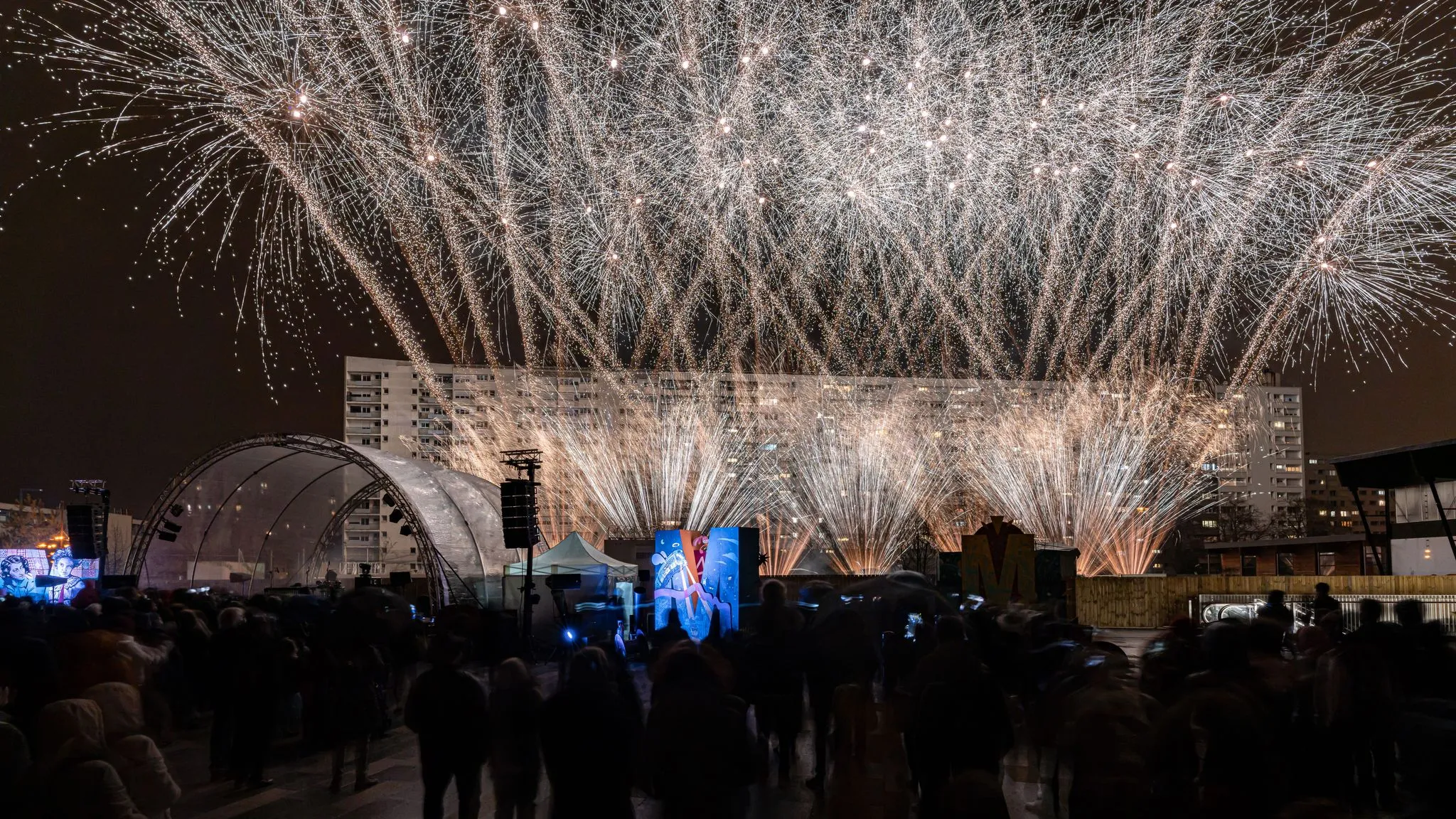
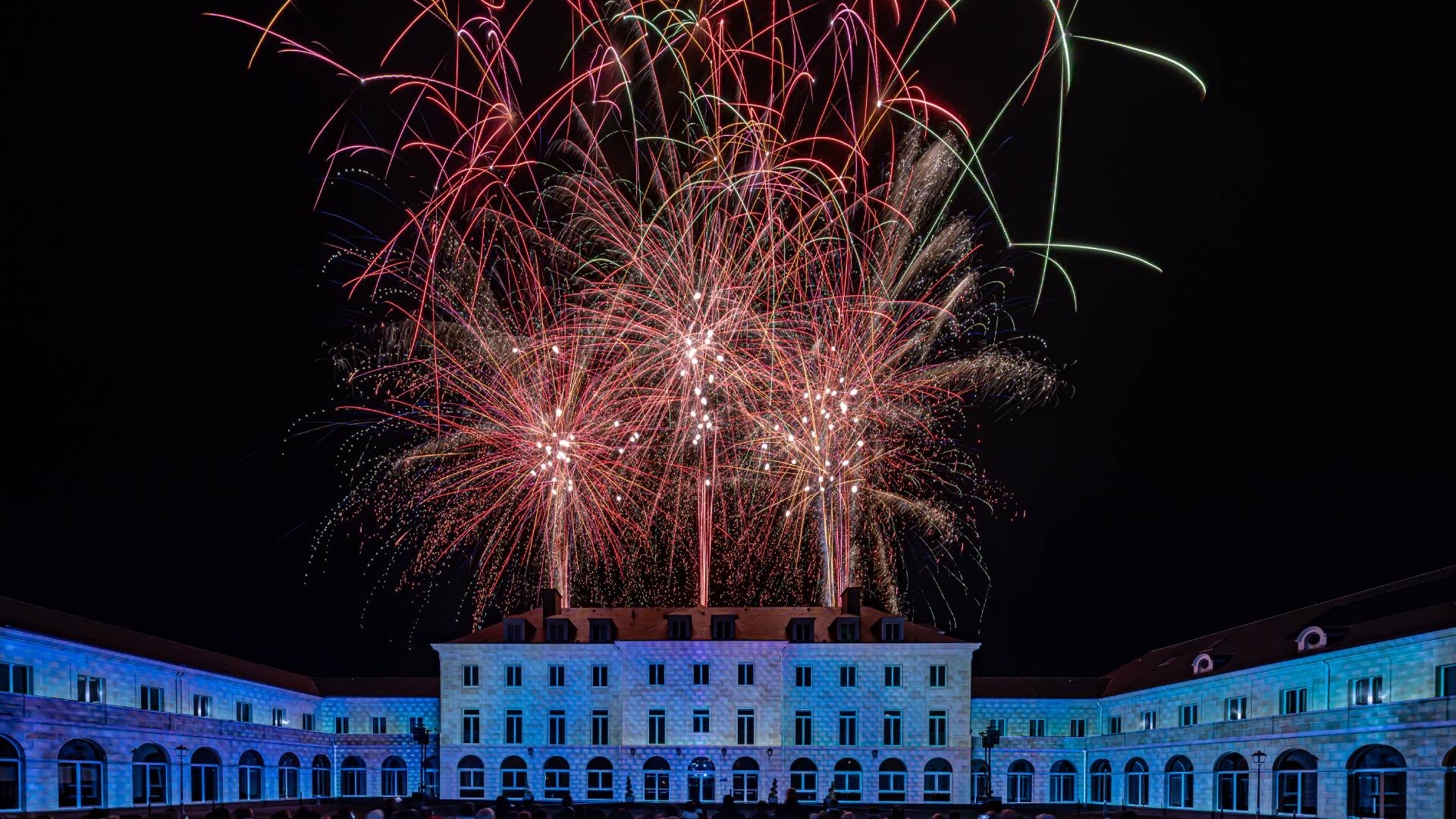
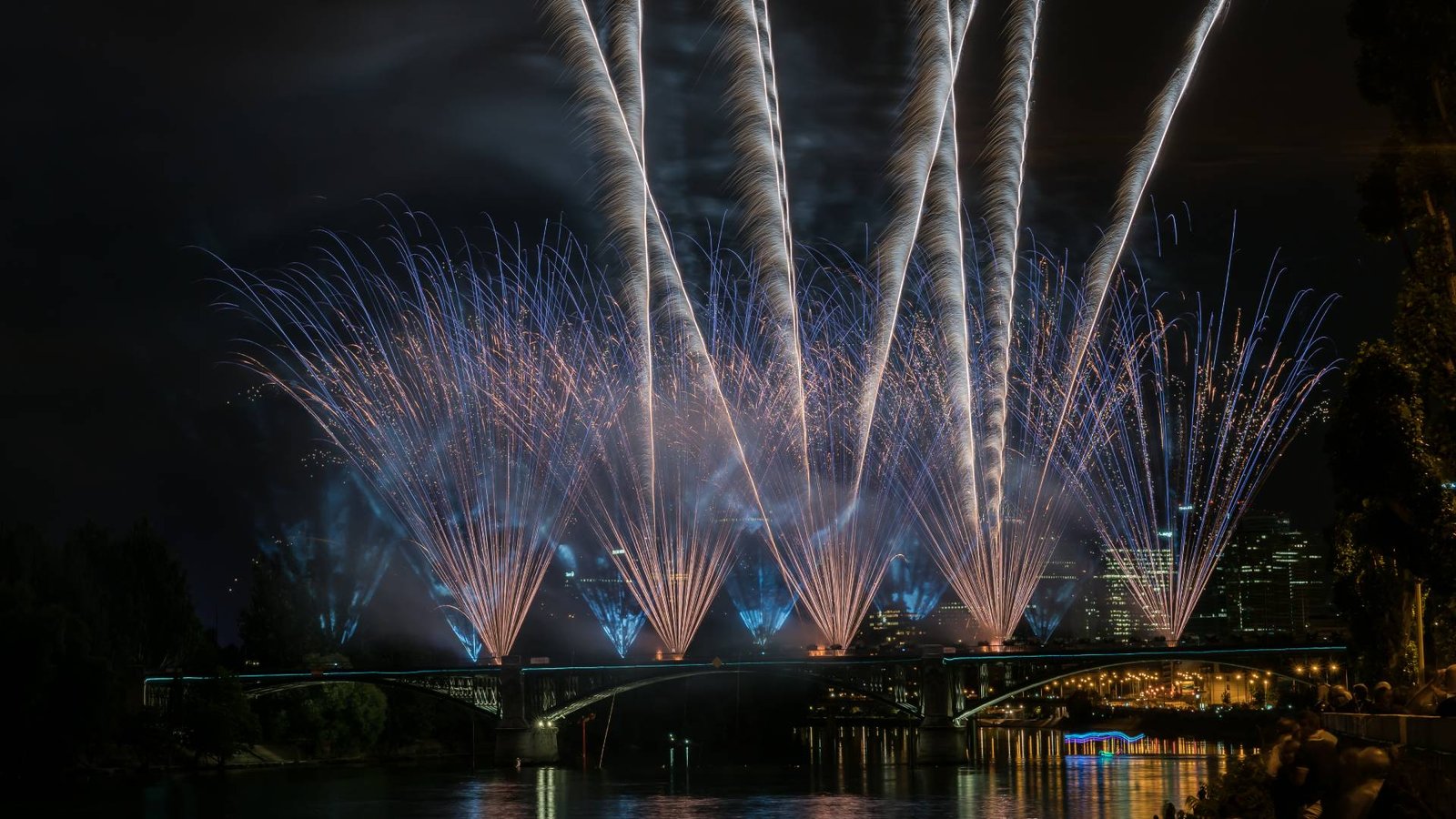
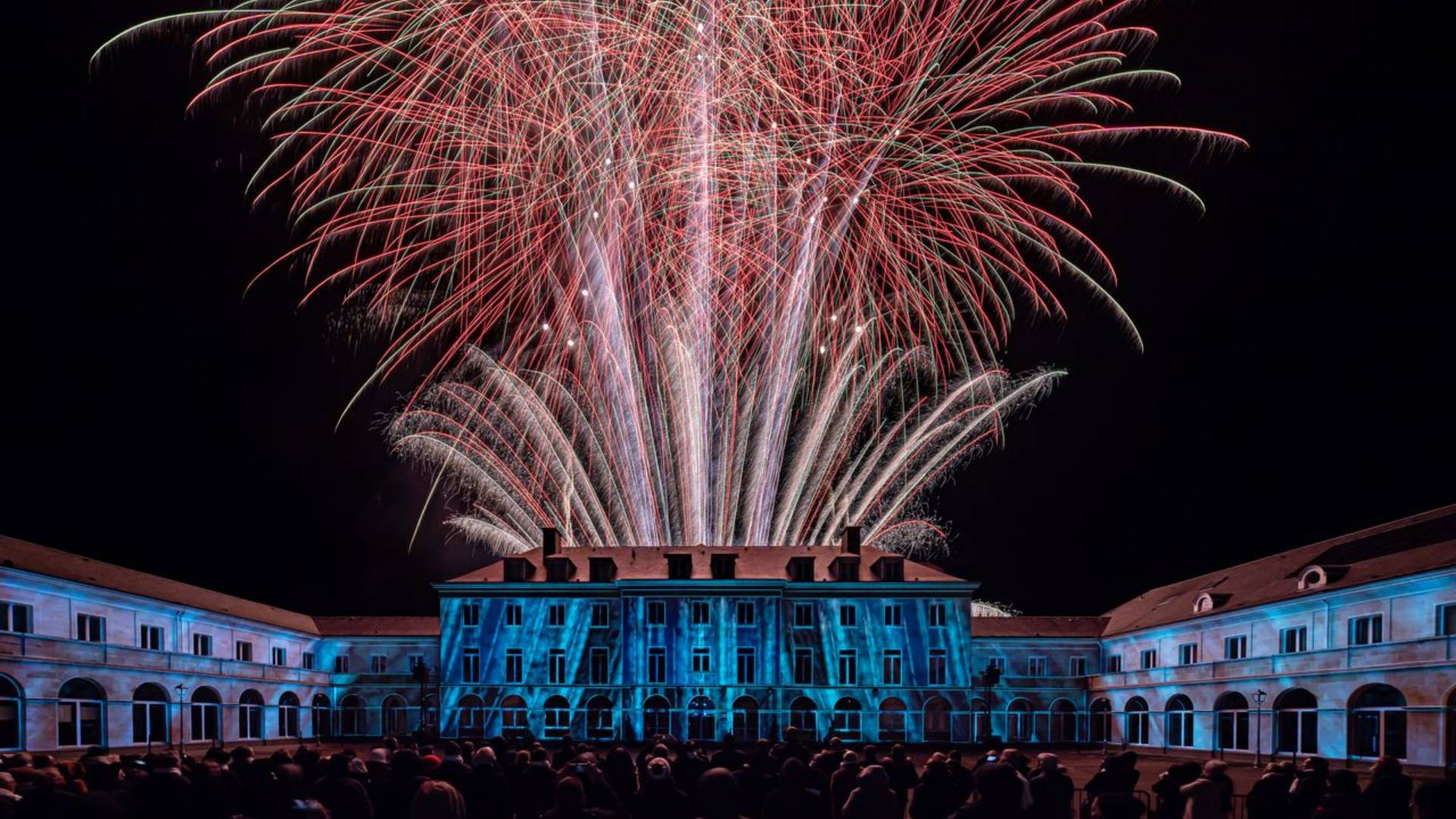
    Fireworks display set off above a public square, in front of an audience

    Regulations governing pyrotechnic shows and fireworks displays

    If the event includes entertainment effects such as a fireworks display, the requirements vary depending on the category of the products and the quantity of active material (K3 or K4/F4).

    What the current regulations say

    • F2/F3 fireworks on private property: no prior notification is required provided that the total quantity of active material remains below the 35 kg threshold.
    • Pyrotechnic shows (F4 or T2 fireworks, or those containing more than 35 kg of active material): a prefecture declaration and a local council declaration are required.

    Deadlines and form

    • Official form: Cerfa No. 14098*02.
    • Mandatory deadline: at least one month before the firing date.
    • Documents to be provided: site plan of the firing zone (clearance, safety distances), certificate of qualification for the pyrotechnician (F4/T2), certificate of public liability insurance for the pyrotechnics company, product data sheets and written consent from the landowner.

    Be aware of summer prefectural orders: during heatwaves or droughts, prefectures frequently issue temporary bans on firing to prevent fires. It is essential to monitor these orders on a daily basis as the date approaches.

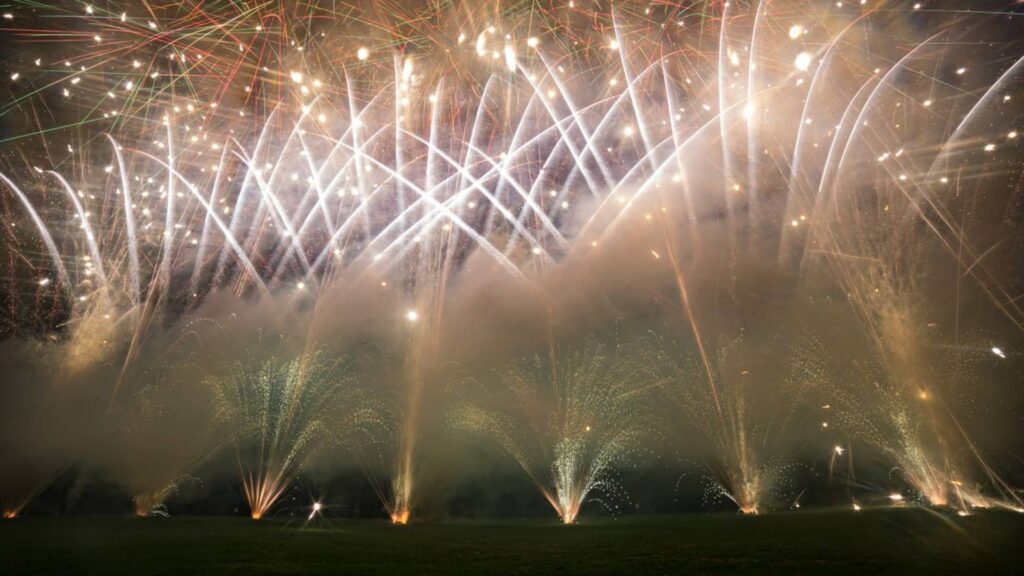
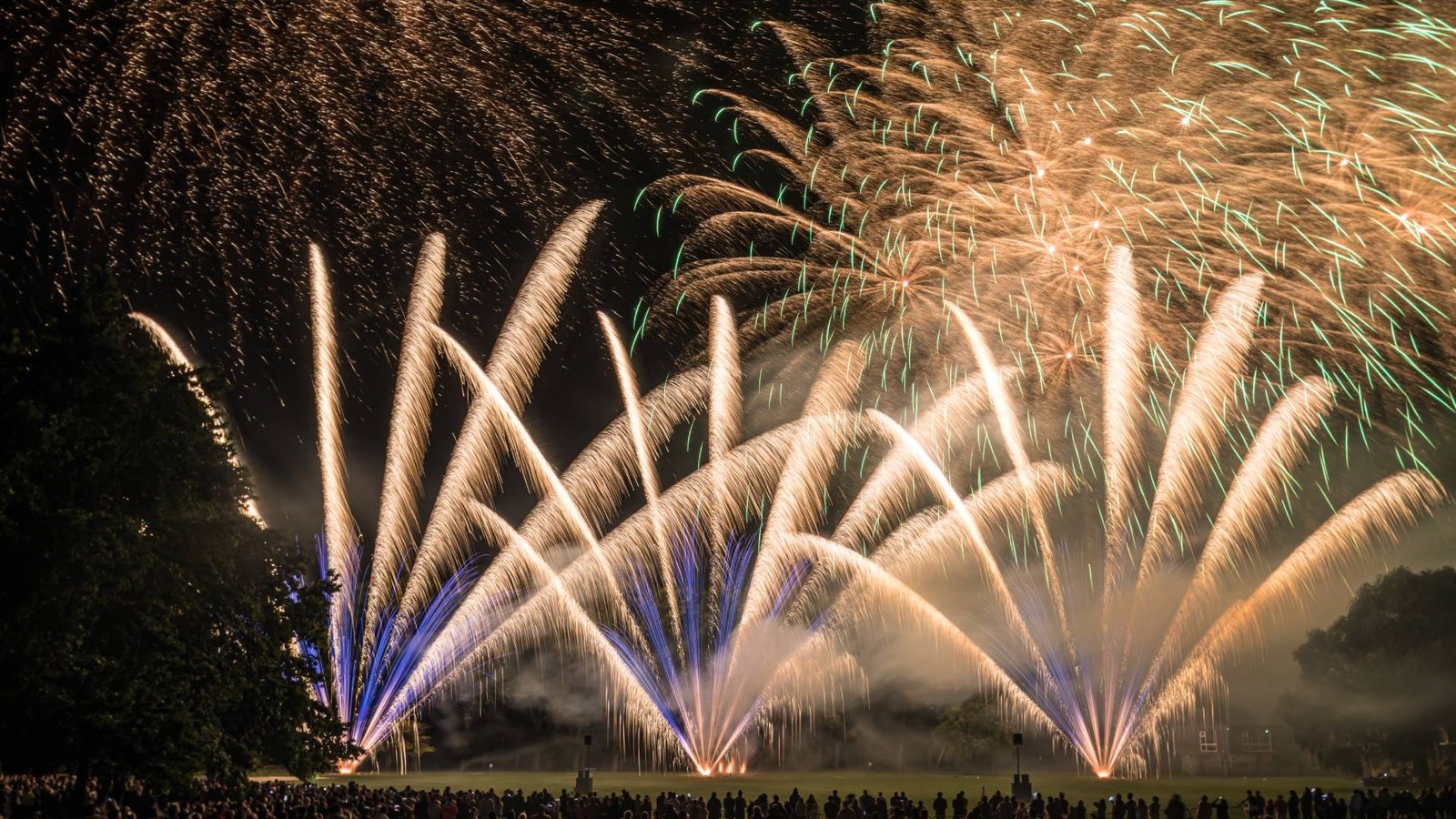
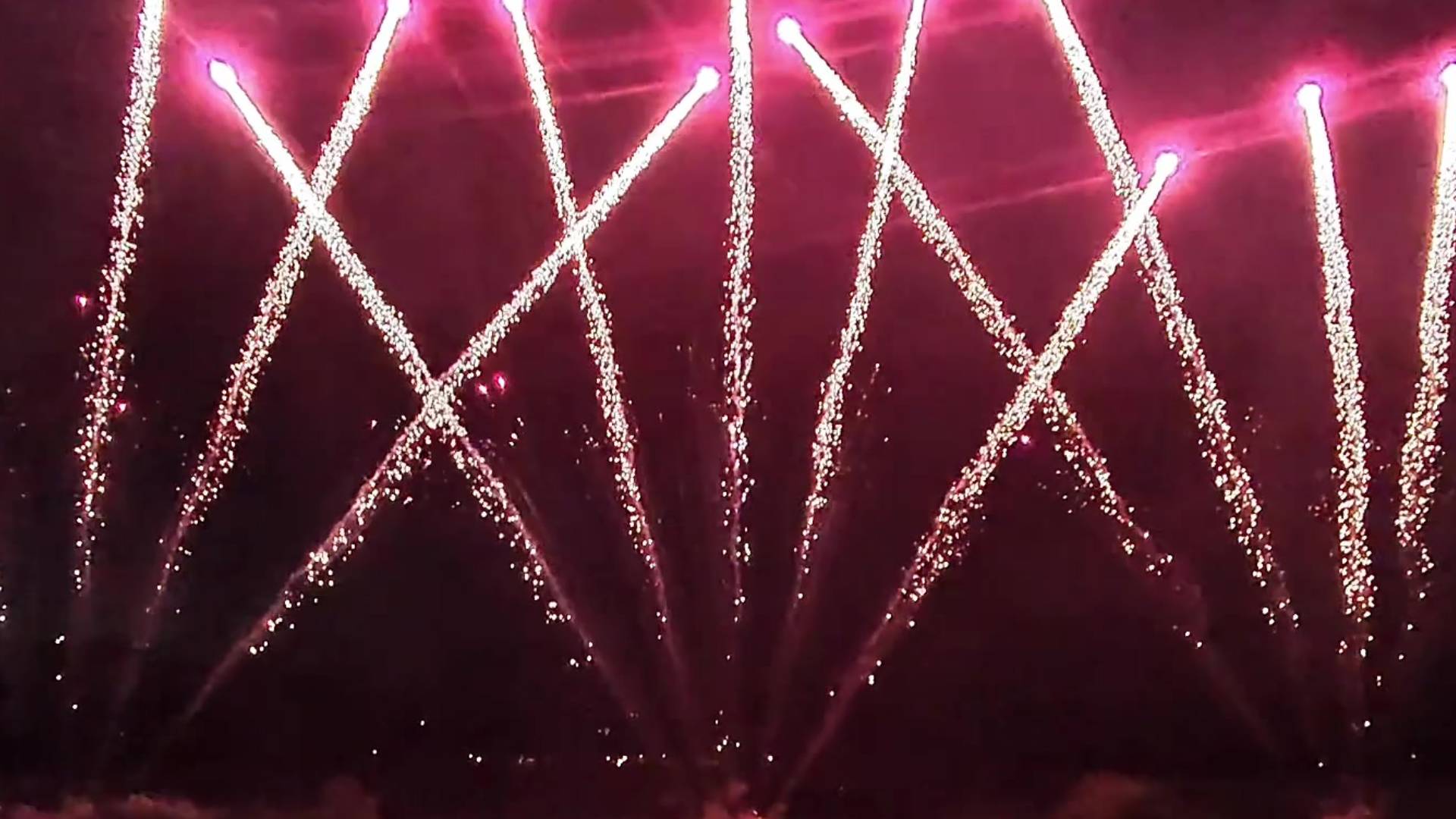
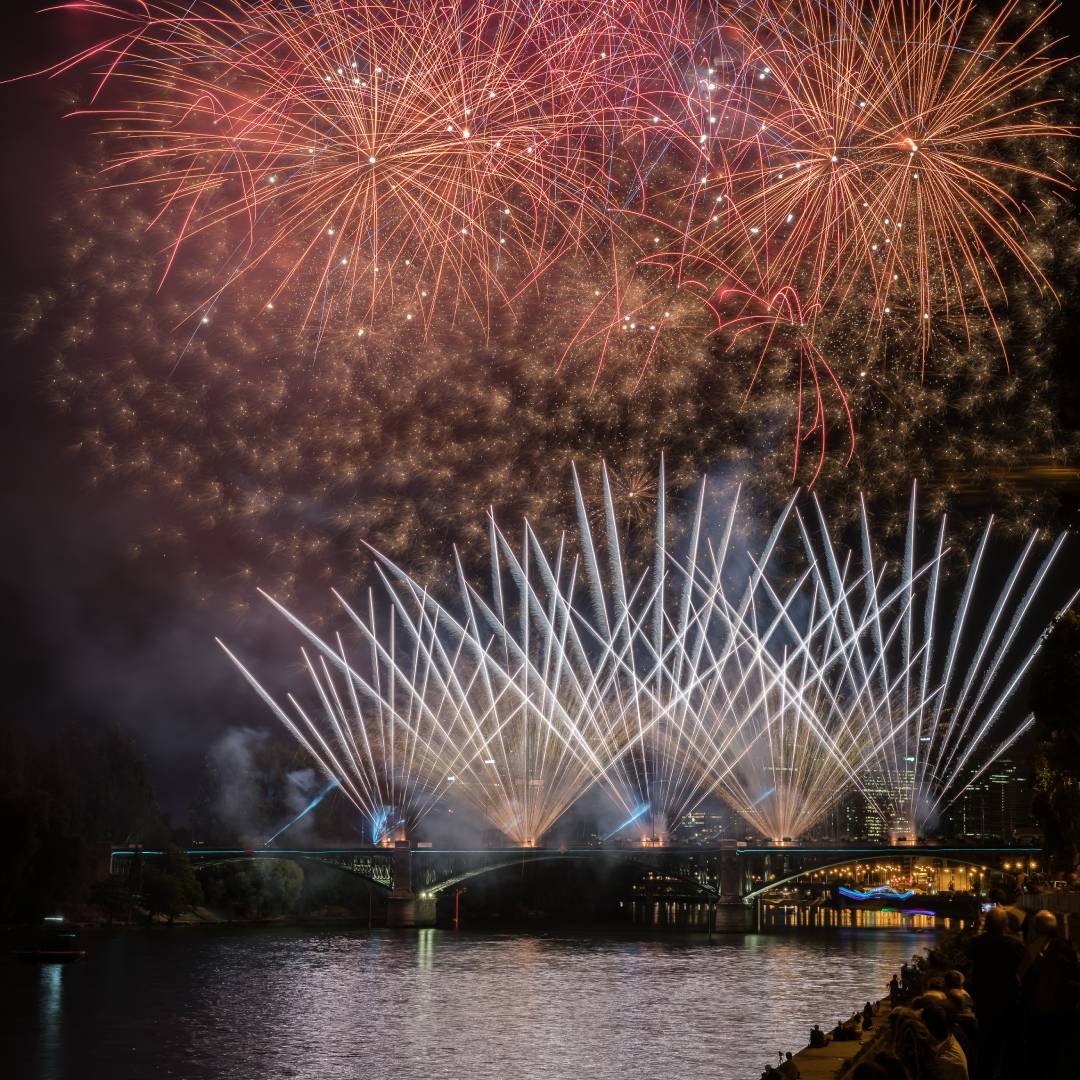
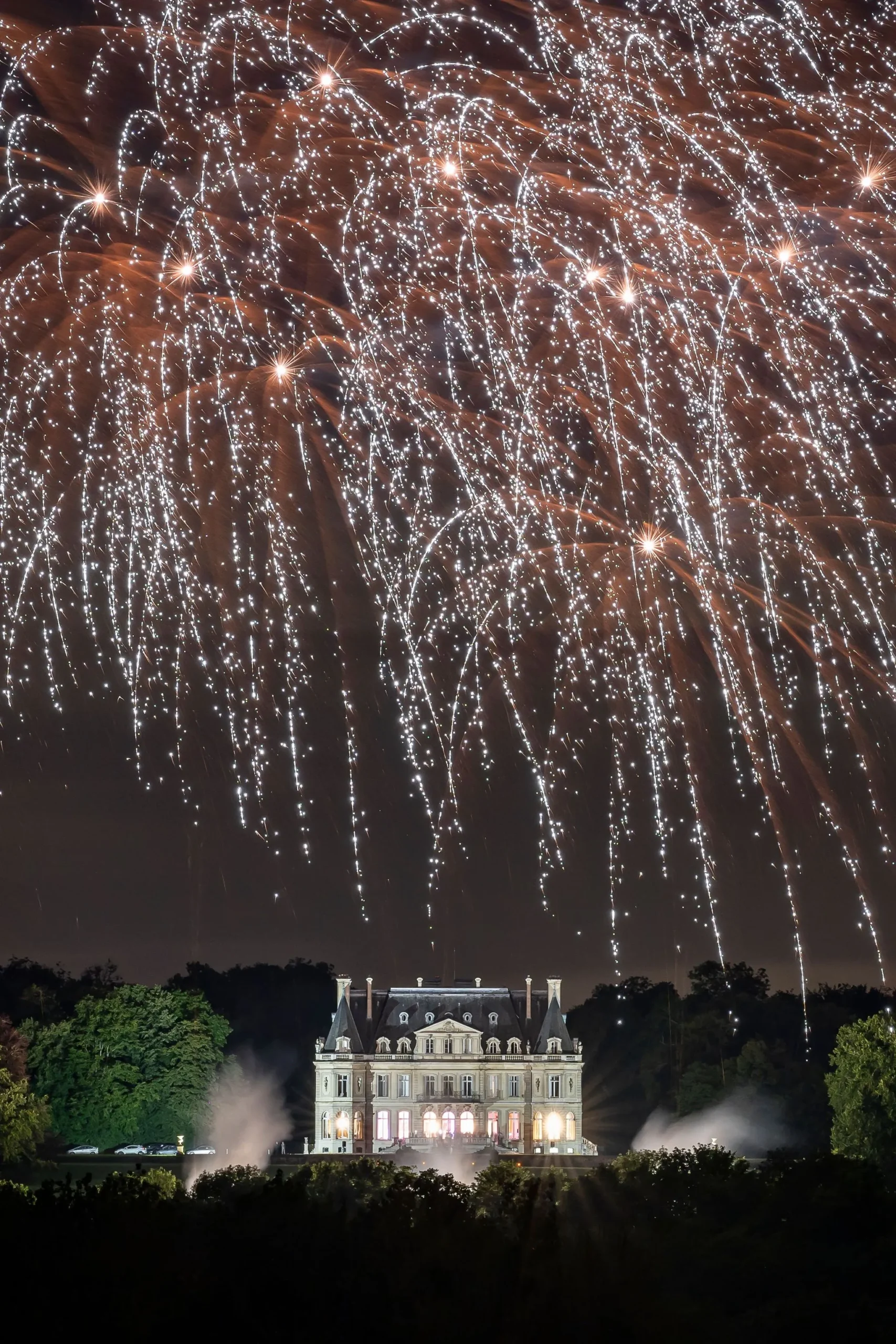
    A large fireworks display set off above a park

    Laser displays and night-time special effects

    High-powered spotlights and stage lasers add a striking visual element to night-time events, but their use is strictly regulated for reasons of visual safety and air navigation.

    • Class 1 and 2 lasers: the organiser or service provider may operate them under their own responsibility, whilst ensuring that nearby aerodromes or airports are notified.
    • Class 3B and 4 lasers: prior notification to the prefecture is compulsory.
    • Deadline: the application and technical dossier (including the firing plan, beam orientation and safety perimeter) must be submitted to the prefecture at least one month before the event, including test firings.
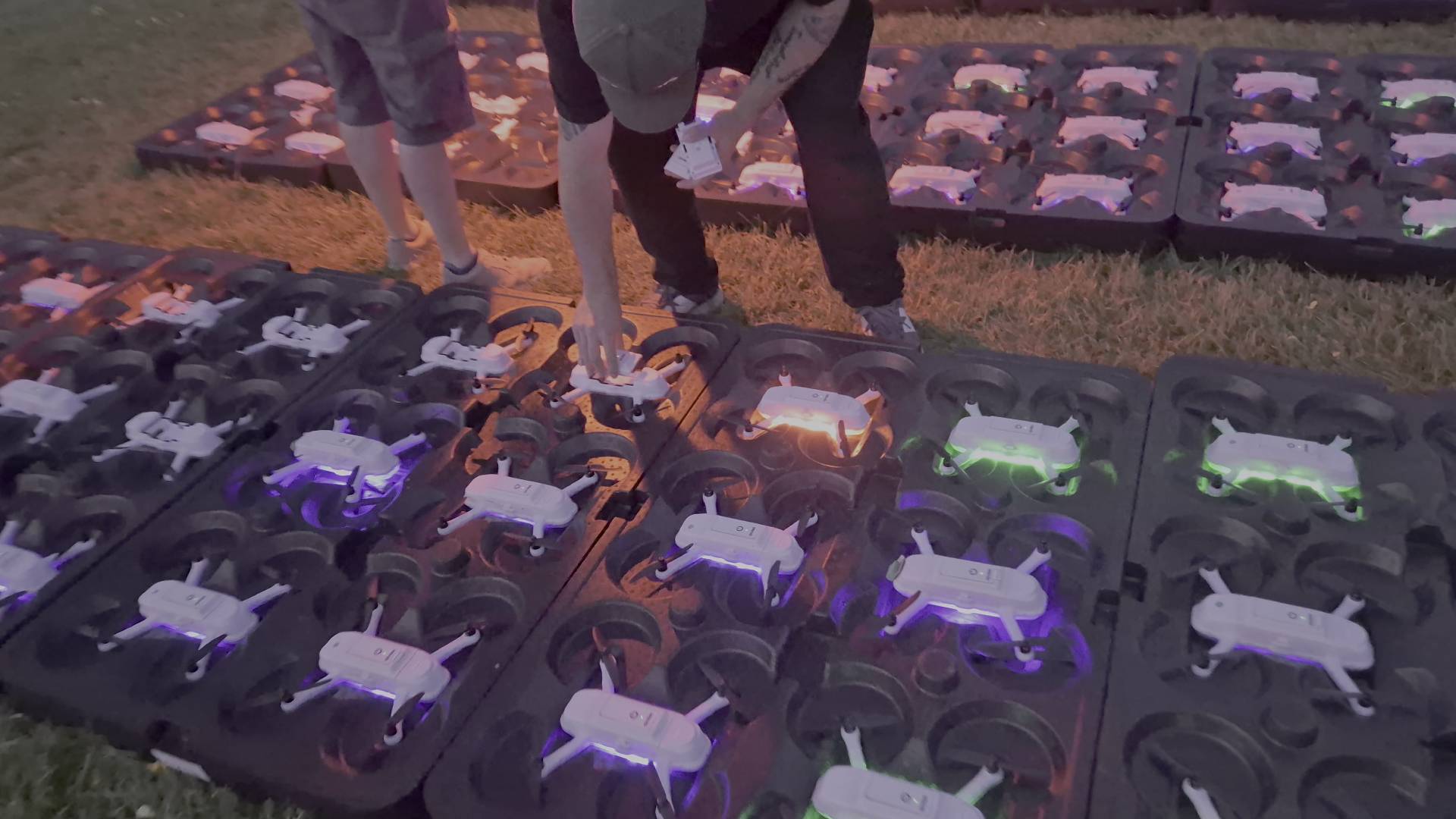
    Ground preparations for a drone light show prior to launch

    Noise, public safety and copyright

    The technical and safety aspects are accompanied by cross-cutting initiatives:

    • Noise levels and public peace: noisy night-time events must comply with the decree on the prevention of risks associated with noise and amplified sound (thresholds set at 102 dB(A) over a 15-minute period). It is strongly recommended that local residents be informed in advance.
    • Temporary premises open to the public (ERP): the erection of tents, marquees or mobile structures (CTS) open to the public requires approval from the safety committee if the capacity so requires.
    • SACEM and SPRE: the broadcast of original or recorded music must be declared in advance via the SACEM portal at least 15 days before the event date in order to qualify for reduced rates.

    Summary timetable of steps to be taken

    Administrative procedureBody or authorityMinimum statutory notice
    Application for an event on public roadsTown hall or prefecture1 to 3 months before
    Notification of a pyrotechnic show (F4 or over 35 kg)Prefecture and town hall (Cerfa 14098*02)1 month before
    Class 3B or 4 laser declarationPrefecture, events department1 month before
    Application for a safety committee reviewTown hall, prevention department1 month before
    Music broadcasting declarationSACEM15 days before
    Application for a traffic or parking orderTown hall or highways department15 days to 3 weeks before

    Six applications, six points of contact, six deadlines. Celesta submits them and keeps track of them for you.

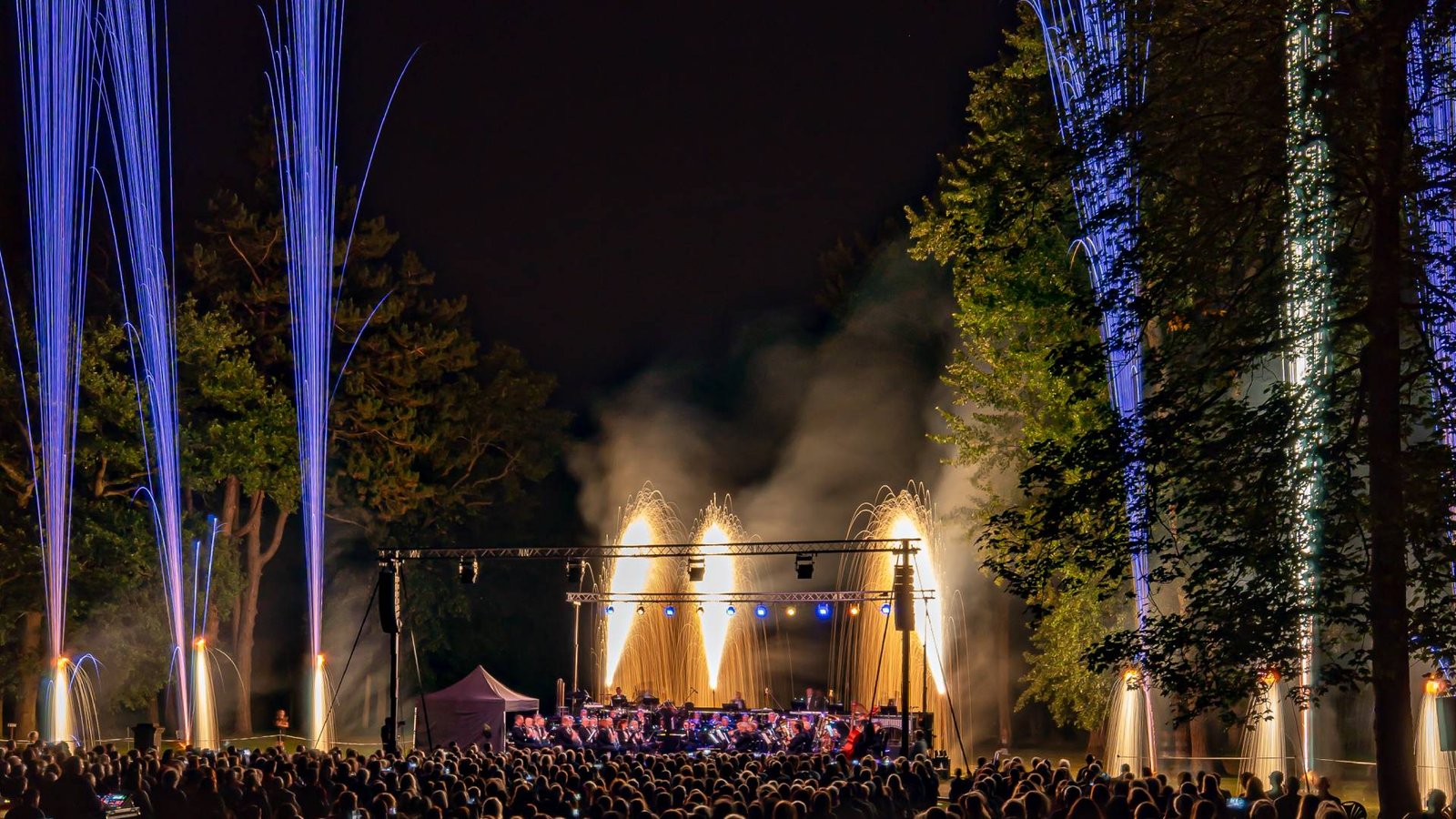
    Flame effects on stage during a National Day celebration

    Turnkey support to secure your administrative procedures

    Designing an immersive show, a pyrotechnic show or a drone light show requires creativity, but its feasibility depends on a thorough understanding of administrative procedures. Between dealing with prefectural authorities, compiling Cerfa applications, validating safety perimeters and monitoring prefectural drought decrees, the mental workload for an organiser or elected representative can quickly become overwhelming. Celesta supports local authorities, associations and businesses throughout the entire process:

    • Comprehensive administrative support: drafting the full technical dossier, submitting Cerfa prefecture declarations and liaising directly with the regulatory authorities.
    • Technical compliance and safety: drawing up layout plans, calculating firing or projection ranges, and deploying certified pyrotechnicians or technicians.
    • Responsiveness to regulatory uncertainties: ongoing monitoring of local prefectural restrictions (heatwaves, strong winds) with proposals for technical adjustments where necessary to avoid outright cancellation.

    Entrusting the administrative management to an experienced expert such as Celesta transforms the regulatory constraints surrounding pyrotechnic shows and drone shows into a clear and reassuring framework, enhancing the visual impact.

    Planning a night-time show? We’ll provide a quote within 48 hours and take care of all the administrative procedures.

  • Drone light show: the new way to light up the sky at your events

    Drone light show: the new way to light up the sky at your events

    The night sky is now illuminated by points of light controlled with millimetre precision. Drone light shows are making their way into town festivals, corporate events and major heritage celebrations. Here’s how this aerial art form works, what it offers, and why the teams at Celesta place it at the heart of their creations, both in France and abroad.

    What is a drone light show?

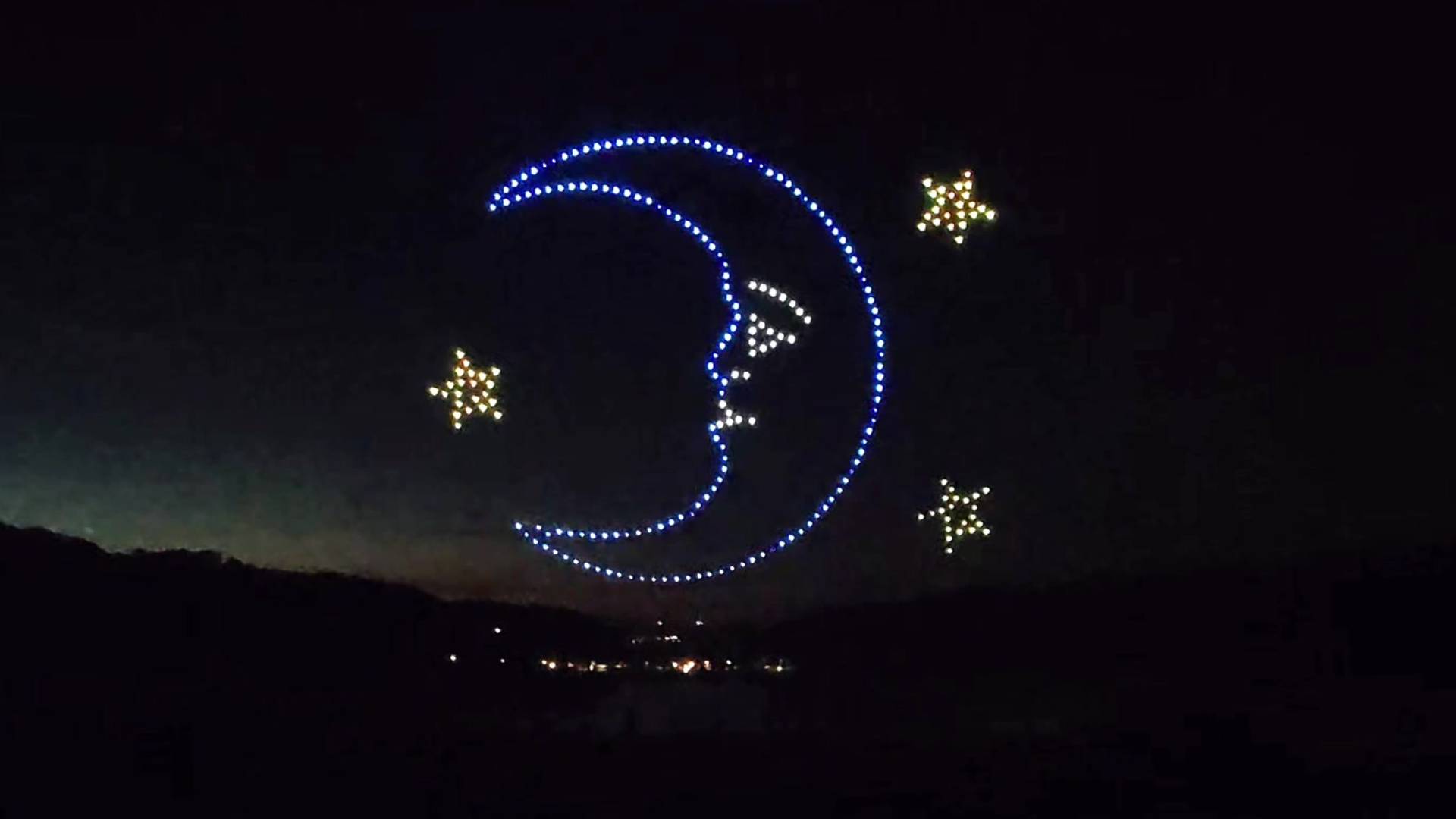
    A drone light show is an aerial display in which dozens or hundreds of light drones fitted with LEDs form shapes, logos and animated scenes in the sky. Each drone acts like a flying pixel. Its position, colour and brightness are programmed frame by frame, then synchronised to a soundtrack using timecode.

    The swarm takes off from a designated area on the ground. It ascends in formation, maintains its patterns, regroup, and then lands. Whereas a fireworks display paints the sky with successive bursts, the swarm of drones sculpts stable, clearly defined shapes – a precise display that the audience can follow effortlessly.

    In 2024, more than 1,500 shows of this kind took place around the world, with set-ups comprising up to 500 devices, according to sector analyses published by WiseGuy Reports. The medium is still in its infancy. Its visual language is becoming more refined with each passing season.

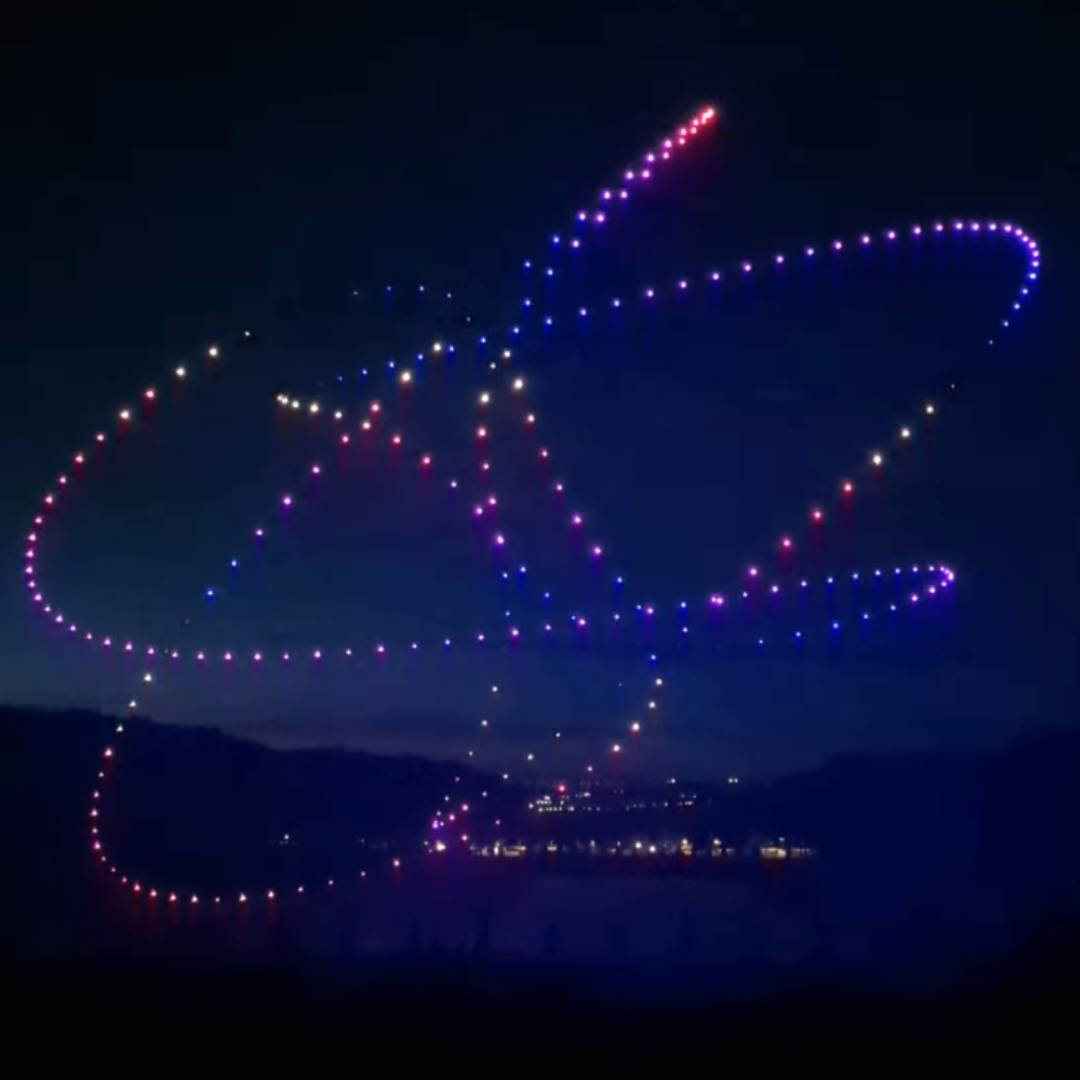
    Drones lumineux traçant une étoile filante au-dessus d’un lac de montagne

    Why drone light shows are proving popular with event organisers

    The rise in the use of light drones is primarily due to their small footprint. A European study published in 2024 measured an average 40 per cent increase in PM2.5 fine particulate matter around launch sites in the half-hour following a fireworks display. A 15-minute municipal fireworks display emits around 200 kg of CO₂, whilst a drone show featuring 500 drones consumes nearly 2 kWh, equivalent to less than 1 kg of CO₂, according to measurements cited by GoodPlanet. For a local authority subject to a climate action plan, this difference carries significant weight in the decision-making process.

    Narrative writing also takes on a new dimension. A brand logo, a town’s coat of arms, a character coming to life: the swarm tells a figurative story that pyrotechnics alone cannot convey. This visual composition of the show speaks directly to communications departments and heritage sites keen to convey their identity.

    Relative silence is just as important. Fireworks displays often exceed 150 decibels, a level that stresses wildlife and disturbs sensitive members of the public. A swarm of light drones operates at a lower noise level. For a Natura 2000 site or a busy town centre, this is a valid argument.

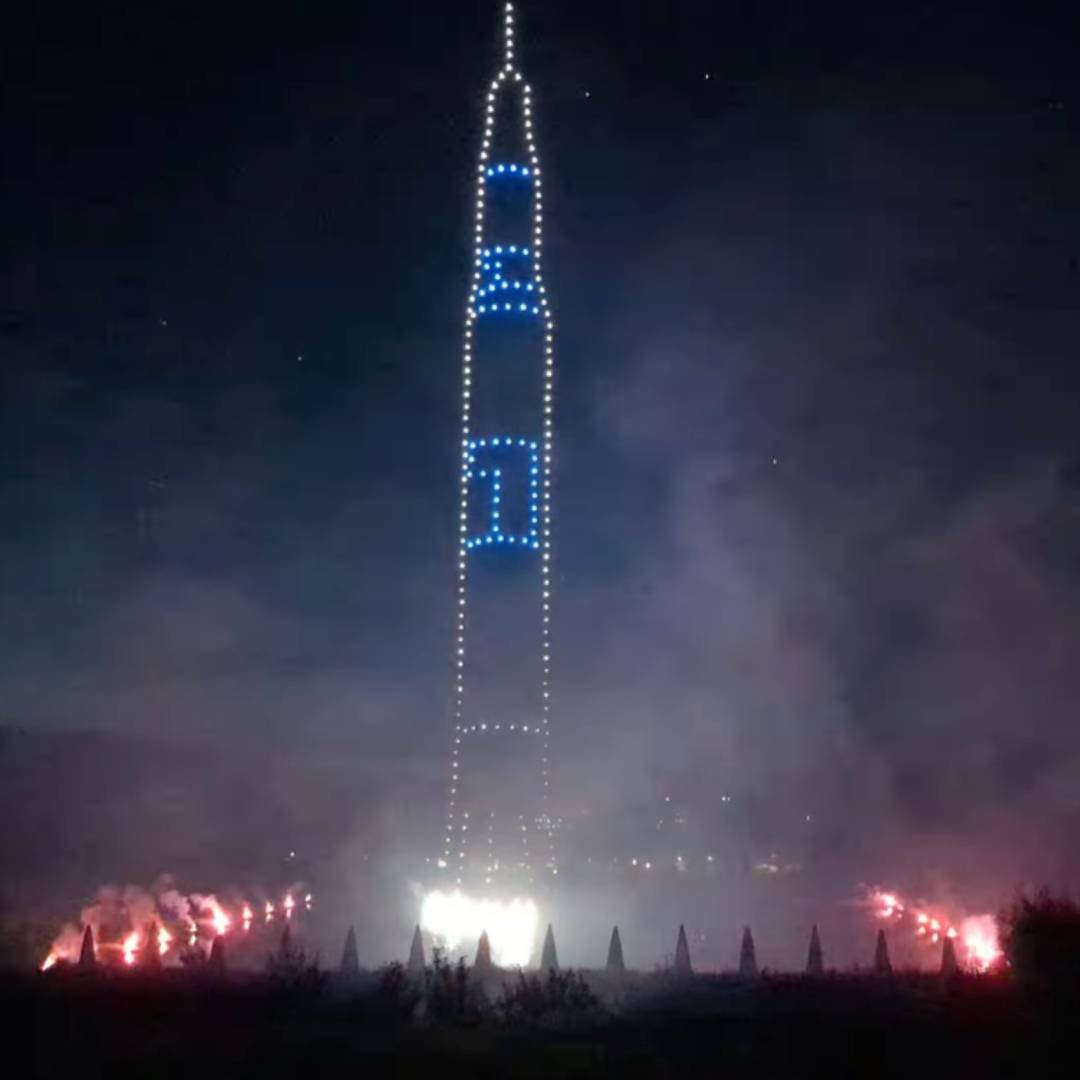
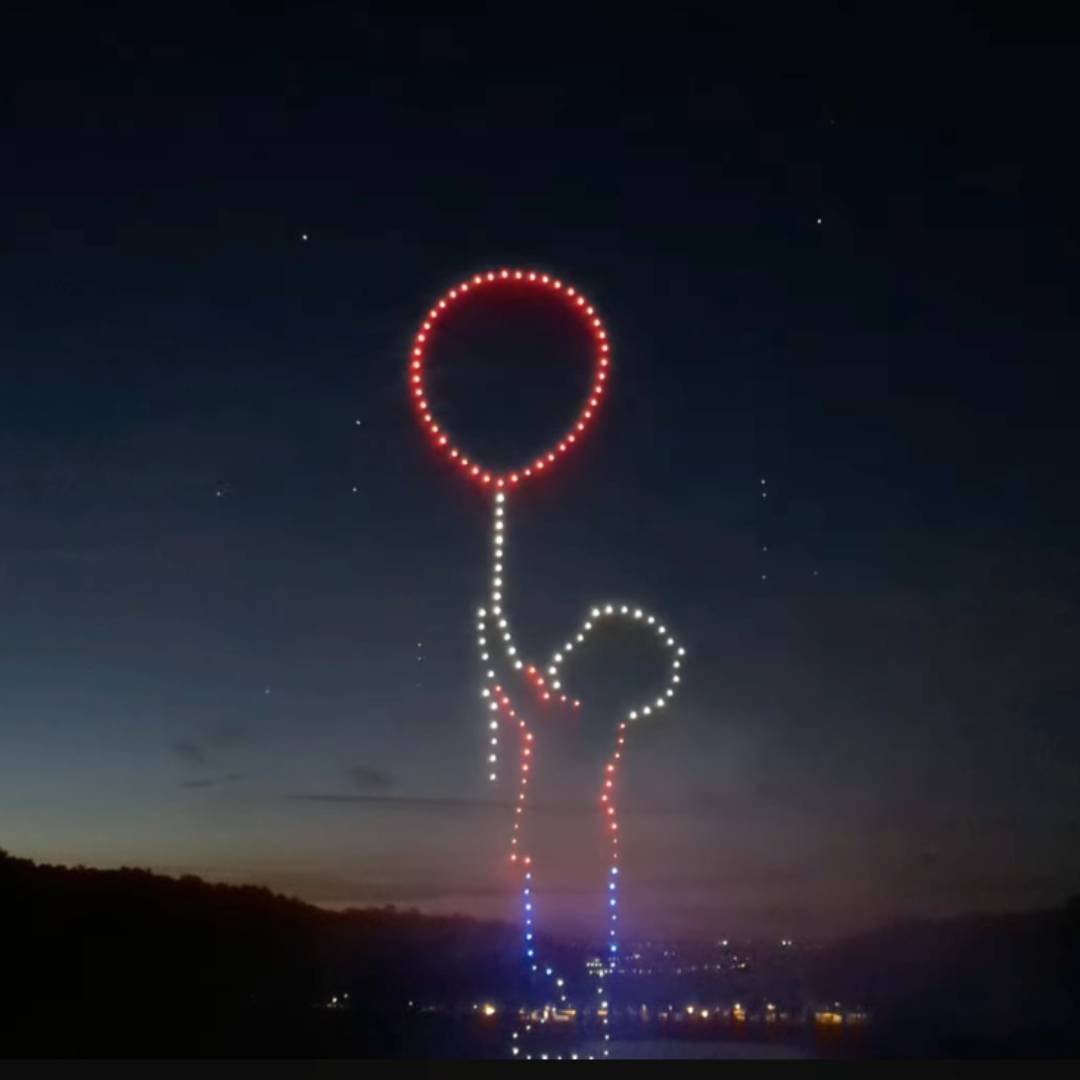
    Drones lumineux dessinant une fusée dans le ciel nocturne

    How to put together a drone show, step by step

    A drone show is put together long before take-off. The Celesta teams follow a tried-and-tested approach, drawn from the world of pyrotechnics.

    It all begins with the conceptualisation: artistic vision, message, site constraints, audience capacity. Next comes the scriptwriting, where the visual narrative is broken down into sequences. The 3D animators model each figure, frame by frame, before simulating the whole sequence on a computer. Production control synchronises the flight with the music and sound. Rehearsals confirm the flight paths. On the day, a lead pilot supervises the launch from the controlled ground area.

    Celesta owes this rigour to its original line of business. The company operates a licensed storage facility, managed by certified pyrotechnicians, ensuring logistical autonomy on every project. Whether in front of more than 700,000 spectators gathered on the Champs-Élysées for a New Year’s Eve celebration, or 700 guests at the Carrousel du Louvre for a product launch, the same safety and coordination protocols apply to the drones.

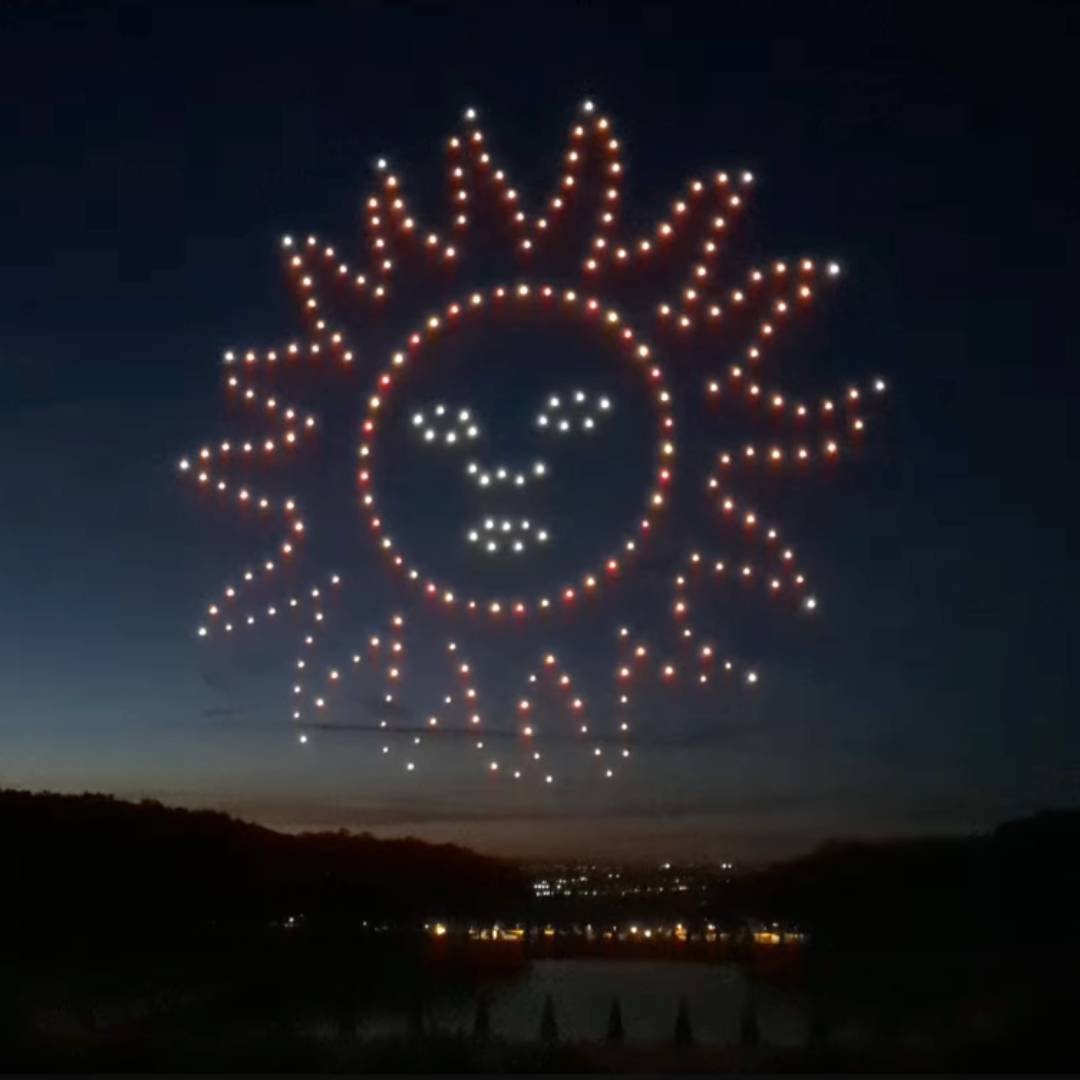
    Drones lumineux dessinant un soleil souriant au-dessus d’un lac au crépuscule

    Drones, fireworks display or special effects: our recommendation

    Should we opt for drones for firefighting? Our experience in the field suggests a combination of the two approaches.

    The two forms of expression do not convey the same thing. The fireworks display offers power, warmth and that sensation that courses through one’s chest. The drone light show brings figurative precision and understated elegance. Combined and blended with video mapping, stage flames, cold sparks or performers, they create a multimedia spectacle whose richness surpasses that of any single discipline taken in isolation.

    This fusion is what the teams at Celesta specialise in, whether in Aigremont in the Yvelines or on the international stage. The company has staged productions in Dubai, Guangzhou, Mulhouse and at the Château de Chantilly, both in France and abroad. A dual expertise – technical and creative – is equally suited to a national celebration, a brand event or a high-end wedding.

    What do the regulations in France say?

    The legal framework is based on Implementing Regulation (EU) 2019/947 of 24 May 2019, which has been in force since 31 December 2020. It classifies operations into three categories: open, specific and certified. A drone swarm display falls under the ‘specific’ category, which is the most strictly regulated of the common uses.

    In France, the Directorate General of Civil Aviation (DGAC) oversees the implementation of these regulations, whilst the Directorate of Civil Aviation Security (DSAC) carries out monitoring. The operator submits an application for authorisation, defines a controlled ground area and a safety perimeter, and then obtains the necessary prefectural approvals. An exemption exists for carrying certain equipment on drone swarms. Given the complexity of these procedures, it is advisable to entrust them to an experienced service provider.

  • Pyrotechnic show and drone light show: a fusion of fire and technology

    Pyrotechnic show and drone light show: a fusion of fire and technology

    For centuries, fireworks displays have symbolised celebration and collective memory. Drone light shows, on the other hand, project sharp, almost cinematic images into the sky. Combining the two opens up a new way of ‘writing’ the night sky at various events. Here’s how this combination works, what it requires in terms of safety, and how the teams at Celesta stage it both in France and abroad.

    pyrotechnic shows: two ways of writing in the sky

    Pyrotechnics and drones convey different things. Fireworks displays play on the physical elements: heat, the blast, the smell of gunpowder, and falling sparks. They evoke a physical emotion that is felt as much as it is observed. A drone light show, on the other hand, creates images. Each drone becomes a point of light in the sky, capable of forming a logo, a face or a wave gliding slowly over a castle.

    This fundamental difference is a game-changer for the client. Whilst pyrotechnics impress with their power and visual impact, a swarm of drones conveys a figurative narrative that is clear and reproducible from one evening to the next. The first drone shows appeared in the 2010s, becoming very popular in East Asia before spreading to Europe. In September 2024, the city of Shenzhen flew 10,197 drones simultaneously, setting two Guinness World Records in the process. This figure illustrates the scale the discipline has reached in less than fifteen years.

    Mapping vidéo projeté sur un édifice public à Saint-Lô lors d’une cérémonie officielle

    How is a show that combines fire and drones put together?

    A combined display is based on a principle that is simple to explain but demanding to execute: every effect goes off at the precise moment planned. Celesta’s pyrotechnicians fine-tune the ignition to the nearest hundredth of a second, synchronised with the soundtrack. The drones follow a pre-programmed choreography, with each flight path calculated to avoid collisions and remain within the authorised flight envelope.

    Three layers of writing then overlap.

    • Pyrotechnics provide the power.
    • The swarm of drones creates the design.
    • Sound and light bring it all together.


    A finale might open with a formation of drones spelling out a town’s coat of arms, then cut to a barrage of bombs synchronised with the chorus. Production control pulls the strings, frame by frame.

    The planning begins well before the big day. Artistic writing, site reconnaissance, calculating safety perimeters, administrative formalities, rehearsals: every stage contributes to the final precision. It is this coordination that distinguishes a technical demonstration from a performance that truly moves the audience.

    Safety and regulation: two systems that must be managed in tandem

    Ensuring that fire and drones can coexist requires a thorough understanding of two distinct legal frameworks. As regards pyrotechnics, Decree No. 2010-455 of 4 May 2010 governs the acquisition, possession and use of recreational fireworks, classified in categories F1 to F4. Professional fireworks displays fall under category F4 and are restricted to holders of the Level 2 C4-F4-T2 qualification certificate. The Celesta teams hold these qualifications and have a licensed storage facility, ensuring logistical autonomy.

    As regards drones, Implementing Regulation (EU) 2019/947 of 24 May 2019 lays down the European rules, which have been in force since 31 December 2020. A drone swarm display falls within the so-called ‘specific’ category, which is subject to notification or authorisation from the DSAC, the supervisory authority attached to the DGAC. An exemption exists for carrying certain equipment on drones within a swarm. Combining the two disciplines at the same site therefore requires a thorough review of the operational areas, flight parameters and flight slots. This must be validated with a safety officer for each location.

    The contribution of Celesta’s teams, in France and internationally

    Celesta designs and produces bespoke shows from its base in Aigremont, in the Yvelines, with a presence in Normandy and projects carried out internationally. The company has staged the New Year’s Eve celebrations on the Champs-Élysées for over 700,000 spectators, as well as a product launch party for 700 guests at the Carrousel du Louvre. Its productions have travelled as far afield as Dubai and Guangzhou, via Rouen, Mulhouse, the Château de Chantilly and the Vieilles Charrues festival.

    This variety of scales underpins a single approach: write first, then produce. Celesta’s pyrotechnicians select their effects from the finest European and Asian productions, then integrate them with drones, video mapping, performers and stage special effects such as cold sparks or thick fog. For a client, the appeal lies in this singular vision that orchestrates the whole project, from the initial concept right through to the dismantling of the installation.

    Fire, drones or both: our report from the field

    Do we have to choose between fireworks displays and a drone show? Our answer depends on the venue and the narrative we wish to convey, never on what is currently in fashion. At a heritage site at risk of fire or subject to noise restrictions, a swarm of drones offers a cleaner solution: less smoke, less fallout and a reduced noise footprint. Measurements taken after certain fireworks displays have revealed unusual levels of sulphates, chlorine and metals in the air and water – a key consideration for a local authority mindful of its environment.

    For a national celebration eagerly anticipated by tens of thousands of people, fireworks retain a power that nothing else can match. The combination of the two is essential when a sponsor wants both impact and a message: a coat of arms taking shape, a countdown traced across the sky, followed by the final explosion. What we’ve found in our productions is that the audience remembers the emotion, not the technology behind it.

  • A history of pyrotechnics: from Chinese black powder to modern displays

    A history of pyrotechnics: from Chinese black powder to modern displays

    Pyrotechnics spans nearly thirteen centuries of invention, from the discovery of gunpowder by Chinese alchemists to the drone light shows. This story weaves together chemistry, warfare, celebration and the performing arts. We look back at the key milestones in the history of fireworks displays, the families of pyrotechnicians and the technological breakthroughs that have shaped the craft, shedding light on the profession as practised today by the teams at Celesta, both in France and internationally.

    Chinese origins: the invention of black powder

    It all began in China, during the Tang dynasty, in the 7th century. Taoist alchemists were searching for an elixir of immortality. Instead, they ended up with the opposite: a mixture that ignites and explodes. The physician Sun Simiao recorded one of the first known recipes. Black powder was born, consisting of approximately 75 per cent saltpetre, 15 per cent charcoal and 10 per cent sulphur. This proportion, which remained virtually unchanged for a thousand years, still governs the combustion of fireworks displays today.

    During the Song dynasty, the practice became widespread. The Chinese would stuff the powder into bamboo stalks, and later into paper tubes. In the 12th century, the first firecrackers were set off during festivals, believed to ward off evil spirits. Fireworks displays already existed as a collective ritual long before they became a courtly art form. This dual nature – as both a weapon and a celebration – would shape the entire history of pyrotechnics.

    The Italian Renaissance: fire becomes an art form

    Gunpowder reached Europe via trade and military routes. It was in Italy, during the Renaissance, that fireworks displays took on a new status. As early as the 15th century, Florence organised fireworks displays for St John’s Day. Venice and the princely courts vied with one another in ingenuity. Italian pyrotechnicians were no longer content merely to make a noise. They created architectural displays of fire, decorated wooden contraptions, and plays of colour achieved by carefully measuring out metal salts.

    The art of pyrotechnics is built upon expertise passed down through the family. The trades we recognise today were already present back then: selecting chemical compositions for colour, calculating trajectories, and staging a narrative. Fire ceases to be a display of power. It becomes a spectacle, presented to a crowd.

    Ruggieri and the Golden Age of Court Fires in France

    France was introduced to these spectacular displays thanks to Catherine de’ Medici. When she married Henry II in 1533, she brought Florentine pyrotechnicians to the court. A taste for royal fireworks took hold and endured for several centuries, from the Louvre to the gardens of Versailles.

    One family dominated this period: the Ruggieris. Originally from Bologna, the brothers settled in Paris around 1730. In August 1739, they staged a now-famous fireworks display at Versailles to mark a royal wedding. Ten years later, in 1749, Gaetano Ruggieri orchestrated the fireworks display in London set to Georg Friedrich Handel’s *Music for the Royal Fireworks*. The Ruggieri company, founded in 1739, has endured through changing regimes and the centuries. It serves as a reminder of a fundamental truth of the trade: a great fireworks display always combines technical expertise with artistic creativity. This is also our interpretation of the subject, underpinned by our productions.

    From the 20th century to musical synchronisation

    The 20th century brought modern colour chemistry, electricity and then electronics. Manual firing gave way to automated firing. Pyrotechnicians achieved greater precision and safety. The key innovation can be summed up in one word: the timecode. Synchronising each ignition to a soundtrack changes everything. The fireworks display becomes a musical score. Each firework bursts on a specific note, to the nearest hundredth of a second.

    This requirement for musical synchronisation remains at the heart of the pyrotechnic shows that Celesta designs, both in France and abroad. A display timed to the fraction of a second requires meticulous planning, rehearsals and coordinated production control for sound and light. The general public sees an emotional experience. Behind the scenes, there is a firing plan, a safety perimeter and a prefecture declaration.

    Today’s light drones and special effects

    The latest major milestone is taking place in the sky, without any fireworks. In 2018, at CES in Las Vegas and then at the opening ceremony of the Pyeongchang Winter Olympics, Intel lined up 1,218 light drones in formation – a record recognised by Guinness World Records. The previous record, of 500 drones, dated back to 2016. Drone displays are emerging as a new form of expression: silent, programmable, reusable and generating less waste.

    Drones do not replace fireworks. They complement them. A swarm of drones traces out a logo, a face, a continuous movement through the night; the pyrotechnics provide the heat, the blast, the physical thrill. The two forms of expression combine, often with video mapping, cold sparks or stage flames. This is where Celesta excels as a special effects provider: bringing these techniques together within a single narrative, both indoors and outdoors.

    Drones lumineux dessinant une fusée dans le ciel nocturne

    Celesta: expertise in special effects in France and internationally

    Based in Aigremont, in the Yvelines, with a presence in Normandy, Celesta designs and produces bespoke pyrotechnic shows. Fireworks displays for local authorities and heritage sites, drone shows, synchronised concerts, high-end private events, and stage special effects for live performances and film shoots.

    The regulatory framework governs every project. In France, Decree No. 2010-455 of 4 May 2010 governs the placing on the market of explosive products, and the setting off of Category F4 fireworks requires a Level 2 qualification certificate. Drone flights are governed by European Regulation 2019/947 of 24 May 2019, which has been in force since 31 December 2020. Celesta’s pyrotechnicians operate within this dual framework, supported by a licensed storage facility which gives the company logistical autonomy. This technical and administrative expertise applies equally to a large public fireworks display in front of tens of thousands of spectators as it does to a production abroad.

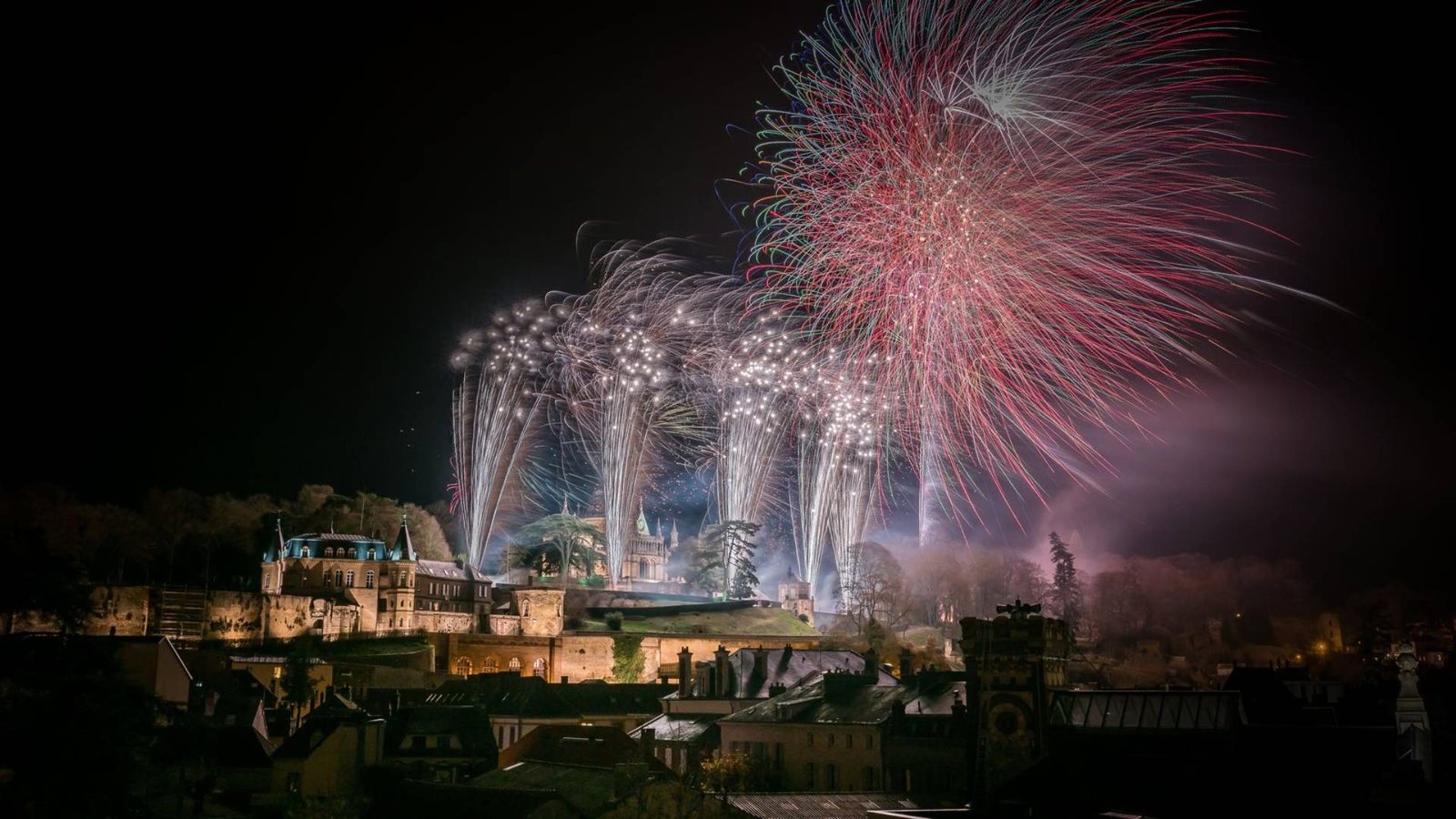
    Feu d’artifice tiré au-dessus d’une commune et de son patrimoine
  • Fireworks and European Royal Celebrations: A Legacy for Heritage Sites

    Fireworks and European Royal Celebrations: A Legacy for Heritage Sites

    The great royal celebrations turned fireworks into a courtly art. From Versailles to London, these blazing displays told of power, of peace restored and of the magnificence of a reign. That heritage directly informs the way Celesta designs pyrotechnic shows today for castles, monuments and local authorities, in France and abroad.

    Versailles, cradle of the great royal celebration

    In 1664, Louis XIV was not yet twenty-six. From 7 to 13 May, he offered his court the Plaisirs de l’Île enchantée: seven days of carousel, theatre, ballet and refreshments in the gardens of Versailles, still under construction. On the third evening, a fireworks display set ablaze the palace of the sorceress Alcina, built near the Grand Canal. Nothing about the show was gratuitous: it staged the power of a young king and his taste for the arts.

    Four years later, on 18 July 1668, the Grand Divertissement royal celebrated the Peace of Aix-la-Chapelle and the annexation of Flemish towns such as Lille and Douai. Banquet, ball, then fireworks: the sequence was conceived as a narrative, building in intensity towards the luminous finale. The engravings circulated afterwards by the royal printing house extended the event far beyond the night it took place. The celebration became image, and the image became memory. What Versailles invented is the idea that fireworks do more than light up the sky. They tell a story.

    London 1749, when music embraced fire

    Across the Channel, one episode lives on in musical memory. In 1749, King George II commissioned George Frideric Handel to write music to accompany the Green Park fireworks, given on 27 April to celebrate the 1748 Treaty of Aix-la-Chapelle. The score, known as the Music for the Royal Fireworks (HWV 351), is written for an imposing ensemble of winds and timpani.

    The rehearsal, held on 21 April at Vauxhall Gardens, drew close to 12,000 people and caused a traffic jam lasting several hours on London Bridge. The official evening went less smoothly: rain multiplied the misfires, a pavilion of the Temple of Peace caught fire and the incident cost three spectators their lives. The lesson still stands: a pyrotechnic show is won as much through preparation and safety as through spectacle.

    One lasting intuition remains. Synchronising fire and music multiplies the emotion. Celesta has made this one of its specialities today, with firing sequences time-coded to a soundtrack or to an orchestra playing live.

    What these celebrations still teach us

    Three centuries on, the principles hold. A great royal celebration rested on dramaturgy, a setting steeped in history and flawless technical mastery. The court’s firework masters already had to reckon with wind, water and crowds, exactly like the teams who today secure a display in front of a listed monument.

    The heritage setting is no mere backdrop. At Versailles as at Chambord or the Château de Vincennes, stone reflects the light, water multiplies it, perspective guides the eye. A successful display converses with the architecture instead of masking it. Our field experience confirms it: on a historic site, restraint often achieves more than excess.

    Designing a pyrotechnic show for a heritage site

    Celesta’s teams design bespoke shows for castles, monuments and major public events, in France and internationally. The method starts with the story. What do we want the audience to feel? Which turning point are we building towards? What final image should the spectator take home?

    Then comes the technical writing: choice of products, calibres, firing angles, safety perimeter and audience capacity. An ICPE-classified storage facility gives the teams genuine logistical autonomy, from preparing the fireworks to transporting them. That independence matters when a site imposes access constraints or tight deadlines.

    Celesta is not limited to fireworks. Luminous drones, video mapping, stage effects such as cold sparks or low fog, performers woven into the staging: the palette adapts to the venue and the budget. On a sensitive monument or in an area subject to noise restrictions, a drone swarm can take over from pyrotechnics without losing any of the narrative charge. The question is not which tool to choose, but which story to serve.

    A telling example: a town celebrating its anniversary can pair a display synchronised to its local music with a few minutes of drones drawing its coat of arms in the sky. In its own way, the approach replays the logic of the royal celebrations: a story, a place, a shared emotion.

    Safety and the regulatory framework

    None of this is improvised. In France, entertainment fireworks are governed by decree no. 2010-455 of 4 May 2010, which classifies them in categories F1 to F4 according to their level of hazard. Firing category F4 products requires a level 2 qualification certificate, whose renewal depends on taking part in at least three pyrotechnic shows over a two-year period.

    Drone shows answer to a different body of rules, chiefly European regulation 2019/947. Administrative declarations, safety perimeter, coordination with the local authorities: these steps protect the client legally as much as they protect the public. On this ground, proven expertise beats improvised goodwill.

Request a quote

Three steps, two minutes. The more you tell us, the more accurate our feedback will be.

  1. 1Your requirement
  2. 2Your project
  3. 3Your contact details

Step 1 of 3

You are

What you are considering several possible answers